


The East-West Pipeline, also known as the Petroline, connects Saudi Arabia’s oil-producing areas in the east with Yanbu on the Red Sea.
That connection is strategically important because it gives Riyadh an export route that does not require crude to pass through the Strait of Hormuz.
If Yanbu can handle significant and sustained volumes, the route could help ease some of the pressure created by the disruption around Hormuz and give global oil markets an additional source of supply flexibility.
But the reopening does not mean the wider shipping crisis is over.
The pipeline and Yanbu terminals have limited capacity compared with Saudi Arabia’s overall export network.
The key question now is how much additional crude can actually move through the western route — and how long those flows can be maintained.
WHAT HAPPENED?
Saudi Arabia has restored operations on the East-West Pipeline, allowing crude movements toward Yanbu and oil loadings at the Red Sea port to resume.
The pipeline carries crude from the kingdom’s eastern oil-producing region across the country to Yanbu.
That gives Saudi Arabia access to its western export infrastructure while shipping through the Persian Gulf remains under pressure.
The resumption of Yanbu loadings provides Aramco with another outlet for crude and more room to adjust export schedules during the continuing regional disruption.
For markets, however, the most important detail will be the actual volume moving through Yanbu.
WHY YANBU MATTERS
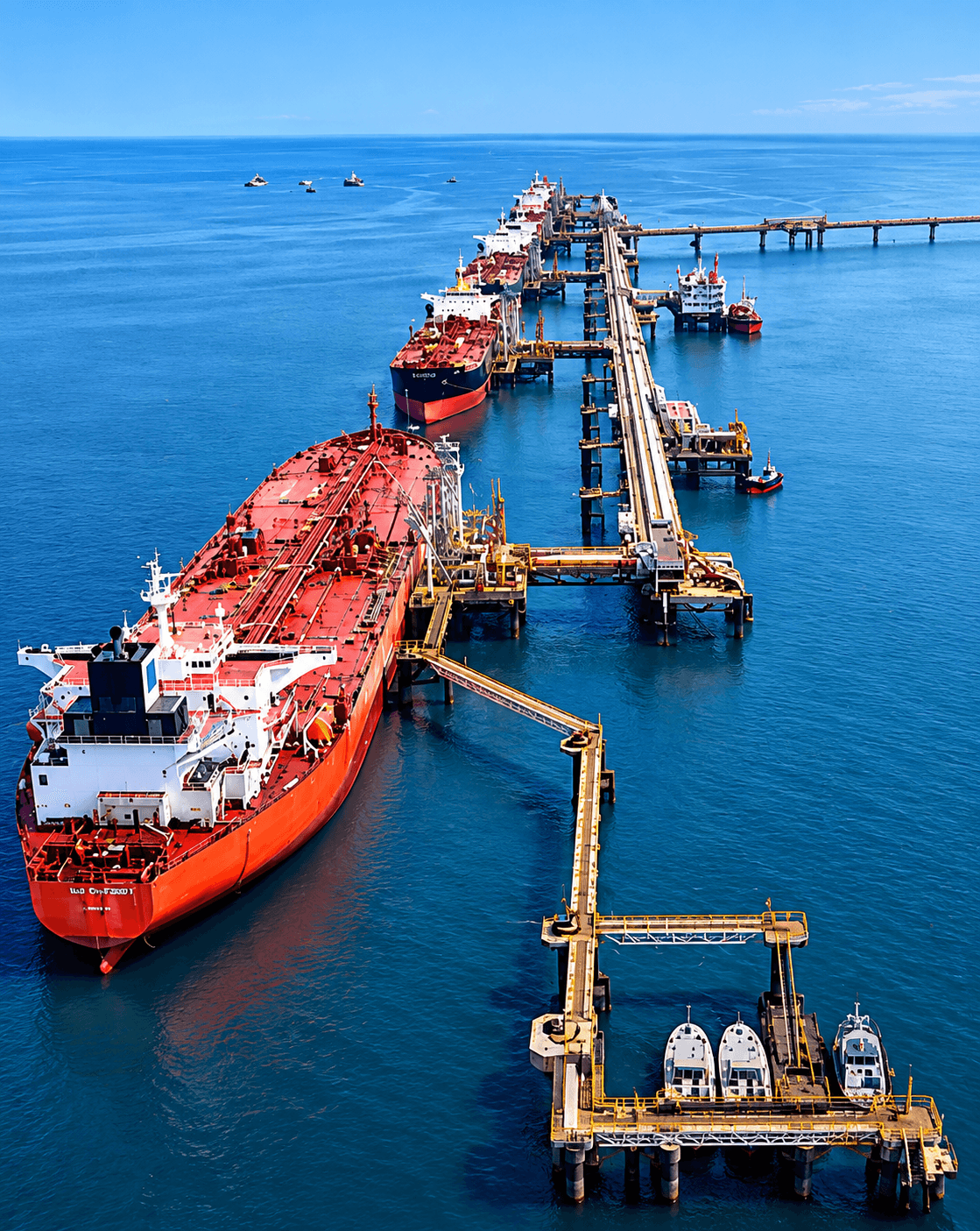
Yanbu sits on Saudi Arabia’s Red Sea coast, giving it an important geographic advantage.
Crude exported from the port can move into the Red Sea and toward the Suez Canal and European markets without first passing through the Strait of Hormuz.
That makes Yanbu particularly valuable when shipping through the Gulf becomes difficult.
Saudi Arabia has invested heavily in western energy infrastructure partly because of this strategic position. The East-West Pipeline effectively links the kingdom’s eastern oil fields with its western coastline.
THE EAST-WEST PIPELINE
The East-West Pipeline is one of Saudi Arabia’s key pieces of energy infrastructure.
It was built to move crude across the kingdom and provide an alternative to exports through the Persian Gulf.
Its importance becomes even greater when shipping through Hormuz faces disruption.
The pipeline serves two main purposes:
During normal operations:
It gives Saudi Arabia greater flexibility in moving crude between its eastern production areas and western export terminals.
During a crisis:
It can reduce the kingdom’s dependence on Gulf export routes.
With the pipeline restored, Riyadh once again has another tool for managing the current disruption.
THE HORMUZ CONNECTION
The Strait of Hormuz remains one of the world’s most important oil chokepoints.
A large share of internationally traded crude normally passes through the waterway, making any disruption there a major concern for energy markets.
Saudi Arabia’s eastern export terminals are located in the Gulf and are therefore exposed to problems affecting shipping through Hormuz.
The western route offers a degree of protection.
Crude can travel through the East-West Pipeline to Yanbu without crossing the strait.
That does not remove Saudi Arabia’s exposure to the wider regional crisis, but it can reduce its dependence on a single maritime chokepoint.
CAN YANBU REPLACE EASTERN EXPORTS?
No. And that distinction matters.
Yanbu cannot simply take over Saudi Arabia’s entire eastern export network.
Both the pipeline and western terminals have finite capacity, while Saudi Arabia’s overall crude export requirements are enormous.
The restored route provides additional flexibility, not a complete replacement for the kingdom’s Gulf export infrastructure.
That is why traders will be watching actual loading volumes rather than focusing only on the pipeline’s restoration.
WHAT IT MEANS FOR SAUDI ARAMCO
For Saudi Aramco, the restored route could provide valuable operational flexibility.
The company can potentially:
• Redirect some crude toward Yanbu
• Reduce pressure on eastern terminals
• Adjust shipping schedules
• Supply some European customers from the Red Sea
• Reduce exposure to disruptions around Hormuz
When geopolitical conditions can change quickly, the ability to move crude through different routes can be a significant advantage.
In an uncertain oil market, flexibility has real value.
EUROPE COULD BENEFIT
The western route could be particularly useful for some European customers.
Oil loaded at Yanbu can move through the Red Sea toward the Suez Canal and then into the Mediterranean.
For some destinations, that provides an alternative to moving Saudi crude through the Gulf.
But the Red Sea comes with its own risks.
Commercial shipping in the region has faced security threats linked to the broader Middle East conflict, meaning Saudi Arabia could be shifting part of its exposure from one vulnerable route to another rather than eliminating the risk altogether.
THE RED SEA RISK
The Red Sea has become an increasingly important energy corridor.
Houthi attacks on commercial shipping have previously caused vessels to reconsider routes through the Red Sea and Bab el-Mandeb.
When ships are forced to take longer routes around Africa, the consequences can include:
Higher fuel costs
Higher insurance premiums
Longer transit times
Greater demand for shipping capacity
Yanbu gives Saudi Arabia an alternative export outlet, but the value of that route ultimately depends on whether ships can continue operating safely through the Red Sea.
GLOBAL OIL MARKETS
The pipeline restoration comes at a sensitive moment for global oil markets.
Traders are watching several factors closely:
• Saudi export volumes
• Shipping conditions around Hormuz
• Iranian oil flows
• OPEC+ production
• Global inventories
• European demand
• Asian refinery demand
Additional Saudi barrels reaching international markets could help ease some supply concerns.
But scale will be critical.
A modest increase in western exports may provide some reassurance without materially changing the global supply balance.
A larger and sustained increase could have a more noticeable effect on prices.
COULD OIL PRICES FALL?
Possibly, but the restoration alone is unlikely to determine where oil prices go next.
Prices are driven by expectations about future supply and demand as much as by current production.
If traders become more confident that Saudi Arabia can maintain exports despite the disruption around Hormuz, some of the geopolitical risk premium could fade.
That could put downward pressure on prices.
But continued disruptions elsewhere could easily offset that effect.
The bigger question for markets is therefore how much oil remains available globally, rather than simply whether one export route has reopened.
WHY THE ROUTE IS STRATEGIC
The East-West Pipeline gives Saudi Arabia something particularly valuable during a crisis:
A second major geographic outlet for its crude.
Much of Saudi Arabia’s oil production is concentrated in the east. Without the pipeline, a larger share of that crude would have to move toward Gulf export terminals.
The pipeline allows some of those barrels to travel west instead.
That geographic flexibility becomes especially important when geopolitical risks threaten major shipping routes.
THE BIGGER ENERGY SECURITY STORY
The situation at Yanbu highlights a broader shift in global energy security.
Countries and energy companies are increasingly looking for ways to reduce their dependence on individual chokepoints and vulnerable routes.
For oil, that can mean:
Alternative pipelines
Strategic reserves
Multiple export terminals
Diversified shipping routes
For LNG, it can involve:
Diversified suppliers
Alternative terminals
Floating storage
Long-term supply contracts
The goal is the same: reduce the impact of a single disruption.
Saudi Arabia’s western export network is one example of that broader strategy.
WHAT ABOUT ASIA?
Asia remains the most important broad market for Saudi crude, with China, India, Japan and South Korea among the kingdom’s major customers.
For those buyers, Yanbu will not necessarily be the most efficient export route in every situation.
Still, greater flexibility in the Saudi system could have wider effects.
If more crude is shifted toward the western route, Saudi Arabia could adjust the distribution of available barrels between different markets and reduce pressure elsewhere in its export network.
INDIA’S INTEREST
India is particularly sensitive to changes in Middle Eastern oil supplies because it imports a large share of its crude requirements.
Saudi Arabia remains an important supplier.
A prolonged disruption to Gulf shipping could therefore affect:
• Indian crude import costs
• Refinery margins
• Fuel prices
• Inflation
• The current-account balance
If Saudi Arabia can keep exports moving through alternative routes, it could provide some reassurance to Indian refiners and reduce uncertainty around supply.
WHY THIS MATTERS
1. SAUDI EXPORT FLEXIBILITY IS IMPROVING
The restored pipeline gives Riyadh another way to move crude toward international markets.
2. HORMUZ EXPOSURE COULD BE REDUCED
Some Saudi crude can reach export terminals without passing through the Strait of Hormuz.
3. GLOBAL SUPPLY PRESSURE MAY EASE
Additional western exports could offset part of the disruption affecting other routes.
4. YANBU BECOMES MORE STRATEGIC
The Red Sea port could take on a larger role in Saudi oil exports while the current crisis continues.
5. THE RED SEA REMAINS A RISK
An alternative export route is only useful if the shipping corridor beyond it remains secure.
FACT CHECK METER
AWX FACT CHECK
FACT METER: 94%
STATUS: DEVELOPING
CONFIRMED
• Saudi Arabia has an East-West Pipeline connecting its eastern oil-producing region with Yanbu on the Red Sea.
• Yanbu provides Saudi Arabia with a western crude-export route that avoids the Strait of Hormuz.
• Restoration of the pipeline allows crude movements toward Yanbu to resume.
• The route has strategic importance during periods of disruption around Hormuz.
• Saudi Arabia has major oil-export infrastructure on both its Gulf and Red Sea coasts.
NOT YET FULLY ESTABLISHED
• The precise volume of crude currently being loaded from Yanbu following the restoration.
• How much additional crude Saudi Arabia can ultimately redirect through the western route.
• How long higher Yanbu loadings will continue.
• The precise impact on global oil prices.
• Whether the restored route will operate at its maximum available capacity.
IMPORTANT DISTINCTION
YANBU LOADINGS RESUMING DOES NOT MEAN HORMUZ RISKS HAVE ENDED.
The western route provides Saudi Arabia with another export channel, but its capacity is limited and shipping through the Red Sea also faces security risks.
AWX VERDICT
PIPELINE RESTORATION: CONFIRMED
YANBU EXPORT ROUTE: ACTIVE
SAUDI EXPORT FLEXIBILITY: IMPROVED
HORMUZ RISK: REMAINS HIGH
GLOBAL PRICE IMPACT: DEVELOPING
AWX FOCUS: CAN SAUDI ARABIA BYPASS HORMUZ?
THE ADVANTAGE
The East-West Pipeline allows Saudi crude to reach the Red Sea without travelling through the Strait of Hormuz.
THE LIMITATION
Pipeline and Yanbu terminal capacity cannot replace Saudi Arabia’s entire eastern export network.
THE NEW RISK
The Red Sea and Bab el-Mandeb remain exposed to regional security threats.
THE MARKET QUESTION
How many additional barrels can Saudi Arabia actually move through Yanbu?
That figure could determine whether the development remains a logistical adjustment or becomes a meaningful change in global oil supply expectations.
WHAT TO WATCH NEXT
Yanbu:
Daily crude-loading volumes and tanker departures.
Saudi Aramco:
Whether additional export cargoes are shifted toward the Red Sea.
East-West Pipeline:
Whether operations remain stable and at what capacity.
Strait of Hormuz:
Whether restrictions continue or shipping conditions improve.
Red Sea:
Whether commercial vessels can operate safely and consistently.
Oil prices:
Whether additional Saudi supply reduces the geopolitical risk premium.
Europe:
Whether more Saudi crude reaches Mediterranean and European refiners.
Asia:
Whether Saudi export allocations to Asian customers change.
THE AWX BOTTOM LINE
The restoration of Saudi Arabia’s East-West Pipeline and the resumption of crude loadings from Yanbu give Riyadh an important alternative as pressure around the Strait of Hormuz continues.
The strategic advantage is clear:
Saudi crude can move from the kingdom’s eastern oil fields to a Red Sea export terminal without passing through Hormuz.
That could help Saudi Arabia maintain exports, reduce pressure on Gulf terminals and reassure international oil buyers.
But Yanbu is not a replacement for the kingdom’s entire eastern export network.
Its capacity is limited, while the Red Sea faces its own security challenges.
For that reason, the market will be watching actual volumes rather than simply the reopening announcement.
If Yanbu loadings rise substantially and remain steady, the route could help ease some of the supply pressure created by the Hormuz crisis.
If volumes remain modest, the broader market impact is likely to be limited.
For now, Saudi Arabia has reopened an important alternative route.
The question is how many barrels that route can carry — and whether it can stay open.
ATTLAS WIRE | AWX WORLD NEWS
Real Stories. Lasting Impact.

Comments
No comments yet.