

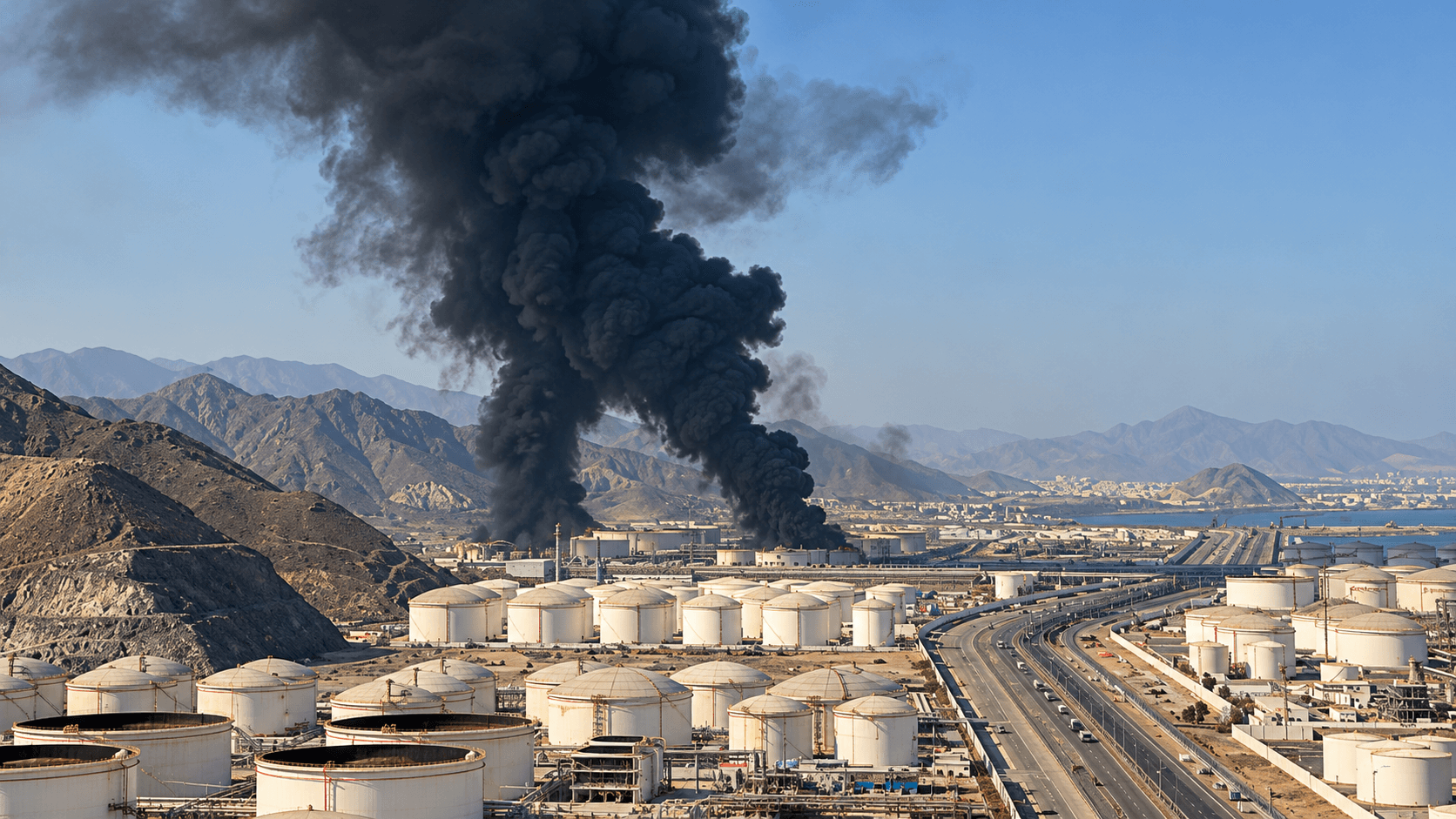
The Gulf is under pressure on several fronts at once.
Oil exports have recovered significantly from the disruption earlier this year, but the rebound has not brought the region back to normal. Tankers are paying more for insurance and freight, airlines are changing routes, and attacks on Saudi infrastructure and airports have added to concerns over regional security.
The Strait of Hormuz remains open, but traffic is still operating under significant constraints. At the same time, the Bab el-Mandeb is emerging as another security concern as fighting in Yemen intensifies.
The Gulf economy is still moving. But it is doing so in a much more difficult and expensive environment.
WHAT HAPPENED?
The latest picture is mixed.
Gulf oil exports have recovered strongly. Vortexa data showed exports from Saudi Arabia, the UAE, Kuwait, Qatar, Oman, Bahrain and Iraq averaging around 19.2 million barrels per day in September — more than 81% of the pre-war level of roughly 23.6 million bpd. Crude and condensate flows recovered to about 91% of their earlier level.
Refined-product exports, however, remain much weaker, at around 60% of pre-war levels. That continues to put pressure on diesel and jet-fuel markets.
Saudi Arabia has played a major role in the recovery.
The kingdom sharply increased crude shipments in September, while its East-West Pipeline has provided an important alternative for moving oil toward the Red Sea and reducing reliance on the Strait of Hormuz. Saudi Energy Minister Prince Abdulaziz bin Salman said volumes pumped through the pipeline had reached 5.8 million barrels, while Reuters reported that around 4 million bpd was being routed through the system.
But while energy flows are recovering, the security picture is deteriorating.
Saudi Arabia has reported attacks affecting airports in Jizan and Najran, leaving three people lightly injured. A separate ballistic missile headed toward Khamis Mushait was also intercepted.
The result is an unusual combination: Gulf energy exports are recovering at the same time that the risks surrounding those exports are increasing.
OIL IS MOVING — BUT THE LOGISTICS ARE GETTING HARDER
The main problem is no longer simply whether oil is available.
Increasingly, it is about how safely and cheaply that oil can be moved.
Oil shipments through the Strait of Hormuz have recovered to around 80% of pre-war levels, according to Reuters, but crude prices remain above $100 a barrel.
The cost of moving energy through a conflict zone has risen sharply.
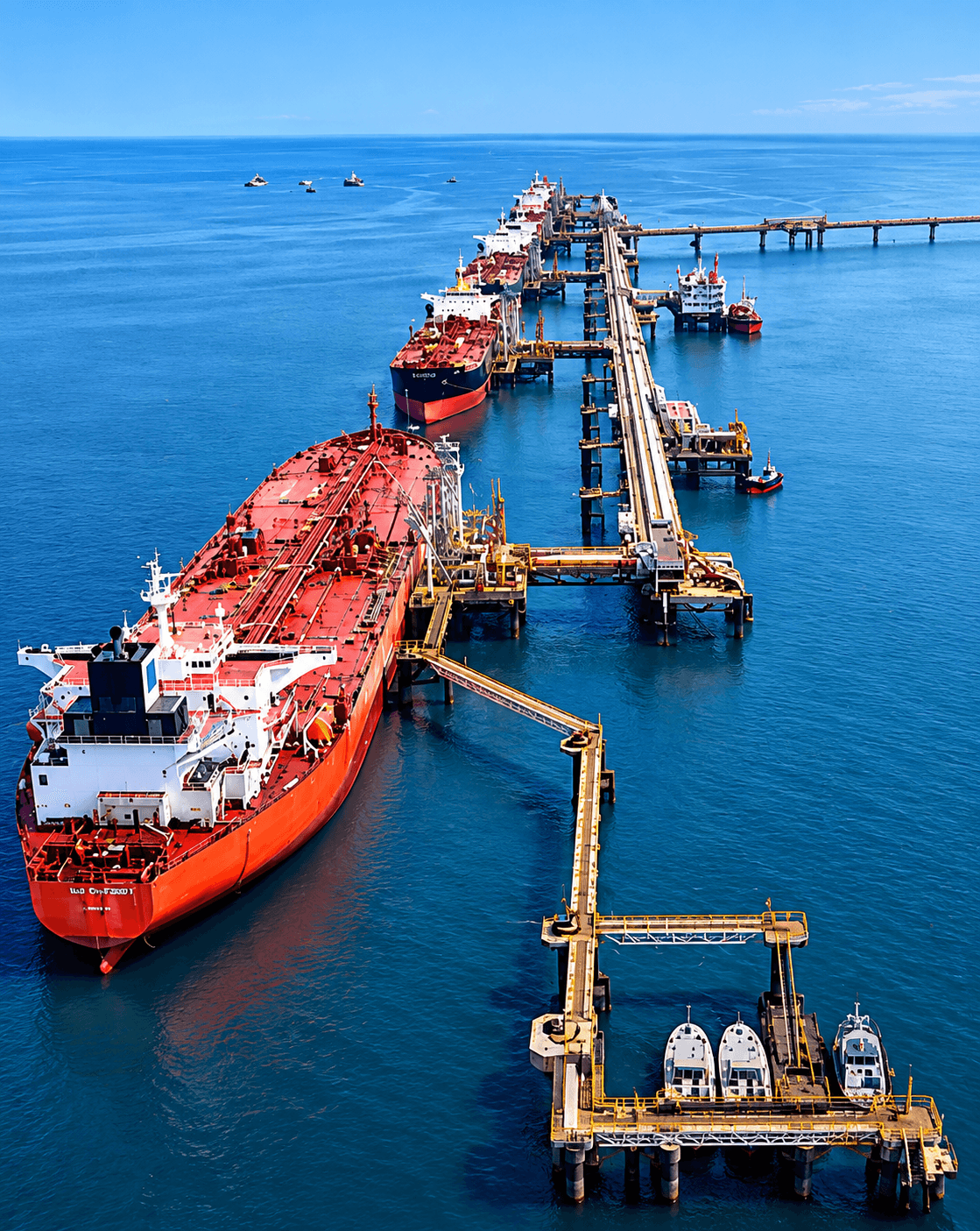
Tankers are facing higher insurance premiums, longer voyages, security concerns and much higher freight rates. Reuters reported that tanker costs for routes from the Middle East to Asia had surged, with some daily rates exceeding $1.2 million.
Some Gulf exporters have also turned to ship-to-ship transfers and other logistical workarounds to keep cargo moving.
Those measures can keep supplies flowing, but they are not a substitute for a normal shipping network.
That distinction is important.
There may be enough oil physically available in the market, yet consumers can still face higher prices because transporting, insuring and processing that oil has become more difficult.
HORMUZ REMAINS OPEN — BUT "OPEN" DOES NOT MEAN NORMAL
The Strait of Hormuz remains one of the region's biggest pressure points.
Before the conflict, the waterway carried a huge share of global energy shipments. It is still operating, but traffic remains restricted and vessels are dealing with delays, security concerns and higher costs.
Recent estimates put oil and product flows through the strait at around 13 million barrels per day, below pre-war levels.
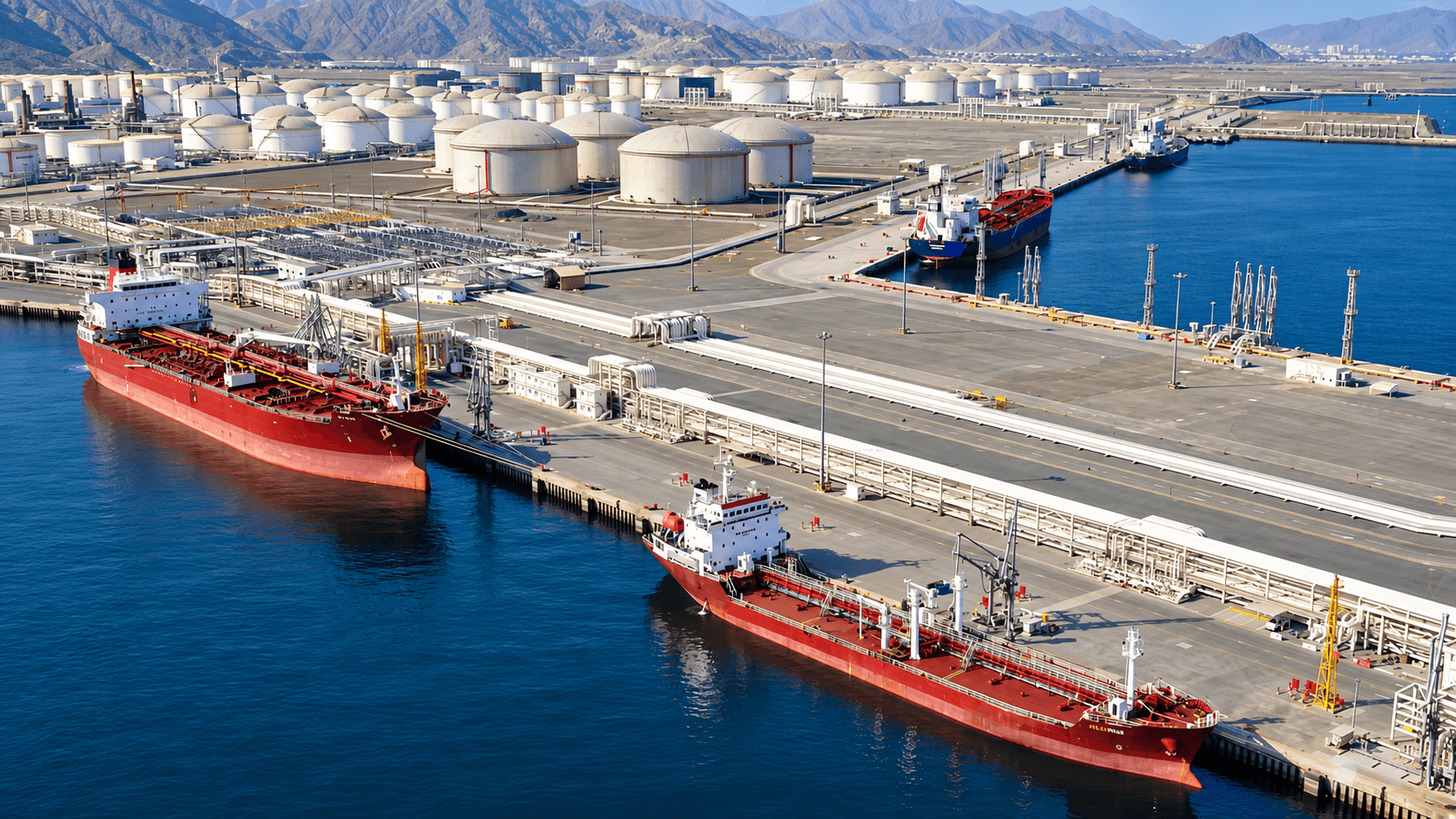
At times, more than 100 large tankers have gathered near Oman, while some vessels have reportedly waited days to load or transit.
Freight costs into the Gulf have also climbed several times above normal levels as shipping companies absorb war-risk premiums, extra fuel expenses and route changes.
The key question is therefore not simply whether Hormuz is physically open.
It is whether shipping companies, insurers, crews and energy traders are willing to operate through it at anything close to normal capacity.
AIRSPACE IS THE OTHER FRONT
The pressure is not confined to shipping.
Gulf aviation networks are also operating under greater strain.
Dubai International, Al Maktoum International and Abu Dhabi's Zayed International Airport remain operational, but airlines continue to adjust schedules because of regional airspace risks.
Some services have been reduced or suspended, while other flights are taking longer routes to avoid sensitive areas.
The effects can quickly spread through the aviation system.
Longer routes mean more fuel. More time in the air can reduce aircraft utilisation. A delay at one major hub can then disrupt connecting flights elsewhere.
Gulf News reported that Emirates was operating around 98% of its pre-war destination network, but only about 93% of its previous weekly frequency. The figures underline the difference between keeping a network open and operating it normally.
The aviation-security picture was further complicated by the September 30 flydubai Flight FZ1073 incident.
The Dubai-to-Tel Aviv flight diverted to Saudi Arabia following an alleged cockpit attack involving the co-pilot. Authorities in the UAE and Saudi Arabia are investigating the incident, with Israel and other parties also examining what happened.
Reuters reported that the aircraft went through a dramatic descent before stabilising and diverting to Tabuk. Investigators have not established Iranian involvement or a final motive.
Even so, the incident has brought renewed attention to cockpit security and crew screening.
SECURITY IS MOVING CLOSER TO ENERGY INFRASTRUCTURE
The military dimension is becoming harder to separate from the energy story.
The United States has reportedly deployed two additional Patriot missile batteries to Saudi Arabia and Qatar to strengthen protection around critical energy facilities.
Axios reported that one battery was intended to help defend a Saudi oil facility, while another was deployed to Qatar to protect a gas installation.
The deployment reflects a wider shift in how the region's energy infrastructure is viewed.
Oil terminals, pipelines, refineries and gas facilities are no longer just commercial assets. They have become part of the region's wider security architecture.
That makes any further escalation more consequential.
An attack on a military target can remain largely a military event.
An attack on an oil terminal or gas facility can quickly become a global economic event.
YEMEN OPENS ANOTHER RISK CORRIDOR
The security challenge is also moving toward the Red Sea.
Fighting between Saudi-backed Yemeni forces and Iran-backed Houthi forces has intensified around strategic areas near the Bab el-Mandeb.
The waterway links the Red Sea with the Gulf of Aden and is a major route for international shipping.
For Gulf exporters, the timing is particularly difficult.
Hormuz is already under pressure because of the conflict involving Iran. If the Bab el-Mandeb becomes significantly more dangerous at the same time, shipping companies could face risks at both ends of the wider Gulf-Red Sea trade corridor.
That could mean higher insurance premiums, longer routes and possible disruption to oil, fuel and other commodity shipments.
AP reported that Saudi Arabia has stepped up its campaign in Yemen, while Houthi forces have responded with missile and drone attacks against Saudi targets.
THE HUMAN AND ECONOMIC COST
The impact is beginning to extend beyond energy traders and defence officials.
Higher freight costs eventually make their way into the wider economy.
In the UAE, shipping costs have reportedly climbed to several times their previous levels. Higher fuel and logistics expenses are feeding into transportation, imports and, ultimately, consumer prices.
Air passengers are also dealing with longer routes, cancellations and uncertainty.
Businesses that depend on just-in-time deliveries face higher insurance and transport bills. Energy-importing countries, meanwhile, have to keep an eye not only on crude prices but also on diesel, jet fuel and shipping costs.
India is particularly exposed to developments in the Gulf.
The country relies heavily on Middle Eastern energy supplies, so disruptions to Gulf shipping can affect crude availability, freight rates and, eventually, domestic fuel prices and inflation.
Recent Indian oil-import data also indicate that some suppliers have been using ship-to-ship transfers to keep Gulf crude moving despite the difficult shipping environment.
WHY THIS MATTERS
The Gulf is highlighting a basic reality of the global economy:
Energy security is no longer just about production. It is also about shipping routes, insurance, infrastructure and airspace.
Saudi Arabia can increase production.
The UAE can restore fuel flows.
Qatar can resume LNG shipments.
But if ships cannot move safely, aircraft cannot operate normally and critical infrastructure needs additional missile defence, the system remains vulnerable.
The current recovery should therefore not be mistaken for a return to normal conditions.
The region has restored part of its export capacity, but it is doing so through a logistics network that is more expensive, slower and more complicated than before.
FACT CHECK METER
FACT METER: 96%
STATUS: DEVELOPING
CONFIRMED
Gulf oil exports recovered significantly in September, reaching more than 81% of pre-war levels excluding Iran.
Saudi Arabia has increased its use of the East-West Pipeline as an alternative export route.
UAE airports remain operational, although airlines continue to adjust schedules and routes.
Saudi Arabia reported attacks affecting Jizan and Najran airports.
The United States has reportedly added Patriot missile systems in Saudi Arabia and Qatar to reinforce protection around energy infrastructure.
The flydubai FZ1073 cockpit incident remains under investigation.
IMPORTANT DISTINCTION
Higher Gulf oil exports do not mean the region's energy system has returned to normal.
The recovery is taking place alongside higher shipping costs, restricted routes, security threats and much weaker refined-product flows.
Responsibility for individual attacks and the motive behind the flydubai incident have not been fully established and remain subject to investigation.
AWX VERDICT
The Gulf's energy system is functioning — but under exceptional pressure.
The immediate risk is not necessarily a complete shutdown of oil exports or aviation.
The bigger concern is that repeated disruptions could gradually make every shipment, flight and energy transaction more expensive and less predictable.
AWX FOCUS
Three indicators now matter more than most:
HORMUZ:
Can tanker and LNG traffic continue to recover without another major attack or prolonged closure?
AIRSPACE:
Can Gulf airlines maintain schedules while regional military activity continues to affect flight routes?
ENERGY INFRASTRUCTURE:
Can Saudi, Qatari and UAE oil and gas facilities remain protected as the conflict develops across several fronts?
If all three remain stable, the Gulf can continue rebuilding its energy flows.
If even one suffers a major disruption, the effects could spread quickly through global markets.
WHAT TO WATCH NEXT
1. Hormuz shipping activity
A sustained increase in tanker movements would point to improving confidence. Another wave of attacks could quickly reverse that recovery.
2. Saudi oil exports
Saudi Arabia's ability to maintain high export volumes will remain important for global supply stability.
3. Bab el-Mandeb
Any further deterioration around Yemen could add another major shipping risk to the region.
4. Gulf aviation notices
Flight cancellations, route suspensions and new airspace restrictions could provide an early indication of changing security conditions.
5. Oil prices
Brent has remained around the $100-a-barrel level as traders weigh recovering Gulf supplies against continuing geopolitical risks.
6. Energy infrastructure security
Any further missile, drone or sabotage incidents involving pipelines, refineries, terminals or gas facilities could quickly change the market outlook.
THE AWX BOTTOM LINE
The Gulf is not shutting down.
Oil is moving. Airports are operating. Tankers are still crossing Hormuz. Energy infrastructure remains online.
But underneath that activity is a much more fragile system.
Every tanker now carries a security calculation.
Every flight carries an airspace calculation.
Every refinery and pipeline carries a defence calculation.
That is why the Gulf's story is about more than oil prices.
It is about whether the region can keep some of the world's most important energy and trade routes functioning while security risks continue to rise.
For now, they are.
But the margin for error is getting smaller.
ATTLAS WIRE | AWX WORLD NEWS
Real Stories. Lasting Impact.


Comments
No comments yet.