

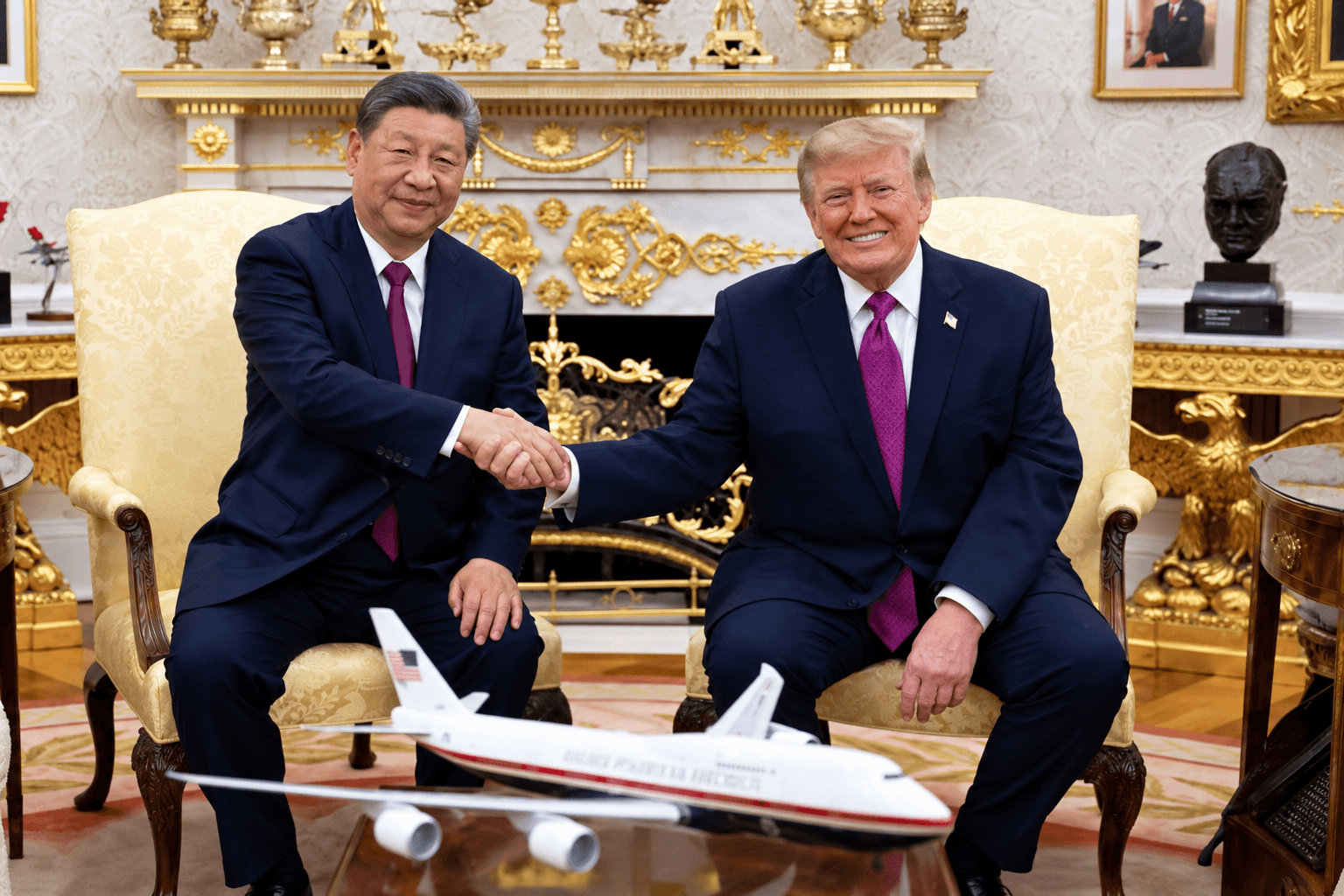
The comments add a human-rights dimension to the latest high-level contact between Washington and Beijing.
Trade, technology and strategic competition remain at the centre of the relationship, but Washington has also continued to press China over Americans and other individuals it considers to be wrongfully detained.
So far, however, there has been no announcement of a prisoner-release agreement.
WHAT HAPPENED?
Trump said political-prisoner cases came up during his meeting with Xi.
When asked whether he had discussed people detained in China, Trump confirmed that he had. He did not provide a full list of the cases discussed or say whether Xi had made any specific commitments.
Before Xi's visit, the White House had indicated that Trump was expected to raise cases involving people Washington believes were wrongfully detained.
His latest comments confirm that the issue made it into the leaders' discussions.
MIN ZIN'S CASE
One of the cases highlighted is that of Min Zin, a Myanmar scholar and US citizen who was arrested by Chinese authorities in June.
The US government has subsequently designated him as wrongfully detained.
His case has become part of Washington's broader efforts to secure the release of Americans held in China.
Trump's decision to raise the case directly with Xi puts Min Zin among the individual detainees whose cases the US is seeking to address through diplomacy.
JIMMY LAI'S CASE
Another prominent case is Jimmy Lai, the Hong Kong media entrepreneur and founder of the now-shuttered Apple Daily newspaper.
Lai was sentenced to 20 years in prison in February after being convicted under Hong Kong's national-security framework.
His imprisonment has attracted international criticism and become a major point of debate over political freedoms in Hong Kong and China's national-security policies.
Trump's reference to Lai shows that the discussion was not limited to American citizens and also touched on wider concerns surrounding political freedoms and human rights.
NO RELEASE DEAL ANNOUNCED
The key point is that Trump confirmed a discussion, not an agreement.
There has been no public announcement that China agreed to release any particular prisoner as a result of the meeting.
Trump said he hoped the talks would be fruitful, but details of Xi's response have not been made public.
For now, the next steps remain unclear.
HUMAN RIGHTS ENTER A BROADER US–CHINA AGENDA
The prisoner issue is only one part of a much larger relationship.
Washington and Beijing continue to face disagreements over:
Trade and tariffs
Technology restrictions
Artificial intelligence
Taiwan
Human rights
China's international relationships
Strategic competition
The latest summit therefore went well beyond individual detainee cases.
The political-prisoner issue is another sensitive subject being handled as the two governments try to keep diplomatic channels open despite major differences.
WHAT ABOUT TIBET AND THE UYGHURS?
It remains unclear whether Trump raised broader human-rights concerns involving Tibet, China's Uyghur Muslim population or Beijing's policies toward ethnic minorities.
The reports surrounding Trump's comments specifically identify political-prisoner cases. They do not establish that every wider human-rights issue was discussed during the meeting.
That distinction matters.
What is confirmed is that prisoner cases were raised. Broader human-rights issues should not be presented as part of the conversation without further evidence.
WHY THIS MATTERS FOR US–CHINA RELATIONS
Political detainees can become particularly sensitive diplomatic issues.
For Washington, securing the release of Americans detained overseas can be both a foreign-policy goal and a significant domestic concern.
Beijing, meanwhile, generally treats cases involving national security, espionage or political activity as matters governed by Chinese law and sovereignty.
That leaves little room for simple compromise.
The prisoner cases could therefore become a test of whether direct diplomacy between Trump and Xi can produce concrete humanitarian results.
THE DIPLOMATIC CALCULUS
The timing is significant.
Trump and Xi are trying to maintain high-level communication despite disagreements over trade, technology and broader strategic competition.
For Washington, individual detainee cases provide another avenue for putting pressure on Beijing while keeping diplomatic engagement alive.
For China, any decision involving politically sensitive prisoners could ease tensions with Washington, but concessions could also have domestic political consequences.
That makes the issue difficult for both sides.
THE BIGGER US–CHINA PICTURE
The prisoner discussion comes after the leaders' latest summit, where trade and technology remained among the central issues.
Both governments have an interest in managing tensions rather than allowing disagreements to completely derail bilateral relations.
That means humanitarian concerns are increasingly being discussed alongside economic and strategic matters.
The real test now is whether diplomatic conversations produce measurable results.
WHY THIS MATTERS
1. TRUMP CONFIRMED THE ISSUE WAS RAISED
Trump said political-prisoner cases were discussed directly with Xi.
2. MIN ZIN AND JIMMY LAI ARE PROMINENT CASES
Both cases have drawn attention in Washington and internationally, although they involve different legal and political circumstances.
3. NO RELEASE AGREEMENT HAS BEEN ANNOUNCED
Trump confirmed that the issue was discussed, but no prisoner-release deal has been publicly announced.
4. HUMAN RIGHTS ARE PART OF A LARGER NEGOTIATION
The issue is unfolding alongside trade, technology and broader strategic disputes.
5. THE NEXT MOVE IS UNCLEAR
The key question is whether the discussions will lead to actual releases or other humanitarian measures.
FACT CHECK METER
AWX FACT CHECK
FACT METER: 95%
STATUS: DEVELOPING
CONFIRMED
Trump said he discussed political prisoners with Xi Jinping.
The discussion took place during their meeting last week.
Trump confirmed that he raised individual prisoner cases.
Min Zin and Jimmy Lai were among the cases referenced in questions to Trump.
Washington has designated Min Zin as wrongfully detained.
NOT YET CONFIRMED
Whether China agreed to release any specific prisoner.
Whether Xi made a commitment regarding Min Zin or Jimmy Lai.
The complete list of cases discussed.
Whether broader issues involving Tibet and Uyghurs were raised.
IMPORTANT DISTINCTION
DISCUSSION DOES NOT EQUAL AGREEMENT.
Trump has confirmed that political-prisoner cases were discussed, but there is no confirmed public evidence of a corresponding release agreement.
AWX VERDICT
POLITICAL-PRISONER ISSUE RAISED: CONFIRMED
MIN ZIN CASE: DISCUSSED
JIMMY LAI CASE: RAISED IN CONTEXT
RELEASE DEAL: NOT ANNOUNCED
CHINESE RESPONSE: UNCLEAR
DIPLOMACY: DEVELOPING
AWX FOCUS: FROM DIPLOMACY TO DELIVERABLES
WASHINGTON'S POSITION
Trump has made securing the release of Americans detained abroad a priority.
BEIJING'S POSITION
China has not publicly indicated that it will make concessions on the cases discussed.
THE KEY TEST
Whether diplomatic engagement produces tangible humanitarian outcomes.
THE BIGGER QUESTION
Can individual prisoner cases become an area of cooperation while Washington and Beijing continue to disagree over trade, technology and geopolitics?
WHAT TO WATCH NEXT
China
Whether Beijing publicly responds to the cases Trump says he raised.
United States
Whether the White House provides more details about the prisoners discussed during the summit.
Min Zin
Any development concerning his detention or possible release.
Jimmy Lai
Whether Washington continues diplomatic pressure over his case.
Human rights
Whether broader concerns involving Tibet, Uyghurs and Hong Kong become part of future talks.
US–China diplomacy
Whether prisoner cases become a continuing issue in negotiations between Washington and Beijing.
THE AWX BOTTOM LINE
President Donald Trump says political prisoners were discussed when he met Chinese President Xi Jinping.
That puts the issue on the agenda of the latest high-level US–China dialogue.
But the distinction between raising a case and achieving a result is critical.
There has been no confirmed announcement of a prisoner-release agreement.
For the families of detainees, what happens next will matter far more than diplomatic language.
For Washington, the challenge is turning presidential discussions into concrete humanitarian outcomes.
For Beijing, the issue touches sensitive questions of national security, sovereignty and political control.
The conversation has happened.
The outcome remains uncertain.
The question now is whether diplomacy can turn words into freedom.
ATTLAS WIRE | AWX WORLD NEWS
Real Stories. Lasting Impact.


Comments
No comments yet.