

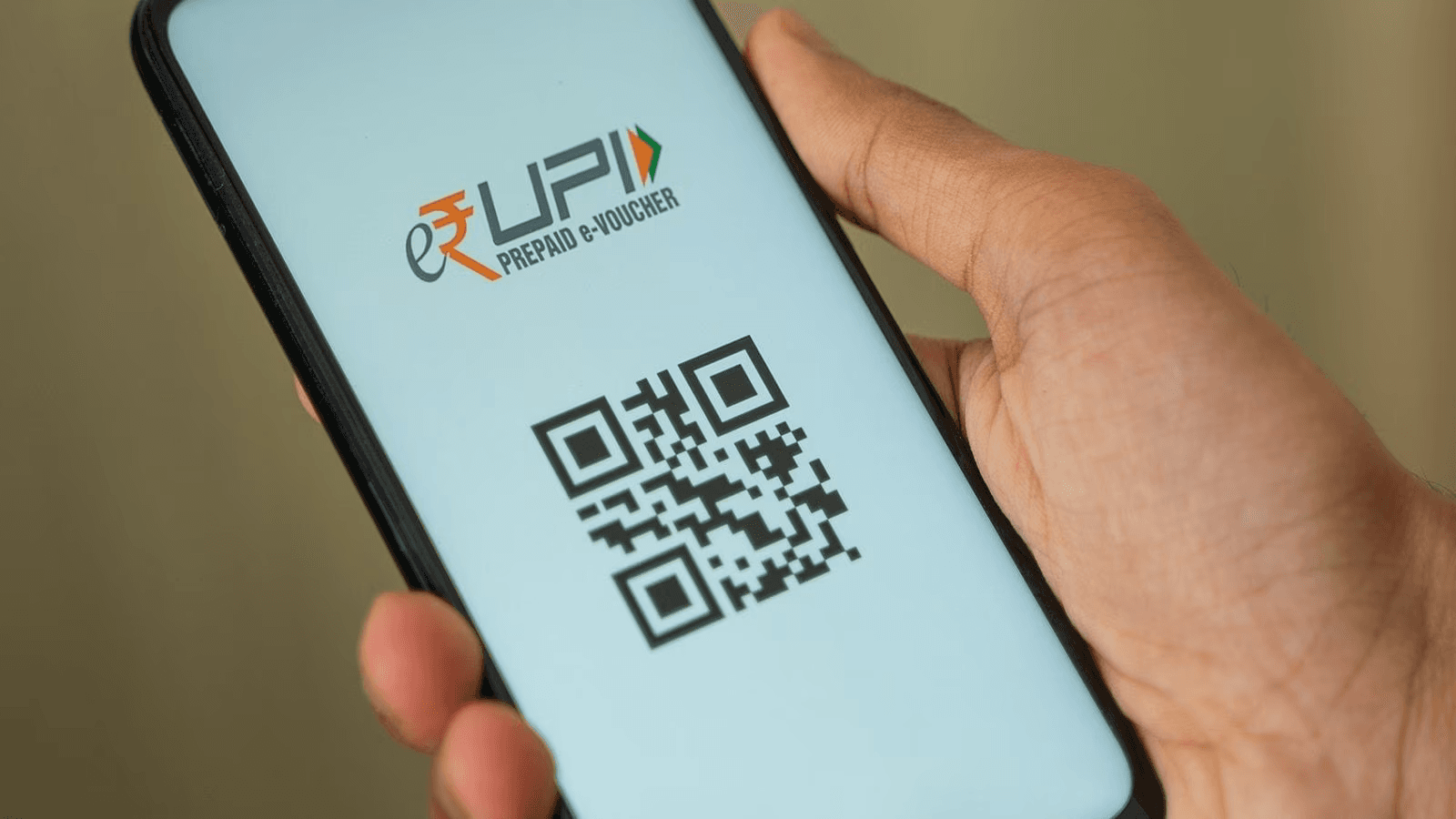
UPI has become part of everyday life in India.
Whether it is paying a neighbourhood shopkeeper, settling a restaurant bill, buying fuel or shopping online, millions of Indians now use UPI without giving much thought to what happens behind the payment screen.
But the economics behind that convenience are now facing renewed scrutiny.
A proposed merchant charge on certain higher-value UPI transactions has brought merchants, banks, payment companies, consumers and regulators into the debate.
The Supreme Court’s examination adds an important legal dimension.
At the centre of the discussion is a straightforward question:
Who should ultimately pay for the infrastructure that keeps UPI running at such enormous scale?
WHAT IS THE ISSUE?
The controversy centres on a proposed Merchant Discount Rate, or MDR, for certain UPI transactions.
Under the proposed framework, specified person-to-merchant transactions above ₹2,000 would attract a merchant-side charge.
The proposed rate is 0.4%, subject to applicable caps and category-specific rules.
Importantly, this is not designed as a conventional fee charged directly to consumers for using UPI.
Instead, the initial cost would fall on participating merchants.
That distinction matters.
A customer could continue to make a UPI payment without seeing an additional charge on the transaction, while the merchant receiving the payment could incur a processing cost.
The Supreme Court is examining the legal challenge surrounding the proposed framework.
WHY IS THE SUPREME COURT INVOLVED?
The legal challenge questions the government's authority to introduce the proposed merchant-charge structure.
The petition argues that the move would alter the earlier zero-MDR framework associated with UPI transactions.
The court’s involvement, however, does not mean that the proposed charges have already been declared illegal.
Rather, the legal basis of the framework is being examined.
The eventual decision could determine whether the proposal goes ahead as planned, is modified or faces further legal restrictions.
WHAT CHANGES FOR MERCHANTS?
For merchants, the most immediate concern is the possibility of an additional cost on qualifying higher-value UPI payments.
Take a simple example.
If a merchant receives a qualifying UPI payment of ₹10,000, a 0.4% MDR would work out to ₹40, before taking into account any applicable caps or category-specific provisions.
For one transaction, that may not seem significant.
For a business handling thousands of such payments each month, however, the numbers can add up quickly.
That could be particularly important for smaller businesses and retailers operating with tight profit margins.
WHAT CHANGES FOR CONSUMERS?
For consumers, the impact would be less direct.
The proposed MDR is structured as a merchant-side charge, meaning users would not automatically receive a separate bill simply because they make a qualifying UPI payment.
But there is a bigger question in the background:
Could merchants eventually pass some of that cost on to customers?
Businesses have several possible responses. They could:
Absorb the cost themselves
Adjust product or service prices
Introduce payment-related charges
Offer incentives for other payment methods
Encourage cash payments
What actually happens will depend largely on how merchants respond.
WHY DOES UPI NEED A NEW REVENUE MODEL?
UPI’s extraordinary growth has also created a huge infrastructure challenge.
Behind every successful transaction is a system that requires investment in:
Payment infrastructure
Cybersecurity
Fraud prevention
Server capacity
Transaction processing
Authentication systems
Customer protection
Technical upgrades
As transaction volumes rise, maintaining a fast and reliable network becomes increasingly demanding.
That is why supporters of MDR argue that the debate is not simply about introducing another fee.
It is also about finding a sustainable way to fund the ecosystem behind UPI.
Banks, payment companies and other participants need to keep investing in technology, security and capacity as digital payments continue to expand.
THE ZERO-MDR MODEL
Zero MDR played an important role in UPI’s rapid adoption.
Consumers became used to the idea that sending money digitally did not come with an additional transaction fee.
For merchants, UPI offered a convenient way to accept digital payments without the same cost structure associated with some traditional payment channels.
That helped accelerate India’s shift toward digital payments.
But UPI’s success has also created a new challenge.
The bigger the network becomes, the greater the investment required to operate, secure and upgrade it.
That leaves policymakers facing a difficult balance:
Keep digital payments affordable and accessible
while
building a payment ecosystem that can financially sustain itself.
THE MERCHANT DILEMMA
Merchants essentially have three choices if a new cost is introduced.
They can absorb it, pass some of it on to customers, or encourage customers to use another payment method.
Large businesses may have enough transaction volume and operating margins to absorb a relatively small charge.
For smaller retailers, the calculation can be very different.
When margins are already thin, even a small percentage of every qualifying transaction can become meaningful over time.
That is why merchant groups are watching the issue closely.
THE CONSUMER QUESTION
For consumers, the biggest concern is whether UPI could gradually become less "free" in practice.
Most users today think of UPI simply as a convenient way to pay. They do not necessarily think about the costs involved in processing each transaction.
If merchants begin adding payment-related costs, that perception could change.
Even without a direct consumer fee from the UPI system itself, businesses could potentially reflect some of their increased costs in prices.
That creates a delicate policy challenge.
Part of UPI’s appeal has always been its simplicity:
Scan. Pay. Done.
If using digital payments becomes noticeably more expensive or complicated, consumer behaviour could change.
WHY INDIA’S UPI MODEL MATTERS
UPI is now one of the most important pieces of India’s digital economy.
Its growth has changed how people and businesses exchange money.
From street vendors and small retailers to restaurants, online platforms and large businesses, a wide range of users now operate within the same digital-payment ecosystem.
The model has also attracted attention beyond India.
India has demonstrated that instant payments can move beyond being a banking innovation and become part of everyday economic infrastructure.
That is why the MDR debate matters.
It is not only about the cost of one type of transaction.
It is also about how large-scale digital financial infrastructure should be funded in the long term.
THE BANKS AND FINTECH COMPANIES
Banks and fintech companies are central to the UPI ecosystem.
They invest in applications, infrastructure, security, customer support and the technology required to process transactions reliably.
At the same time, payment providers operate in a highly competitive environment.
If transaction volumes continue to grow while direct payment revenues remain limited, questions about the long-term economics of the ecosystem are likely to become harder to ignore.
A merchant-charge model could create another revenue stream.
But the challenge is making sure that additional revenue does not come at the expense of accessibility, competition or consumer adoption.
THE REGULATORY BALANCE
Regulators are being asked to balance several competing interests.
Too little revenue could reduce incentives for continued investment in payment infrastructure.
Too much cost could make digital payments less attractive for merchants.
And if businesses begin passing those costs directly or indirectly to consumers, the impact could extend well beyond the merchant community.
Any sustainable framework would therefore need to consider:
Affordability
Merchant viability
Payment-system sustainability
Consumer protection
Competition
Innovation
The Supreme Court proceedings could become an important part of this wider policy discussion.
WHY THIS MATTERS
1. MERCHANT COSTS COULD CHANGE
Businesses handling qualifying higher-value UPI transactions could face new payment-processing expenses.
2. CONSUMERS MAY NOT PAY DIRECTLY
The proposed MDR is structured as a merchant-side charge rather than a direct consumer transaction fee.
3. PRICES COULD STILL BE AFFECTED
Merchants may choose to absorb the cost or reflect some of it in their prices.
4. UPI’S BUSINESS MODEL IS UNDER REVIEW
The debate highlights a larger question about how India’s digital-payment infrastructure should be financed.
5. THE COURT’S VIEW COULD MATTER
The judicial decision could influence how the proposed framework is implemented and how future payment charges are structured.
FACT CHECK METER
AWX FACT CHECK
FACT METER: 86%
STATUS: DEVELOPING
CONFIRMED
The Supreme Court is examining a legal challenge concerning proposed UPI merchant charges.
The proposed framework concerns certain person-to-merchant UPI transactions.
The proposed MDR is structured as a merchant-side charge.
The proposed rate for specified transactions above ₹2,000 is 0.4%, subject to applicable rules and caps.
The proposal has renewed debate over the long-term financial sustainability of India’s UPI ecosystem.
NEEDS FURTHER VERIFICATION
The final form of the MDR framework following judicial consideration.
Whether the Supreme Court will allow the proposed system to operate without changes.
Whether merchants will absorb the additional cost or pass some of it on to consumers.
The long-term effect of MDR on UPI transaction volumes.
WHAT IS NOT ESTABLISHED
UPI IS NOT BEING MADE A GENERAL PAID SERVICE FOR CONSUMERS.
The proposed framework concerns specified merchant transactions. It does not mean that every UPI transfer will automatically carry a consumer fee.
AWX VERDICT
UPI CHARGE DEBATE: CONFIRMED
MERCHANT MDR PROPOSAL: CONFIRMED
DIRECT CONSUMER FEE: NOT ESTABLISHED
SUPREME COURT OUTCOME: PENDING
ECONOMIC IMPACT: DEVELOPING
AWX FOCUS: WHAT CHANGES?
FOR MERCHANTS
Potentially higher payment-processing costs on qualifying transactions.
FOR CONSUMERS
No automatic direct UPI fee under the proposed merchant-side model, although indirect costs remain possible if businesses pass charges through.
FOR BANKS
Potentially greater revenue opportunities, along with continued responsibility for payment infrastructure, security and reliability.
FOR FINTECH COMPANIES
A changing revenue environment could influence competition, pricing and investment in payment technology.
FOR THE UPI ECOSYSTEM
The debate could influence whether India’s instant-payment infrastructure remains largely subsidy-supported or moves toward a broader transaction-funded model.
WHAT TO WATCH NEXT
Supreme Court
Whether the court allows, restricts or changes the proposed framework.
Government
Whether the Centre modifies the MDR structure following legal or industry feedback.
Merchants
Whether businesses absorb the charges or begin passing some of the cost on to customers.
Consumers
Whether payment behaviour changes for transactions above ₹2,000.
Banks and fintech companies
Whether the proposed model improves the financial sustainability of UPI services.
Digital payments
Whether transaction volumes continue to grow once any new framework takes effect.
THE AWX BOTTOM LINE
UPI changed the way India pays.
It made digital transactions fast, simple and accessible to millions of people, from small retailers to large businesses.
Now, the MDR debate is forcing a different question into the spotlight: How should that massive payment infrastructure be funded as it continues to grow?
For merchants, the issue comes down to cost.
For consumers, it is about whether “free UPI” remains the norm.
For banks and fintech companies, it is about who ultimately pays for the infrastructure behind every transaction.
And for regulators, it is about finding the right balance between affordability and long-term sustainability.
The Supreme Court’s examination adds an important legal dimension to the debate, but the final outcome remains pending.
For now, one thing is clear:
India’s UPI revolution is not ending.
But the economics behind it may be entering a new chapter.
ATTLAS WIRE | AWX WORLD NEWS
Real Stories. Lasting Impact.




Comments
No comments yet.