

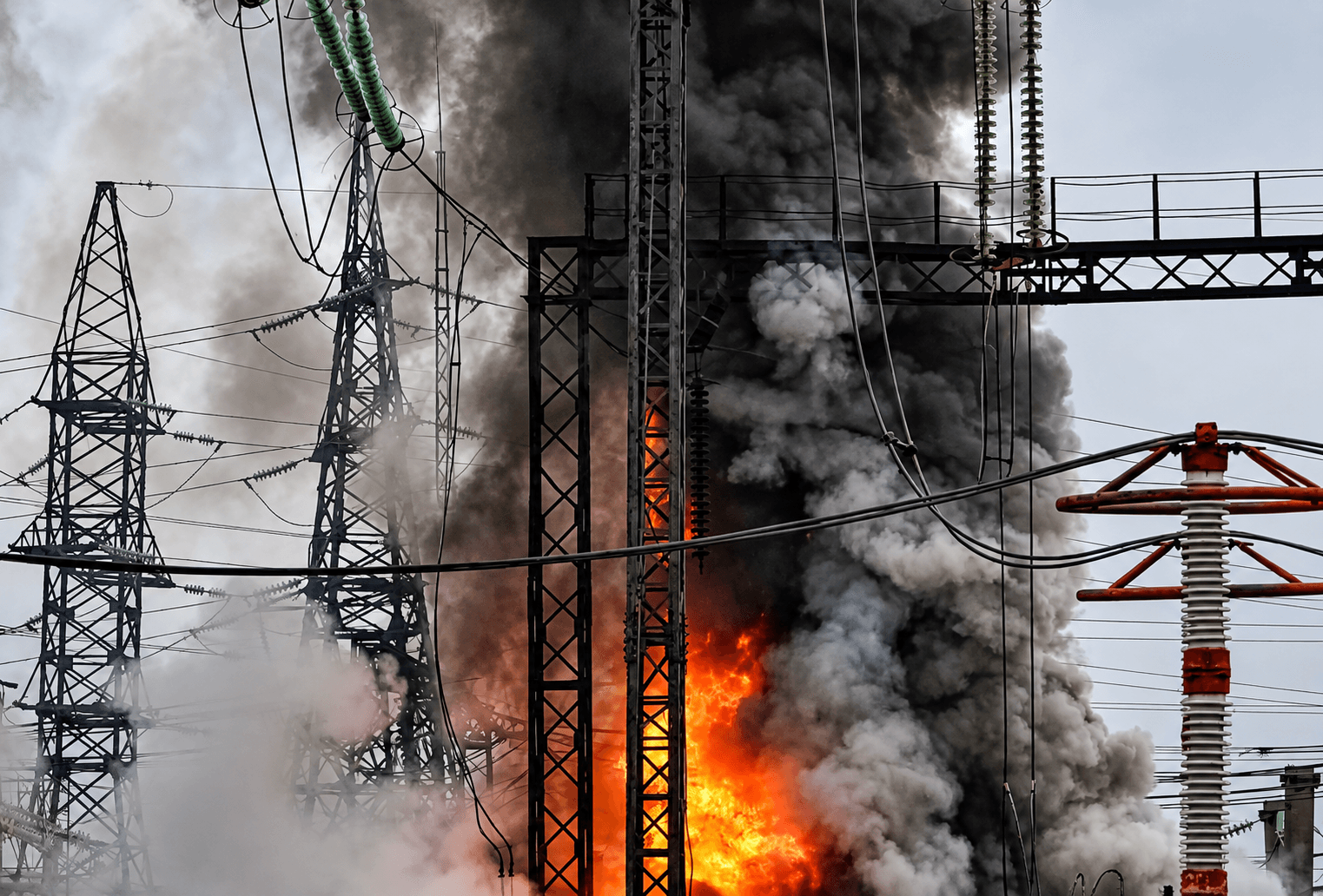
The overnight assault involved hundreds of drones as well as missiles, putting further strain on Ukraine’s air-defence systems and an energy network that has already suffered repeated attacks during the war.
Ukraine’s state grid operator introduced emergency power restrictions in Kyiv and three surrounding regions. It was the first time such emergency measures had been imposed in the capital since spring.
The latest strikes have renewed concerns that Russia is stepping up its campaign against Ukraine’s energy infrastructure ahead of the colder months.
WHAT HAPPENED?
Russian forces launched a major overnight aerial assault, with energy facilities among the infrastructure hit.
Ukraine’s Air Force said Russia launched 285 drones, including a significant number of faster, jet-powered models, along with a ballistic missile attack. Ukrainian forces said they intercepted 254 drones.
President Volodymyr Zelenskyy said critical infrastructure was damaged in five regions, with additional damage reported elsewhere.
The Kyiv region was among the hardest hit.
Damage to power facilities around the capital forced authorities to introduce emergency electricity restrictions and disrupted some essential services.
KYIV WAKES UP TO POWER CUTS
The effects of the attack were felt across Kyiv.
Some trams and trolleybuses stopped running after electricity supplies were disrupted. The city’s water utility also reported lower pressure in parts of the network.
Emergency power cuts were introduced as crews worked to stabilise the grid.
The air-raid alert lasted for more than 12 hours, while drone attacks continued into the daytime.
The disruption brought back memories of previous Russian campaigns against Ukraine’s energy infrastructure, particularly during winter.
SEVEN PEOPLE REPORTED KILLED
Ukrainian officials said seven people were killed across the country, including a child.
Zelenskyy said critical infrastructure had been attacked in five regions, while damage was reported in several others.
The deaths highlight the human cost of the latest wave of strikes.
Russia says its military targets are military or strategic facilities and denies deliberately targeting civilians.
ODESA ALSO HIT
The Black Sea port city of Odesa was also affected.
Ukrainian officials reported damage to infrastructure in the city and said one person was injured.
Odesa and the surrounding region have been repeatedly targeted during the war because of their strategic importance to Ukraine’s maritime trade and exports.
Russian authorities separately said their forces had struck an industrial complex and port infrastructure in the Odesa region.
Those claims could not immediately be independently verified.
RUSSIA’S ACCOUNT
Russia’s Defence Ministry said its forces targeted infrastructure connected to Ukraine’s military effort.
Moscow said the strikes hit:
Energy facilities in the Kyiv region
A communications centre in Kyiv
Industrial infrastructure in Odesa
Port infrastructure in Izmail
Other facilities linked to Ukraine’s military-industrial sector
Russian officials said the sites were connected to military production or logistics.
The individual Russian claims about specific targets could not all be independently verified.
UKRAINE’S ACCOUNT
Kyiv says Russia is deliberately putting pressure on Ukraine’s civilian population and energy system as winter draws closer.
Ukrainian Prime Minister Sergii Koretskyi described the assault as a major escalation against energy infrastructure.
Foreign Minister Andrii Sybiha accused Moscow of trying to use cold, darkness and disruption as weapons against the population.
The Ukrainian government has ordered inspections of backup power systems at critical facilities and urged authorities to speed up preparations for further attacks.
WHY THE POWER GRID MATTERS
Ukraine’s electricity network has been a major target throughout the war.
The grid supports almost every part of daily life, including:
Homes
Hospitals
Water systems
Public transport
Industry
Communications
Military logistics
Damage to power infrastructure can therefore have consequences far beyond the facility that is hit.
Even relatively limited damage can trigger wider disruptions if electricity supplies become unstable.
WINTER IS THE BIG CONCERN
The timing of the latest attack is significant.
Temperatures in Kyiv are expected to move toward freezing in the coming days, increasing the importance of reliable electricity and heating.
Ukraine has spent months preparing backup generators, protective measures and alternative energy capacity ahead of another difficult winter.
But repeated attacks could put those preparations under serious pressure.
The central challenge will be keeping essential services running while repairing damaged infrastructure and managing electricity demand.
THE NEW DRONE THREAT
Ukraine is also facing a changing aerial threat.
The Ukrainian Air Force said many of the drones used in the latest attack were faster and flew at higher altitudes than some earlier systems, making them more difficult to intercept.
That creates a difficult problem for Ukrainian air defences.
Kyiv must protect major cities and critical infrastructure while carefully managing a limited supply of interceptor missiles.
The growing size and changing capabilities of Russia’s drone campaign could become an important factor in Ukraine’s ability to defend its energy network.
MOLDOVA, ROMANIA AND POLAND ALERTED
The wider air campaign also prompted security alerts beyond Ukraine.
Moldova reported that three drones crossed its airspace.
NATO members Romania and Poland scrambled military aircraft during the broader alert, while temporary flight disruptions were reported at airports in Poland.
The incidents underline the wider risks created by large-scale Russian aerial operations close to NATO territory.
UKRAINE CONTINUES ITS COUNTERATTACKS
The Russian assault comes as Ukraine continues carrying out strikes against Russian targets.
Kyiv has increasingly focused on Russian oil infrastructure and other assets linked to Moscow’s war effort.
Zelenskyy also said Ukrainian forces had made battlefield gains during a counteroffensive in the east.
The result is an ongoing cycle of long-range attacks on both sides, even as diplomatic efforts to resolve the broader conflict remain uncertain.
THE BIGGER ENERGY WAR
The fight over Ukraine’s energy system is about much more than electricity.
Attacks on the network can affect:
Industrial production
Heating supplies
Water distribution
Transportation
Communications
Economic activity
Public confidence
Ukraine has responded by trying to decentralise electricity generation and strengthen backup systems, reducing its dependence on a small number of major facilities.
But sustained attacks could still make the coming winter difficult.
WHY THIS MATTERS
1. UKRAINE’S POWER GRID IS UNDER RENEWED PRESSURE
The latest strikes forced emergency electricity restrictions around Kyiv and neighbouring regions.
2. WINTER IS APPROACHING
Falling temperatures could make power and heating disruptions more dangerous for civilians.
3. RUSSIA IS USING LARGER DRONE WAVES
The scale and speed of the latest drone attack are creating additional challenges for Ukraine’s air defences.
4. CIVILIANS ARE BEARING THE COST
Ukrainian officials reported seven deaths, including a child.
5. THE CONFLICT HAS REGIONAL IMPLICATIONS
Airspace incidents involving neighbouring countries and NATO members show that the risks extend beyond Ukraine’s borders.
FACT CHECK METER
AWX FACT CHECK
FACT METER: 96%
STATUS: DEVELOPING
CONFIRMED
Russia launched a major overnight aerial attack against Ukraine.
Energy infrastructure around Kyiv was among the facilities hit.
Ukraine introduced emergency power restrictions in Kyiv and surrounding regions.
Ukrainian officials reported seven deaths, including a child.
Ukraine said 285 drones were launched and 254 were intercepted.
Odesa and other regions were also affected.
RUSSIAN CLAIM
Russia said it struck military-related energy, communications and industrial infrastructure.
Moscow said facilities in Kyiv, Odesa and Izmail were among the targets.
Individual Russian claims about specific targets have not all been independently verified.
STILL DEVELOPING
The full extent of damage to Ukraine’s energy network.
How long emergency power restrictions will remain in place.
The final casualty figures.
Whether Russia will launch additional attacks against the energy system in the coming days.
IMPORTANT DISTINCTION
THE ATTACK AND RESULTING POWER DISRUPTIONS ARE CONFIRMED, BUT INDIVIDUAL TARGET CLAIMS FROM THE RUSSIAN SIDE HAVE NOT ALL BEEN INDEPENDENTLY VERIFIED.
AWX VERDICT
MAJOR AIR ATTACK: CONFIRMED
ENERGY INFRASTRUCTURE HIT: CONFIRMED
EMERGENCY POWER CUTS: CONFIRMED
SEVEN DEATHS REPORTED: CONFIRMED BY UKRAINIAN AUTHORITIES
RUSSIAN TARGET CLAIMS: PARTLY UNVERIFIED
SITUATION: DEVELOPING
AWX FOCUS: THE WINTER ENERGY BATTLE
UKRAINE
Protect electricity, heating and water systems while making the most of limited air-defence resources.
RUSSIA
Continue long-range strikes against what Moscow describes as military and strategic infrastructure.
CIVILIANS
Prepare for possible disruptions to electricity, heating and other essential services as temperatures fall.
EUROPE
Watch for the humanitarian and security consequences of another winter of attacks.
THE KEY QUESTION
Can Ukraine keep its energy network operating if Russia maintains large-scale attacks throughout the winter?
WHAT TO WATCH NEXT
KYIV
Whether emergency electricity restrictions continue or spread to additional areas.
ENERGY INFRASTRUCTURE
How quickly damaged facilities can be repaired and restored.
AIR DEFENCE
Whether Ukraine receives additional air-defence systems and interceptor missiles.
RUSSIA
Whether Moscow launches another large-scale wave of strikes against energy facilities.
WINTER
How falling temperatures affect electricity and heating demand.
REGIONAL SECURITY
Whether drones or missiles again enter the airspace of neighbouring countries.
THE AWX BOTTOM LINE
Russia’s latest overnight assault has once again put Ukraine’s energy system at the centre of the war.
The strikes damaged power infrastructure around Kyiv and elsewhere, forced emergency electricity restrictions and left Ukrainian authorities preparing for another potentially difficult winter.
The attack also shows how quickly the aerial threat is evolving. Large waves of increasingly capable drones are putting additional pressure on Ukraine’s air-defence network and forcing difficult decisions about where limited resources should be deployed.
For Kyiv, the immediate priority is clear: keep electricity, heating, water and transport systems operating while repairs continue.
For Moscow, strikes against strategic infrastructure remain part of its broader military campaign.
For civilians, the stakes are much more basic:
Light. Heat. Water. Safety.
As winter approaches, Ukraine’s power grid is once again becoming a frontline.
ATTLAS WIRE | AWX WORLD NEWS
Real Stories. Lasting Impact.


Comments
No comments yet.