

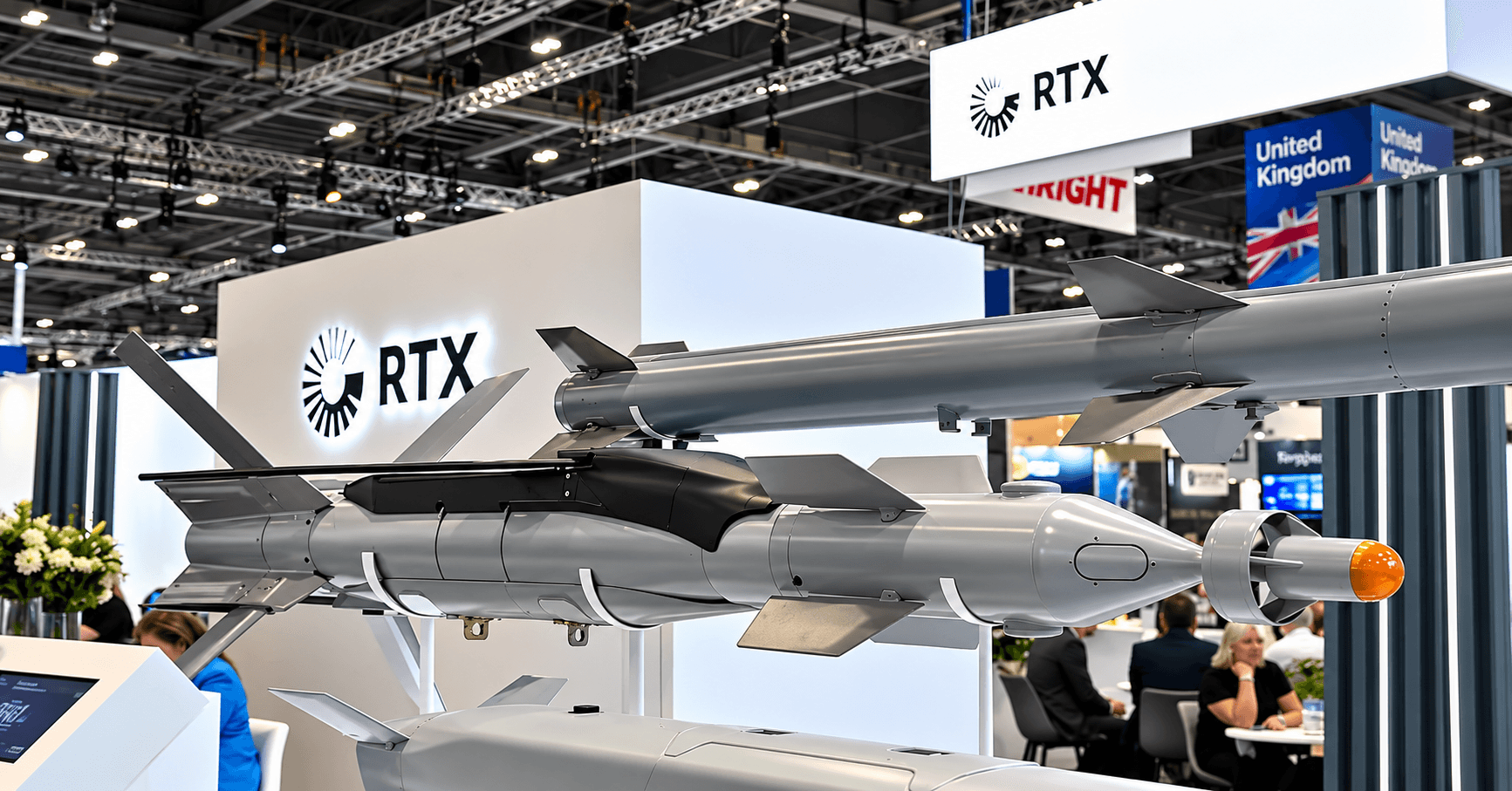
RTX's defence division, Raytheon, has secured a major US Navy contract worth up to $24.4 billion to produce Standard Missile-6 (SM-6) interceptors. The deal marks another significant step in Washington's effort to boost weapons manufacturing and replenish military stockpiles as security concerns grow worldwide.
Announced on October 1, the agreement runs for five years, with options for two additional years. It is intended to increase the Navy's supply of a versatile missile used for air defence, strikes against surface targets and ballistic missile defence.
For Raytheon, the contract provides a substantial order and greater visibility into future demand. For the Pentagon, it is part of a broader push to strengthen domestic weapons production and reduce the risk of shortages during a major military crisis.
However, awarding a contract is only the first step. Expanding production requires skilled workers, specialised components, reliable suppliers and sufficient manufacturing capacity. The industry must also have predictable funding to meet the military's delivery expectations.
The agreement is therefore both a major win for Raytheon and a test of how quickly the US defence industry can turn large procurement commitments into finished weapons.
WHAT HAPPENED?
The US Navy awarded Raytheon a multiyear contract valued at up to $24.4 billion for SM-6 interceptors.
The agreement is designed to increase production, improve delivery reliability and give the company a longer planning horizon. Rather than relying entirely on smaller annual orders, the multiyear arrangement allows Raytheon to plan investments in equipment, staffing and supplier relationships with greater certainty.
RTX has been investing in its manufacturing facilities, workforce and supply chain as demand for its missile systems grows. The company has also highlighted automation and other efforts to improve production efficiency.
The contract's structure matters because missile manufacturing cannot always be scaled up quickly. Suppliers need time to secure materials, install equipment and increase output, while manufacturers must maintain strict quality and testing standards.
It is also important to distinguish the contract's maximum value from money already spent. The $24.4 billion figure represents the potential value of the agreement, not a payment that has already been made in full.
Actual production and deliveries will depend on funding, contract implementation, supplier performance and Raytheon's ability to expand output.
WHY THE SM-6 MATTERS TO THE US NAVY
The Standard Missile-6 is one of the US Navy's more versatile missile systems, supporting several different operational roles.
It can engage airborne threats, strike surface targets and contribute to ballistic missile defence. This flexibility allows naval commanders to use the same missile family across a range of missions rather than relying on a weapon designed for only one purpose.
The SM-6 also operates as part of a wider defence network involving naval vessels, sensors, tracking systems and command infrastructure. Its effectiveness depends on how well these elements work together, not simply on the missile's individual capabilities.
Maintaining an adequate supply is particularly important during periods of heightened military activity. Precision-guided weapons can be consumed rapidly during sustained operations, while replacing them may take months or years.
Increasing production could give the Navy greater flexibility to maintain readiness and replenish its inventories. The key question is whether manufacturers can deliver the additional weapons quickly enough to meet operational needs.
A BROADER US EFFORT TO REBUILD MISSILE STOCKPILES
The SM-6 agreement comes amid a wider push by Washington to expand production across several important weapons programmes.
In late September, Raytheon secured a provisional multiyear agreement worth approximately $20.7 billion for Advanced Medium-Range Air-to-Air Missiles, known as AMRAAMs. The missiles are used in air-to-air combat and are also incorporated into certain ground-based air-defence systems.
Lockheed Martin also secured a separate $58.6 billion Patriot interceptor contract in July, adding to the series of major procurement commitments aimed at strengthening US missile supplies.
Taken together, these agreements point to a change in emphasis. Washington wants defence contractors to invest in sustained production capacity instead of relying primarily on urgent orders when military requirements increase.
The strategy reflects concerns about whether existing inventories can support ongoing operations, replace weapons already used in conflicts and preserve readiness for future contingencies.
For manufacturers, long-term contracts provide a clearer signal of expected demand. But they also raise expectations that additional funding will translate into more weapons and faster deliveries, rather than simply higher production costs.
THE PRODUCTION CHALLENGE: MONEY ALONE WON'T SOLVE IT
Increasing missile production involves much more than expanding a factory floor.
Manufacturers must secure specialised electronics, propulsion systems, guidance equipment and other components that may come from a limited number of suppliers. They also need trained workers and facilities capable of meeting demanding military specifications.
Expanding an established production line takes time. Equipment must be installed, employees trained and suppliers prepared to handle larger orders. Finished weapons must also pass testing and quality checks before they can be delivered.
Raytheon has said it is investing in its workforce, facilities and supplier network to address manufacturing constraints. Automation is another part of the company's effort to improve production efficiency.
Even with those investments, bottlenecks can emerge. A shortage of one specialised component may delay an entire production run, even if most of the other materials are available.
That is why the US defence industry's challenge extends beyond the major contractors. Smaller suppliers must also be able to increase output and deliver components on schedule.
The success of the SM-6 agreement will depend partly on whether the entire supply chain can keep pace with the Navy's requirements.
CONGRESS AND FUNDING WILL BE CRUCIAL
Another major question is whether government funding will keep up with Washington's ambitions for expanding weapons production.
Some multiyear procurement arrangements depend on congressional appropriations and funding commitments. If money arrives later than expected or falls short of planned requirements, contractors may be reluctant to make major investments in new facilities, equipment and long-lead components.
That could create a gap between the production capacity the government wants and the weapons manufacturers can realistically deliver.
Defence companies need confidence that orders will be backed by funding before committing substantial resources. Suppliers face the same challenge when deciding whether to expand their own operations.
For the government, the task is to provide enough certainty to encourage investment while maintaining oversight of public spending and keeping procurement costs under control.
The $24.4 billion agreement sends a strong demand signal. But the pace of production will depend on how the contract is funded and implemented over time.
DEFENCE SPENDING IS RISING, BUT THE TRADE-OFFS REMAIN
Governments are reassessing their military requirements as geopolitical tensions and security threats evolve.
Missile defence, precision weapons and air-defence systems have become important priorities for the United States and its allies. Recent conflicts have also demonstrated how quickly sophisticated munitions can be used and how difficult they can be to replace.
Higher production could improve military readiness, shorten the time needed to replenish stockpiles and support skilled manufacturing jobs. It may also encourage investment in advanced industrial capabilities.
But large defence contracts come with financial trade-offs. Governments must balance weapons procurement against personnel costs, training, maintenance, infrastructure and other military priorities.
The headline value of a contract also does not capture the full lifetime cost of a weapons system. Testing, maintenance, upgrades, storage and integration with other military platforms can add significantly to the overall expense.
For policymakers, the challenge is to ensure that higher spending produces measurable improvements in readiness rather than simply increasing the value of contracts awarded.
WHAT THE DEAL MEANS FOR RTX
The SM-6 agreement strengthens Raytheon's position as a major supplier of advanced naval weapons to the US military.
A multiyear contract can make future demand more predictable, helping the company plan production and coordinate with suppliers. It may also support investment in manufacturing capacity as the Navy seeks a larger and more reliable supply of interceptors.
For investors, however, a contract of this size does not automatically translate into an equivalent increase in profits.
The financial outcome will depend on the contract's terms, manufacturing expenses, delivery schedules, supplier costs and Raytheon's ability to meet its obligations. Expanding production can also require significant upfront spending before the benefits become visible in financial results.
The company will face pressure to increase output without compromising quality or allowing costs to rise faster than expected.
Ultimately, RTX's performance will be judged not only by the size of its new contracts but also by how efficiently it turns those orders into completed weapons and reliable deliveries.
WHY THIS MATTERS
For US military readiness: The agreement is intended to strengthen the supply of a naval interceptor used for several critical missions.
For defence manufacturers: Multiyear contracts provide greater demand visibility but require investment in workers, equipment and suppliers.
For taxpayers: The scale of the agreement makes cost control, delivery performance and public spending oversight important measures of success.
For US allies: Increased American missile production could strengthen wider defence readiness, although actual availability will depend on military priorities and procurement arrangements.
For global markets: Continued defence spending is supporting demand across the aerospace and defence sector, but individual companies' financial results will depend on execution, costs and contract terms.
FACT CHECK METER
FACT METER: REQUIRES INDEPENDENT VERIFICATION
STATUS: CONTRACT ANNOUNCEMENT REPORTED — PRODUCTION OUTCOMES STILL TO BE MEASURED
Reported details
Raytheon, an RTX business, secured an SM-6 interceptor contract reportedly valued at up to $24.4 billion.
The agreement was reportedly announced on October 1, 2026.
The contract is described as covering five years, with options for two additional years.
The SM-6 supports air defence, surface strikes and ballistic missile defence.
The award is part of a wider US effort to expand munitions manufacturing and replenish military inventories.
Important distinctions
The $24.4 billion figure represents the reported maximum contract value, not money already paid.
A contract award does not establish that the planned production increase has already been achieved.
Actual output will depend on funding, workforce availability, supplier performance and manufacturing capacity.
What remains to be established
The pace at which Raytheon can increase SM-6 production.
The availability and timing of funding for broader munitions expansion.
Whether the agreement leads to faster deliveries and measurable improvements in stockpile readiness.
AWX VERDICT: The reported contract represents a significant procurement commitment and a major opportunity for Raytheon. Its strategic value will ultimately depend on whether the US defence industry can convert long-term orders into timely deliveries while keeping costs and supply-chain constraints under control.
Editorial note: The contract value, announcement date, duration and related programme figures should be checked against official US Navy, Department of Defense and company announcements before publication. The percentage previously assigned to the fact-check meter has been removed because no documented verification methodology was provided.
WHAT TO WATCH NEXT
Production rates: Whether Raytheon can increase SM-6 output and meet the Navy's delivery expectations.
Congressional funding: Whether government appropriations support the wider expansion of US munitions manufacturing.
Supply-chain capacity: Whether component suppliers can handle higher demand without creating new bottlenecks.
Other missile programmes: Progress on AMRAAM, Patriot and other weapons contracts will help show how broadly US production capacity is expanding.
RTX financial results: Investors will be watching manufacturing costs, contract execution and the effect of additional defence orders on company performance.
Global security developments: Changes in military requirements could influence future procurement decisions and production priorities.
THE AWX BOTTOM LINE
RTX's reported $24.4 billion SM-6 agreement highlights the scale of America's effort to replenish weapons inventories and expand defence manufacturing. For Raytheon, it offers the prospect of substantial multiyear demand. For the US Navy, it is intended to strengthen supplies of a missile capable of performing several important missions.
But the real measure of success will be what happens after the contract is signed. Funding, manufacturing capacity and the availability of specialised components will determine how quickly additional weapons can reach the Navy.
Washington wants more missiles produced, and it wants them delivered faster.
The challenge now is turning that ambition into reliable production and measurable improvements in military readiness.
ATTLAS WIRE | AWX WORLD NEWS
Real Stories. Lasting Impact.


Comments
No comments yet.