

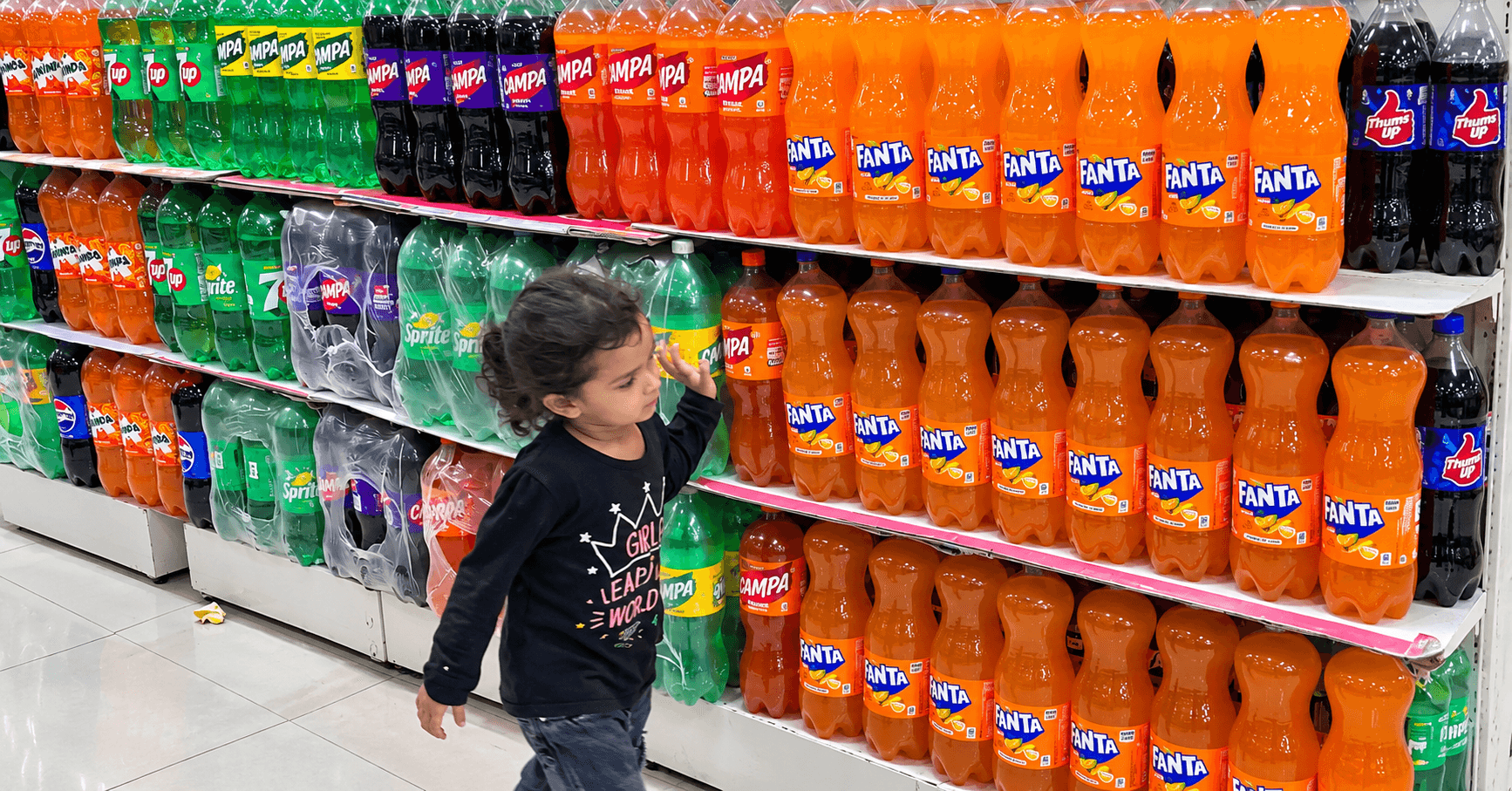
India's food-labelling debate is entering a crucial phase as the Supreme Court continues to examine the country's proposed Front-of-Pack Labelling (FoPL) system.
The Food Safety and Standards Authority of India (FSSAI) has proposed prominent red warning labels for packaged foods that cross specified limits for nutrients of concern, including added sugar, salt and saturated fat.
The idea is straightforward: give consumers an easy-to-see warning on the front of a package rather than expecting them to turn it over and work through a detailed nutrition table.
But food manufacturers and industry groups have questioned how those limits are determined, which products would carry warnings and whether the system could unfairly shape consumer perceptions.
The Supreme Court has sought greater clarity from the regulator on the science behind the thresholds, the design of the labels and how the system would eventually be implemented.
The debate has therefore become a clash between two competing priorities:
Protecting public health
versus
Protecting consumer choice and addressing industry concerns.
WHAT IS THE RED-LABEL PROPOSAL?
FSSAI has proposed a prominent red hexagonal warning on the front of qualifying packaged-food products.
Depending on the nutritional content, a product could carry warnings such as:
HIGH FAT
HIGH SUGAR
HIGH SALT
or, where applicable, HIGHLY SWEETENED BEVERAGE.
The goal is to make the information immediately visible.
Instead of turning the package around and interpreting a detailed nutritional table, shoppers would see a simple visual warning that could help them make a quicker decision.
The proposed thresholds are linked to the Dietary Guidelines for Indians, 2024, issued by ICMR-NIN.
WHY IS THE SUPREME COURT INVOLVED?
The issue stems from a public-interest case concerning nutrition information and consumer health.
The Supreme Court has repeatedly questioned the delay in introducing front-of-pack warnings and has urged the Centre and FSSAI to move the process forward.
In August, the court raised concerns about protecting consumers, particularly children, from unhealthy food environments.
It has since sought more information from FSSAI on several aspects of the proposal, including:
The design of the warning
Its colour and shape
Where it would appear on packaging
Nutritional thresholds
The scientific basis for those thresholds
The implementation timeline
How different food categories would be treated
In other words, the court is no longer looking only at whether warning labels should exist.
The bigger question is now how the system should actually work.
THE TWO-PHASE CONTROVERSY
One of the biggest disagreements has involved how the proposed system would be introduced.
FSSAI initially considered a two-phase approach.
During the first phase, warnings would apply to products that were high in two or more specified nutrients.
A later phase would expand the system to products that exceeded the limit for even one nutrient.
Health advocates criticised that approach, arguing that a product should not escape a warning simply because it exceeds the recommended level for only one nutrient.
Following Supreme Court scrutiny, the Centre indicated that it was open to warnings for products exceeding the threshold for a single nutrient.
FSSAI has also indicated that it is willing to move toward a single-phase implementation.
However, the final framework is still being worked out through the regulatory and judicial process.
WHY HEALTH EXPERTS SUPPORT THE LABELS
Supporters of front-of-pack warnings say consumers need clear information at the moment they make a purchasing decision.
Packaged foods can contain substantial amounts of sugar, salt or saturated fat, while nutritional information is often presented in a format that requires consumers to stop, read and interpret the numbers.
A prominent warning could make that process much easier.
Supporters believe the system could:
Improve nutritional awareness
Help shoppers compare products
Encourage healthier purchasing decisions
Push manufacturers to reformulate products
Make it easier for children and families to understand basic nutritional risks
The Supreme Court has also highlighted concerns about the links between unhealthy food consumption and conditions including obesity, diabetes, heart disease and hypertension.
WHY THE FOOD INDUSTRY IS CONCERNED
For food manufacturers, the details of the warning system matter.
A large red warning on the front of a package could affect how consumers perceive a product before they consider its ingredients, price, portion size or other nutritional information.
Industry concerns include:
How thresholds are calculated
Per-100-gram versus per-serving measurements
How traditional foods are treated
Product categorisation
Possible exemptions
Consumer perception
Potential commercial losses
Manufacturers have also questioned whether measuring nutrients on a per-100-gram basis accurately reflects how people actually consume certain foods.
Industry representatives have warned that the system could have a significant effect on traditional foods as well as commercially manufactured products.
THE PER-SERVING VS PER-100-GRAM DEBATE
This technical issue sits at the centre of the wider dispute.
The nutritional profile of a product can look very different depending on whether it is assessed:
per 100 grams
or
per serving.
Industry groups have argued that consumers do not necessarily eat 100 grams of every product in one sitting, making serving size an important consideration.
Public-health advocates favour standardised measurements because they make it easier to compare different products on a common basis.
The decision could ultimately determine which products receive warnings and which do not.
WHAT ABOUT TRADITIONAL FOODS?
Another sensitive part of the debate involves foods such as jaggery and honey, as well as other single-ingredient or traditional products that may naturally contain high levels of sugar or fat.
Critics have questioned whether these products should be treated in exactly the same way as heavily processed packaged foods.
FSSAI's proposed framework has considered exemptions for certain inherently high-fat or high-sugar single-ingredient products.
That raises a difficult policy question:
Should the warning system look only at the nutrient level, or should it also consider what the food is and how it is traditionally consumed?
THE CHILDREN'S HEALTH QUESTION
Children have become one of the most important parts of the debate.
The Supreme Court has raised concerns about children's exposure to unhealthy food products and the need to improve nutritional awareness from an early age.
The court has also asked about incorporating nutritional education into school education.
Supporters of front-of-pack warnings argue that children and families should not need advanced knowledge of nutrition to understand a basic health warning.
A simple red symbol is designed to communicate that message almost instantly.
Critics, however, argue that the system must remain scientifically sound and should not reduce complicated nutritional questions to an overly simple warning.
COULD WARNING LABELS CHANGE THE FOOD INDUSTRY?
They could.
If consumers begin avoiding products carrying prominent warnings, manufacturers may have a stronger reason to reformulate their products.
That could involve:
Reducing added sugar
Cutting salt
Reducing saturated fat
Adjusting portion sizes
Developing alternative products
Changing recipes
For public-health advocates, this is one of the strongest arguments in favour of the system.
The label would not simply tell consumers what is inside a package.
It could also influence what manufacturers put inside future products.
THE INDUSTRY'S BIGGER FEAR
For manufacturers, the issue goes beyond the cost of changing packaging.
A prominent warning could become part of the way consumers identify a product.
A large red symbol may create a negative impression before shoppers consider other factors such as:
Price
Taste
Ingredients
Portion size
Nutritional benefits
Brand reputation
That makes the final design particularly important.
A system designed to inform consumers could also have a significant effect on competition between brands.
WHY THIS MATTERS
1. CONSUMERS COULD GET A CLEARER SIGNAL
Front-of-pack warnings could make it easier to identify products that exceed specified nutrient thresholds.
2. MANUFACTURERS COULD FACE GREATER PRESSURE TO REFORMULATE
Products carrying warnings could encourage companies to reduce sugar, salt or saturated fat.
3. THE THRESHOLDS WILL MATTER
Small changes in nutritional criteria could determine whether a product receives a warning.
4. TRADITIONAL FOODS REMAIN PART OF THE DEBATE
The treatment of naturally high-sugar or high-fat products could become an important policy question.
5. THE COURT IS SHAPING THE TIMELINE
Continued Supreme Court scrutiny has pushed FSSAI and the Centre to provide greater clarity about the proposed system.
FACT CHECK METER
AWX FACT CHECK
FACT METER: 90%
STATUS: DEVELOPING
CONFIRMED
FSSAI has proposed front-of-pack warning labels for packaged foods that are high in specified nutrients of concern.
The proposed warning uses a prominent red hexagonal design.
The proposal covers nutrients including added sugar, salt and saturated fat.
The Supreme Court has questioned FSSAI and the Centre about delays and sought details about the proposed system.
The court has sought clarity on nutritional thresholds and the scientific basis for identifying products as high in particular nutrients.
The Centre has indicated that it is open to warnings where a product exceeds the threshold for even one nutrient of concern.
STILL DEVELOPING
The final regulatory wording and thresholds
The precise implementation timeline
Which food categories will receive exemptions
Whether the final system will use a single-phase or phased approach
How the rules will apply to traditional foods and different serving sizes
INDUSTRY CONCERN
Food manufacturers argue that strict thresholds and prominent warnings could affect consumer perception and sales, particularly when products are assessed using standardised nutrient benchmarks.
HEALTH ADVOCATES' POSITION
Health advocates argue that prominent warnings can improve consumer awareness, encourage healthier choices and give manufacturers stronger incentives to reformulate products.
AWX VERDICT
WARNING-LABEL PROPOSAL: CONFIRMED
SUPREME COURT SCRUTINY: CONFIRMED
FINAL RULES: DEVELOPING
INDUSTRY IMPACT: UNCERTAIN
HEALTH IMPACT: TO BE ASSESSED
AWX FOCUS: HEALTH PROTECTION VS. INDUSTRY CONCERNS
PUBLIC-HEALTH CASE
Consumers need clear information when making food choices.
Warnings could make products high in certain nutrients easier to identify, particularly for shoppers who do not have time to study detailed nutrition tables.
Children and families could also benefit from simpler nutritional signals.
At the same time, manufacturers could have a stronger incentive to reformulate products.
INDUSTRY CASE
Nutritional thresholds need to be scientifically justified.
Serving sizes and real-world consumption patterns should be considered.
Traditional and single-ingredient foods may require special treatment.
And prominent warnings could influence how consumers perceive a product beyond its complete nutritional profile.
THE CENTRAL QUESTION
Can India create a warning system that is strong enough to protect public health without unfairly categorising or penalising food products?
That is the policy challenge now facing regulators, the food industry and the courts.
WHAT TO WATCH NEXT
SUPREME COURT
Whether the court issues further directions on the design, scope or timeline of the warning system.
FSSAI
Whether the regulator finalises the thresholds and implementation framework.
FOOD MANUFACTURERS
Whether companies begin reformulating products in anticipation of the new rules.
CONSUMER GROUPS
Whether health advocates continue pushing for warnings based on a single nutrient rather than multiple nutrients.
TRADITIONAL-FOOD SECTOR
Whether exemptions and the treatment of products such as jaggery and honey become a larger part of the debate.
PACKAGING INDUSTRY
How quickly manufacturers could transition to new labels once the rules are finalised.
THE AWX BOTTOM LINE
India's red-label debate is about much more than the colour of a food package.
It is really a debate about how much information consumers should receive before making a purchase — and how much pressure regulators should place on food companies to provide it.
Health advocates want warnings that consumers cannot easily overlook.
The food industry wants a system built around clear science, fair thresholds and appropriate treatment of different products.
Meanwhile, the Supreme Court has pushed the issue into sharper focus as FSSAI continues to refine the proposed framework.
The final system could influence not only what shoppers see on supermarket shelves, but also how manufacturers develop and reformulate packaged foods in the years ahead.
For now, the central question remains unanswered:
How strong should India's food warnings be — and how much could they change what the country eats?
ATTLAS WIRE | AWX WORLD NEWS
Real Stories. Lasting Impact.




Comments
No comments yet.