

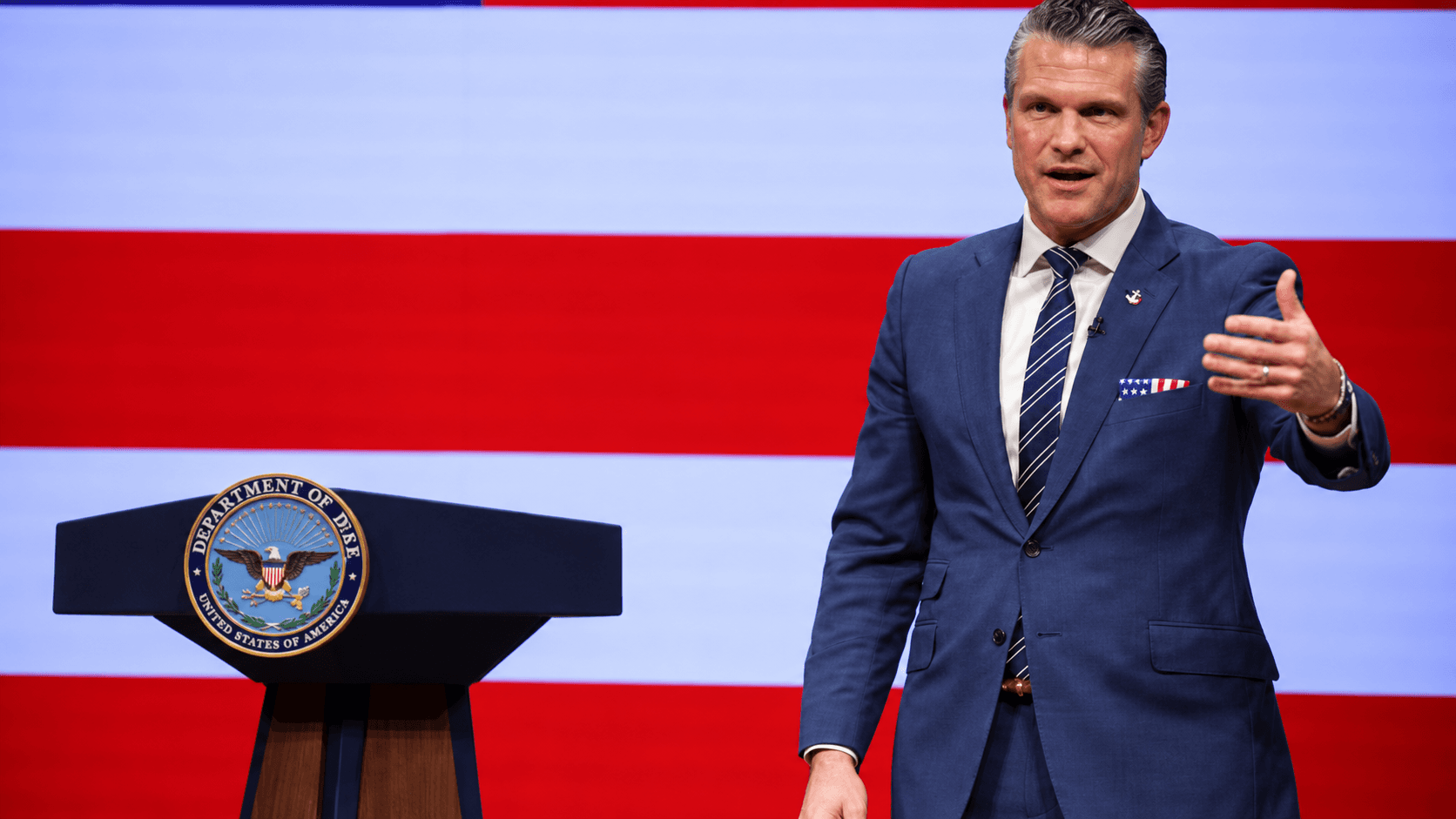
The proposed cuts would represent one of the more significant changes to the Pentagon's senior leadership structure in recent years.
Hegseth has argued that the military needs fewer layers of command and a greater focus on operational effectiveness. At the same time, the Pentagon is putting more resources and attention into autonomous systems that could play a larger role in future conflicts.
WHAT HAPPENED?
Defence Secretary Pete Hegseth announced plans to reduce the number of four-star and other senior general and flag officers by roughly 20%.
The proposal forms part of a wider effort to reshape the Pentagon's senior leadership structure and reduce what the administration sees as unnecessary layers of bureaucracy.
The Pentagon is also moving to expand the military's use of artificial intelligence, autonomous systems and robotic platforms.
The two initiatives point to a broader effort to make the military's command structure leaner while accelerating the adoption of new battlefield technologies.
WHY CUT GENERALS AND ADMIRALS?
The Pentagon has faced growing pressure to operate more efficiently while preparing for a security environment that is changing rapidly.
Hegseth's argument is that a smaller senior leadership structure could mean:
Fewer layers of bureaucracy
Faster decision-making
Clearer lines of responsibility
Greater emphasis on combat readiness
Supporters of the plan say reducing senior positions could make the military more agile.
Critics, however, could raise concerns about whether cutting experienced commanders might reduce institutional knowledge or place additional demands on the officers who remain.
WHAT DOES THE 20% REDUCTION MEAN?
The proposed reduction applies to the Pentagon's senior general and flag-officer ranks.
The final number of positions affected will depend on how the restructuring is carried out across the military's various branches and commands.
The plan is not simply about removing officers. It also involves reorganising commands and examining how responsibilities are distributed.
That distinction is important.
A 20% reduction in senior officers does not mean a 20% reduction in the overall size of the US military.
The proposal is primarily focused on senior leadership and the command structure.
A NEW FOCUS ON AUTONOMOUS WARFARE
Another major part of the Pentagon's strategy is its increased emphasis on autonomous and robotic military systems.
Modern military operations are increasingly incorporating:
Artificial intelligence
Autonomous drones
Uncrewed aircraft
Robotic ground vehicles
Maritime drones
Automated targeting systems
Advanced battlefield data networks
The US is competing with other major military powers to develop and deploy these technologies at scale.
The new command structure is expected to help coordinate efforts surrounding autonomous and robotic capabilities.
WHY AUTONOMOUS SYSTEMS MATTER
Autonomous systems could significantly change how military operations are conducted.
They can potentially operate in large numbers, collect information and carry out certain missions without putting human personnel directly in harm's way.
Potential applications include:
Surveillance
Reconnaissance
Electronic warfare
Logistics
Target identification
Maritime operations
Air defence
Combat support
Much of the technology is still developing, but military planners increasingly regard autonomous systems as an important part of future warfare.
DRONES ARE CHANGING THE BATTLEFIELD
Recent conflicts have demonstrated how drones can influence military operations.
Small unmanned systems can provide surveillance and battlefield intelligence at relatively low cost, while larger platforms can carry sophisticated sensors, communications equipment and weapons.
The ability to manufacture and deploy autonomous systems in large numbers could therefore become an important strategic advantage.
The Pentagon's approach reflects a broader shift toward combining traditional military platforms with cheaper, software-driven and increasingly autonomous systems.
THE AI FACTOR
Artificial intelligence is becoming an increasingly important part of the global military technology race.
AI can help with:
Processing large amounts of battlefield information
Identifying patterns
Analysing intelligence
Coordinating autonomous systems
Improving logistics
Supporting military decision-making
But the technology also raises difficult questions about human oversight, accountability and responsibility when automated systems are involved in military operations.
Those questions are likely to become more pressing as autonomous technology moves from testing into wider operational use.
LEADERSHIP VS TECHNOLOGY
The Pentagon's plans highlight an interesting contrast.
The military is looking to reduce the number of senior commanders while simultaneously building new capabilities around artificial intelligence, robotics and autonomous systems.
The broader strategy appears to be aimed at creating a military that is:
Lean at the top.
Faster in decision-making.
More technologically advanced.
More capable of deploying autonomous systems.
Whether that approach improves military effectiveness will depend heavily on how the restructuring is implemented.
IMPACT ON THE MILITARY SERVICES
The changes could affect the US Army, Navy, Air Force, Marine Corps and other military organisations.
Senior command positions are closely linked to force structure, operational planning and responsibilities across different regions.
A reduction in leadership positions could therefore lead to changes involving:
Command headquarters
Regional responsibilities
Promotion structures
Operational planning
Military career paths
Coordination between the services
The Pentagon will also have to manage the transition carefully to avoid confusion or gaps in command.
A SHIFT IN MILITARY CULTURE
The announcement reflects a wider debate over how the US military should be organised.
The Pentagon has developed a large and complex command structure over decades. Hegseth's approach places greater emphasis on cutting bureaucracy and directing resources toward operational priorities.
If implemented fully, the changes could contribute to a cultural shift toward faster decision-making, technological adaptability and a stronger focus on battlefield effectiveness.
GLOBAL IMPLICATIONS
Changes to US defence policy are closely watched by both allies and competitors.
China, Russia and other major military powers are also investing heavily in drones, artificial intelligence and autonomous systems.
The Pentagon's plans could therefore contribute to a broader international race to develop military robotics and AI.
Future military competition may depend not only on the number of ships, aircraft and armoured vehicles a country possesses, but also on its ability to develop and deploy software-driven systems quickly and at scale.
THE HUMAN ROLE IN FUTURE WARFARE
Greater use of autonomous systems does not remove humans from the military decision-making process.
Instead, it raises a more difficult question: how much authority should ultimately be given to machines?
Autonomous systems can potentially navigate environments, identify objects and respond rapidly to changing conditions.
But when lethal force is involved, questions of human control, accountability and international law become far more complicated.
The Pentagon's expansion of autonomous capabilities is therefore likely to fuel continued debate over where human decision-making should remain essential.
WHY THIS MATTERS
1. THE PENTAGON IS REDUCING ITS SENIOR COMMAND STRUCTURE
A proposed 20% reduction would significantly change the way senior military leadership is organised.
2. AUTONOMOUS WARFARE IS BECOMING A HIGHER PRIORITY
The new focus on robotics and autonomous systems shows how quickly these technologies are moving up the US defence agenda.
3. MILITARY TECHNOLOGY IS CHANGING
Drones, AI and autonomous platforms are becoming increasingly important in modern conflicts.
4. MILITARY CAREERS COULD BE AFFECTED
Fewer senior positions could influence promotion opportunities and traditional command pathways.
5. THE US IS PREPARING FOR A DIFFERENT KIND OF WAR
The Pentagon increasingly views software, AI and autonomous systems as important elements of future military power.
FACT CHECK METER
AWX FACT CHECK
FACT METER: 93%
STATUS: DEVELOPING DEFENCE REFORM
CONFIRMED CORE
US Defence Secretary Pete Hegseth has announced a significant reduction in senior military leadership.
The proposed reduction is approximately 20%.
The Pentagon is seeking a leaner senior command structure.
Autonomous and robotic military capabilities are receiving increased attention.
AI and unmanned systems are becoming important priorities in US defence planning.
DEVELOPING
The final number of positions that will be eliminated.
Which individual commands will be affected.
The precise structure and responsibilities of the new autonomous-systems command.
The timetable for implementing the changes.
The long-term effect on military readiness.
IMPORTANT DISTINCTION
A 20% CUT IN SENIOR OFFICERS DOES NOT MEAN A 20% CUT IN THE US MILITARY.
The proposal focuses on senior general and flag officers and the command structure. It does not represent an equivalent reduction in the overall number of US military personnel.
AWX VERDICT
SENIOR COMMAND CUT: ANNOUNCED
REDUCTION TARGET: 20%
AUTONOMOUS SYSTEMS: EXPANDING FOCUS
AI ROLE: GROWING
IMPLEMENTATION: DEVELOPING
AWX FOCUS: THE NEW US MILITARY MODEL
OLD MODEL
Large command structures, multiple leadership layers and heavy reliance on traditional military platforms.
EMERGING MODEL
Lean command structures combined with AI, autonomous systems and robotic platforms.
THE STRATEGIC GOAL
Faster decisions, stronger technological capabilities and greater battlefield adaptability.
THE BIG QUESTION
Can the Pentagon reduce bureaucracy without losing the experience and command capacity needed to manage a global military?
WHAT TO WATCH NEXT
Pentagon
Details on which senior commands and positions will be eliminated.
Military services
How the Army, Navy, Air Force and Marine Corps respond to the restructuring.
Autonomous command
Further details about its mission, budget and operational responsibilities.
Congress
Whether lawmakers challenge, modify or approve the proposed changes.
Technology
New investments in artificial intelligence, drones and robotic systems.
Allies
How NATO and other US partners respond to changes in American military planning.
THE AWX BOTTOM LINE
The Pentagon's plan to reduce senior military leadership by around 20% marks a significant attempt to reshape how the US military is organised.
But the move is about more than cutting positions.
As Washington looks to reduce layers of senior command, it is also investing heavily in technologies that could change how wars are fought.
AI.
Autonomous systems.
Robotics.
Unmanned platforms.
The direction is clear: the Pentagon wants a military that is less bureaucratic, faster to respond and more technologically driven.
The challenge will be finding the right balance between efficiency and experience.
And as autonomous systems become more capable, one question will become increasingly difficult to avoid:
How much of tomorrow's battlefield should be controlled by humans — and how much by machines?
ATTLAS WIRE | AWX WORLD NEWS
Real Stories. Lasting Impact.


Comments
No comments yet.