

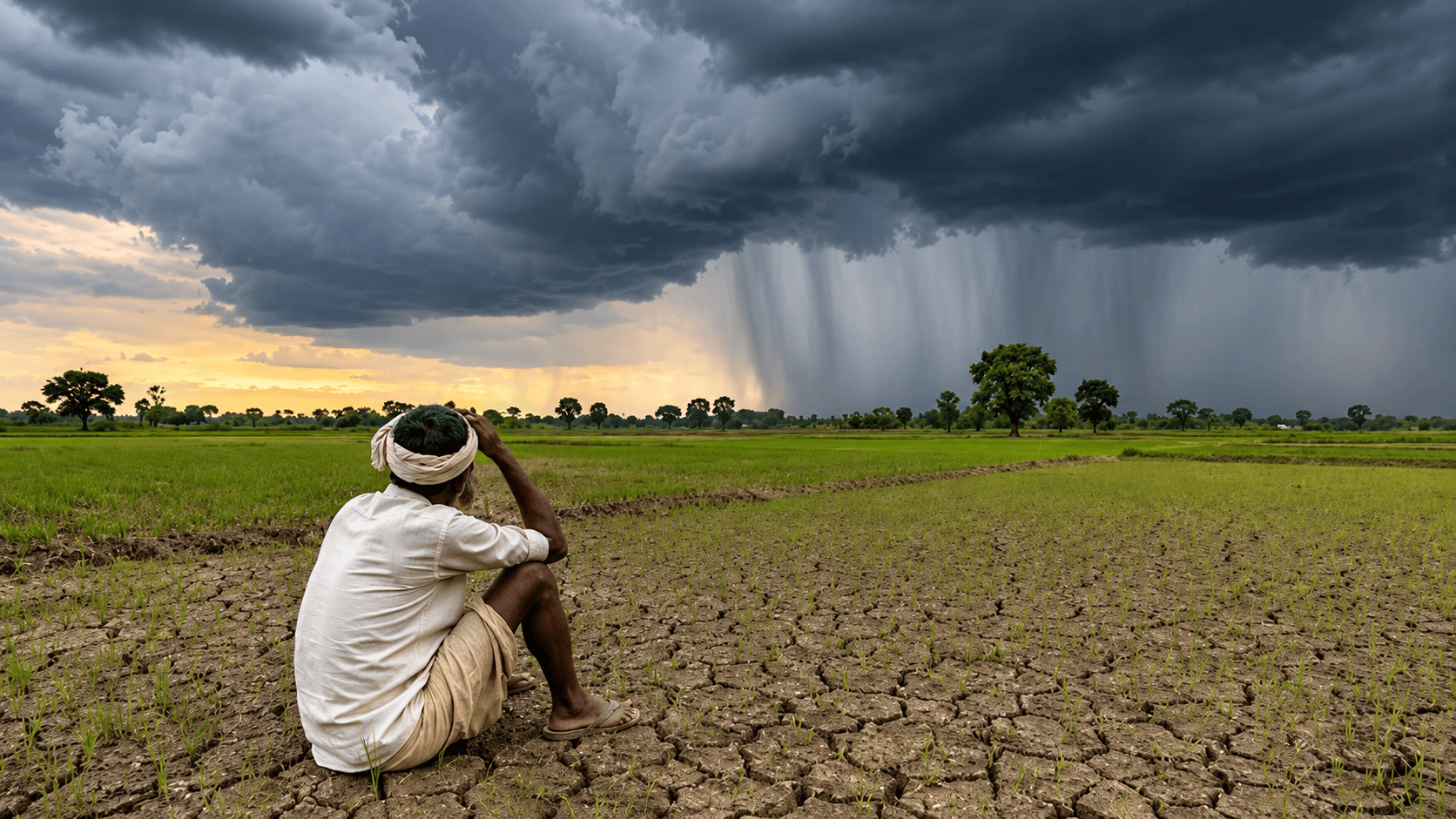
India recorded around 759.4 mm of rainfall between June and September, compared with a long-period average of approximately 868.6 mm.
But the national figure masks a sharp regional divide.
Eastern and northeastern India saw some of the largest rainfall shortfalls, while southern peninsular India also recorded a substantial deficit. Central India, meanwhile, remained comparatively close to normal.
That uneven distribution means the impact of the weak monsoon will vary significantly across the country.
WHAT HAPPENED?
The four-month southwest monsoon ended with India receiving roughly 87% of its long-period average rainfall, putting the season in the deficient category.
The monsoon got off to a particularly weak start. June rainfall was around 36% below normal, creating a sizeable deficit early in the season.
July offered some relief, with rainfall slightly above the long-period average. But that improvement did not last. Rainfall weakened again in August and September.
Late-season rain helped reduce the overall shortfall, but not enough to bring the national total back to normal.
THE NUMBERS BEHIND THE DEFICIT
Normal rainfall: Approximately 868.6 mm
2026 rainfall: Approximately 759.4 mm
National deficit: 12.6%
Share of LPA received: About 87%
Ranking since 2001: Fourth-lowest
Weakest since: 2015
The figures place 2026 among India's more significant deficient monsoon seasons of the 21st century.
EAST AND NORTHEAST HIT HARDEST
Eastern and northeastern India experienced some of the country's steepest rainfall deficits.
The region recorded rainfall around 25.6% below normal, with several areas facing persistent shortages during the season.
Arunachal Pradesh, Assam and Meghalaya were among the areas that recorded particularly large deficits.
The regional picture is important because a national rainfall figure can conceal very different conditions on the ground. A 12.6% national deficit does not mean every state experienced the same level of rainfall shortage.
SOUTH PENINSULAR INDIA ALSO STRUGGLED
Southern peninsular India recorded a rainfall deficit of roughly 24%.
The shortfall could put additional pressure on rain-dependent agriculture and local water supplies, particularly in areas where irrigation resources are limited.
The region's deficit also contributed significantly to India's overall monsoon shortfall.
CENTRAL INDIA PROVIDES SOME RELIEF
The monsoon was not uniformly weak across the country.
Central India remained broadly close to normal, helping limit the size of the national deficit.
That contrast is one of the clearest features of the 2026 monsoon: rainfall varied considerably from one region to another.
Some areas experienced extended dry spells, while others received significant rain from low-pressure systems during parts of the season.
WHY DID THE MONSOON UNDERPERFORM?
The IMD has linked the weak season partly to developing El Niño conditions, which can be associated with weaker monsoon rainfall over India.
However, the weather pattern was far from uniform.
The season also saw a relatively high number of days influenced by low-pressure systems. These systems brought useful rainfall to some parts of the country and helped reduce what could otherwise have been a larger national deficit.
JUNE SET THE TONE
The monsoon's weak beginning played a major role in the final outcome.
June rainfall was approximately 36% below normal, leaving a large deficit that proved difficult to erase.
July brought some improvement, but rainfall weakened again in August before remaining below normal in September.
By the end of the season, the country had recovered some of the lost rainfall, but not enough to return to normal levels.
WHAT DOES THIS MEAN FOR FARMING?
The monsoon remains critical to India's agricultural economy.
Rainfall influences:
Crop sowing
Soil moisture
Irrigation demand
Reservoir levels
Groundwater recharge
Food production
Rural incomes
A deficient national monsoon does not automatically mean that India's agricultural sector will face a crisis.
The actual impact depends on where rainfall was poor, the availability of irrigation and how much water is stored in reservoirs and groundwater systems.
For heavily rain-dependent farming areas, however, prolonged rainfall shortages could create additional pressure heading into the next agricultural cycle.
RABI CROPS NOW IN FOCUS
With the southwest monsoon over, attention is shifting toward the rabi sowing season.
Farmers growing winter crops rely partly on soil moisture accumulated during the monsoon. Lower rainfall in some regions could therefore affect sowing conditions.
The impact is likely to differ by crop and location.
Areas with reliable irrigation and healthy reservoir supplies may be better positioned than regions that depend heavily on rainfall.
WATER RESOURCES UNDER PRESSURE
The monsoon also determines how much water flows into reservoirs, rivers and groundwater systems.
A rainfall deficit can put additional pressure on stored water, particularly if the months ahead remain relatively dry.
For cities and agricultural regions already facing high water demand, that could become an important concern.
The consequences of a weak monsoon are not always immediate. Water stress can become more visible later in the dry season as stored supplies are gradually used.
FOOD PRICES COULD BECOME A WATCHPOINT
Agricultural output is one of several factors that influence food prices.
If rainfall shortages reduce production of particular crops, local supplies could tighten and prices could come under pressure.
But the broader food-price outlook will also depend on:
Crop production
Government stocks
Irrigation availability
Commodity imports
Global prices
Winter rainfall
The monsoon deficit alone, therefore, is not enough to predict India's future food inflation.
OCTOBER COULD REMAIN IMPORTANT
The end of the southwest monsoon does not mean rainfall will suddenly stop across the country.
The IMD expects October rainfall to remain below normal overall, although conditions during the October-December period are likely to vary significantly from region to region.
That transition will be important for agriculture and water resources, particularly in areas that ended the monsoon with significant moisture deficits.
WHY THIS MATTERS
1. INDIA ENDED THE MONSOON WITH A SIGNIFICANT DEFICIT
National rainfall was 12.6% below the long-period average.
2. IT WAS ONE OF THE WEAKEST MONSOONS OF THE CENTURY
The 2026 season ranked as the fourth-lowest since 2001 and the weakest since 2015.
3. THE IMPACT IS UNEVEN
Eastern and northeastern India and southern peninsular India recorded some of the largest deficits.
4. RABI SOWING IS THE NEXT BIG TEST
Soil moisture, irrigation and water availability will be closely watched as farmers prepare for winter crops.
5. WEATHER RISKS HAVE NOT DISAPPEARED
The transition into the post-monsoon period could still bring significant regional differences in rainfall and temperature.
FACT CHECK METER
AWX FACT CHECK
FACT METER: 96%
STATUS: CONFIRMED / DEVELOPING IMPACTS
CONFIRMED
India's 2026 southwest monsoon ended with a 12.6% rainfall deficit.
The country received approximately 759.4 mm of rainfall against a normal of about 868.6 mm.
It was the fourth-lowest monsoon rainfall since 2001.
It was the weakest monsoon since 2015.
East and northeast India recorded a deficit of about 25.6%.
Southern peninsular India recorded a deficit of roughly 24%.
Central India remained comparatively close to normal.
STILL DEVELOPING
The full impact on rabi crop production.
Regional reservoir and groundwater conditions.
Possible effects on food prices.
Whether post-monsoon rainfall will provide meaningful relief.
IMPORTANT DISTINCTION
A 12.6% NATIONAL DEFICIT DOES NOT MEAN EVERY PART OF INDIA RECEIVED 12.6% LESS RAIN.
Rainfall varied sharply across regions, with some areas recording major deficits while others remained close to normal.
AWX VERDICT
MONSOON DEFICIT: CONFIRMED
RAINFALL: 12.6% BELOW NORMAL
SEASONAL RANK: FOURTH-LOWEST SINCE 2001
AGRICULTURAL IMPACT: DEVELOPING
WATER IMPACT: REGIONALLY UNEVEN
OUTLOOK: WATCHING POST-MONSOON RAINFALL
AWX FOCUS: FROM MONSOON TO RABI
FARMERS
Soil moisture, irrigation availability and local weather conditions will be important considerations as farmers prepare for rabi sowing.
GOVERNMENT
Authorities will need to keep a close watch on reservoir levels, agricultural output and food supplies.
MARKETS
Investors will be watching agricultural production, rural demand and any signs of food-price pressure.
HOUSEHOLDS
Food prices will remain an important indicator if rainfall shortages translate into lower production of specific crops.
WEATHER AGENCIES
The next focus will be post-monsoon rainfall and temperature patterns across the country.
WHAT TO WATCH NEXT
Agriculture
Whether the rainfall deficit affects rabi sowing and crop conditions.
Reservoirs
How much water remains available following the weak monsoon.
Food prices
Whether lower rainfall affects agricultural supplies and market prices.
October weather
Whether post-monsoon rainfall provides relief to deficit-hit regions.
El Niño
How evolving climate conditions influence India's weather in the coming months.
Regional conditions
Whether eastern, northeastern and southern regions continue to experience moisture stress.
THE AWX BOTTOM LINE
India's 2026 southwest monsoon ended 12.6% below normal, making it one of the country's weakest monsoon seasons in recent decades.
But the national figure tells only part of the story.
The more important issue is where the rainfall was missing.
Eastern and northeastern India and southern peninsular regions recorded substantial deficits, while parts of central India remained closer to normal.
Now the focus shifts beyond the monsoon.
Farmers are preparing for the rabi season. Governments will monitor reservoirs and water supplies. Markets will watch agricultural production and food prices. Meteorologists will track the country's post-monsoon weather.
The rainfall deficit is confirmed.
Its full agricultural and economic impact is still unfolding.
ATTLAS WIRE | AWX WORLD NEWS
Real Stories. Lasting Impact.




Comments
No comments yet.