

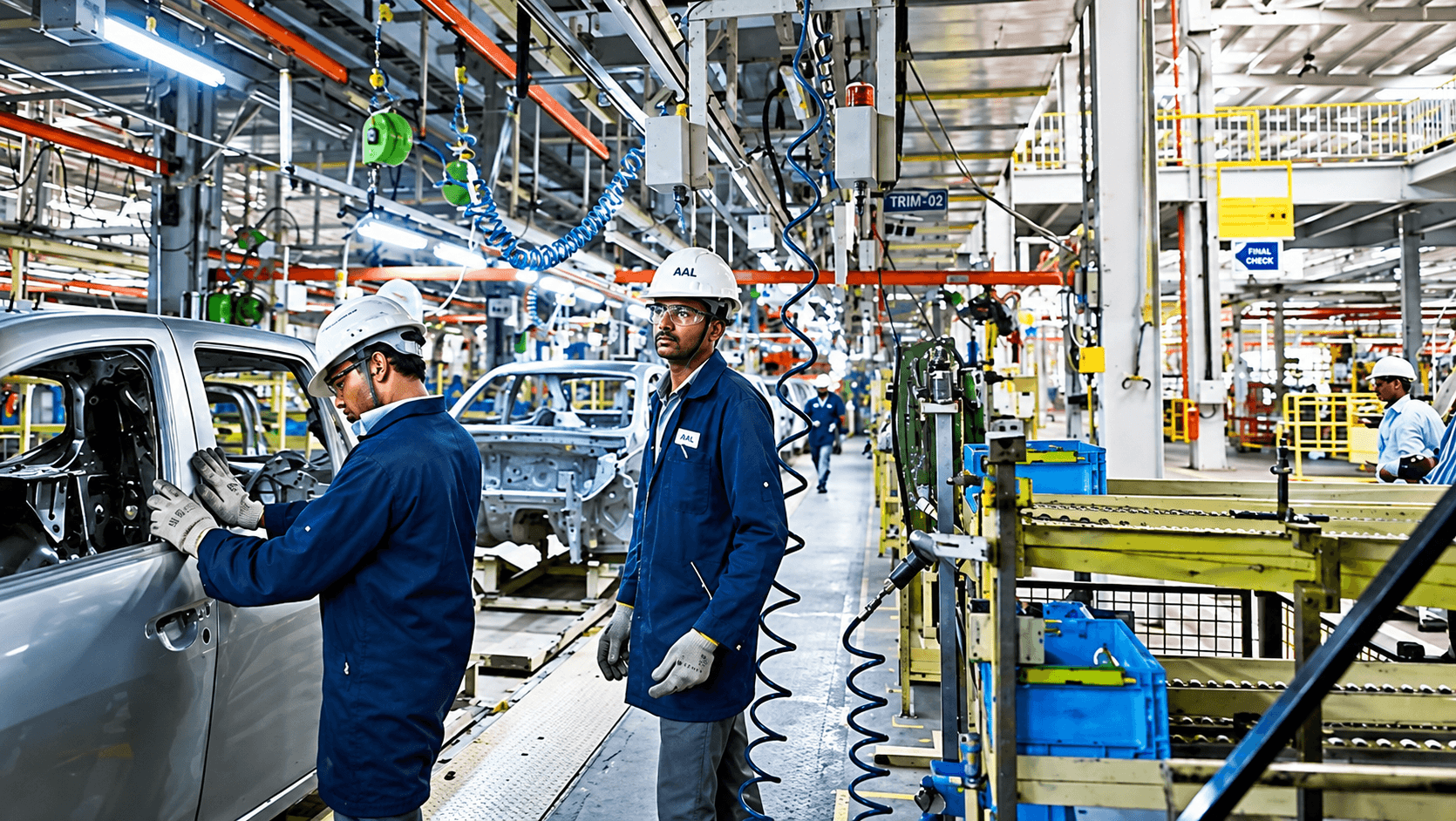
India's manufacturing sector picked up pace in September, recording its strongest expansion in seven months as rising demand encouraged factories to step up production, restock inventories and hire more workers.
The HSBC India Manufacturing Purchasing Managers' Index (PMI), compiled by S&P Global, climbed to 55.1 in September from 52.8 in August. It was the sector's strongest reading since February, bringing a three-month slowdown to an end.
Stronger domestic sales and improving export demand helped drive the recovery. Manufacturers reported more orders across sectors such as electronics, food processing, pharmaceuticals and textiles. Production increased, and businesses became more optimistic about the months ahead.
Hiring also returned to growth after a slight decline in August, reaching its fastest pace since May. Manufacturers stepped up purchases of raw materials and added to their inventories as they prepared for further demand.
There are, however, reasons to remain cautious. Despite September's improvement, the PMI averaged 53.8 during the July–September quarter, its weakest quarterly reading since the same period in 2021. Input costs also rose more quickly, potentially putting pressure on manufacturers if expenses continue to climb.
The latest figures offer a welcome boost to India's industrial outlook. Whether the recovery carries into the final quarter of 2026 will depend on the strength of demand, the direction of production costs and manufacturers' ability to turn new orders into sustainable profits.
WHAT HAPPENED?
India's manufacturing activity strengthened in September after three months of gradually losing momentum.
The HSBC India Manufacturing PMI rose to 55.1 from 52.8 in August. A reading above 50 signals expansion, while a figure below 50 indicates contraction.
The improvement was reflected in both production and new orders. Factory output grew at its fastest pace in four months, while new business recorded its strongest expansion in seven months, according to the survey.
The final reading was slightly below the preliminary estimate of 55.7. Even so, it marked a clear improvement from August's five-year low.
The figures suggest manufacturers entered the final months of the year with stronger order books and renewed confidence in demand.
One distinction is important: the PMI measures changes in business conditions rather than the actual volume of industrial production. A higher reading means more manufacturers are reporting an improvement in activity; it does not mean output has increased by the same percentage.
To understand the full strength of the recovery, the survey will need to be considered alongside official production, sales, investment and employment figures.
DEMAND RETURNS — AND FACTORIES STEP UP PRODUCTION
Stronger demand across several industries helped drive September's rebound.
Manufacturers reported increased orders for products ranging from electronics and food items to pharmaceuticals and textiles. Domestic sales improved, while overseas customers also placed more orders.
With demand picking up, businesses increased production and bought more raw materials. Some also expanded their inventories in preparation for sales in the coming months.
That is a potentially encouraging sign. When companies expect orders to remain strong, they are more likely to invest in production, maintain adequate stock levels and bring additional workers on board.
But building inventories carries risks, too. If demand continues to rise, larger stocks can help manufacturers meet orders on time. If sales disappoint, however, unsold goods can tie up working capital and force companies to scale back production.
For now, September's survey suggests businesses are preparing for continued activity rather than simply reacting to a short-lived increase in orders.
The coming months will reveal whether those expectations are justified.
EXPORTS ADD FRESH MOMENTUM
Stronger overseas demand gave Indian manufacturers another reason for optimism.
Survey respondents reported an increase in export orders from markets including Brazil, Europe, the United Arab Emirates and the United States. Export-order growth accelerated from August, providing additional support for factory output.
A stronger export business can help manufacturers reach customers beyond India, improve the use of existing production capacity and spread fixed costs across a larger volume of sales.
It can also reduce dependence on domestic demand alone.
However, international markets bring their own uncertainties. Slower growth among trading partners, tariff changes, currency fluctuations and higher shipping costs can all affect the flow of new orders.
Manufacturers must also remain competitive on price and quality. A growing order book does not necessarily mean higher profits if raw materials, transport and other production costs rise at the same time.
September's figures suggest Indian producers are finding opportunities overseas. Maintaining that progress will depend on their ability to compete on cost, quality and delivery while navigating an uncertain global trading environment.
HIRING PICKS UP AS CONFIDENCE IMPROVES
The return of employment growth was another positive development in September.
Manufacturers increased staffing after a decline in August, with the pace of hiring reaching its strongest level since May. The improvement suggests stronger orders are beginning to influence decisions about workforce requirements.
Business confidence also rose to a four-month high. Survey respondents pointed to new enquiries and expectations of favourable demand conditions as reasons for their more positive outlook.
Hiring matters because companies are generally reluctant to take on additional labour costs unless they expect business conditions to justify the expense. When manufacturers begin recruiting, it can indicate that existing teams and production capacity may no longer be enough to meet anticipated demand.
Still, one month's improvement is not enough to establish a lasting employment trend. Businesses will need to see continued orders before committing to sustained increases in staffing.
If hiring continues, the benefits could extend beyond factories. More manufacturing jobs can support household incomes, local spending and demand for services in industrial centres.
The key question is whether September marks the beginning of a sustained improvement in manufacturing employment or simply a temporary recovery.
RISING INPUT COSTS COULD PUT PRESSURE ON MARGINS
The recovery came with a warning for manufacturers: production costs are rising.
Businesses reported faster increases in input prices during September, including costs associated with electronic components, pharmaceutical products and steel. Selling prices also increased at a quicker pace, although price inflation on both sides remained relatively mild by historical standards.
For manufacturers, this creates a familiar balancing act.
When raw materials become more expensive, companies must decide whether to absorb the additional costs, improve efficiency or pass some of the increase on to customers.
Raising prices can help protect profit margins, but it may also make products less competitive. Absorbing higher costs can help preserve sales, though it leaves businesses with less room to maintain profitability.
Smaller manufacturers may find this particularly difficult if they have limited bargaining power with suppliers or customers.
Other expenses, including energy, transport and financing, can add to the pressure. If these costs rise while competition limits the scope for price increases, strong sales may not translate into stronger earnings.
For investors and policymakers, the combination of rising factory activity and higher input costs will be worth watching closely. The ideal outcome is continued production growth without a sharp increase in inflationary pressure.
WHY THE QUARTERLY NUMBERS STILL MATTER
September's improvement followed a period of weaker momentum.
The manufacturing PMI slipped from 54.2 in June to 53.5 in July and 52.8 in August before recovering to 55.1 in September. Despite the latest rebound, the July–September average stood at 53.8, its lowest quarterly level since the same period in 2021.
That broader picture puts the September headline into perspective.
Factory conditions improved sharply during the month, but the preceding slowdown suggests manufacturers had been dealing with softer momentum for some time.
One strong reading does not prove that the underlying trend has fully turned around. Investors and policymakers will be looking for further gains in new orders, production and hiring during October and November.
The source of growth matters, too. A recovery supported by steady domestic consumption and repeat export orders is more likely to last than one driven mainly by temporary inventory adjustments.
For now, the data point to a meaningful improvement in momentum, not an outright industrial boom.
WHAT IT MEANS FOR INDIA'S GROWTH STORY
Manufacturing remains central to India's efforts to expand industrial capacity, create jobs and strengthen its role in global supply chains.
When factories increase production, the effects can spread across the wider economy. Transport companies, warehouses, energy suppliers, equipment makers and business-service providers may all benefit from stronger industrial activity.
A sustained recovery could also encourage businesses to invest in new machinery, expand facilities and develop their workforces.
But the PMI is only one part of the economic picture. As a survey-based indicator, it needs to be assessed alongside official industrial production data, exports, consumer demand, investment and employment figures.
Even with that limitation, September's rebound offers an encouraging signal for India's industrial sector at a time when businesses are weighing domestic opportunities against an uncertain global outlook.
If orders remain strong, companies may become more willing to commit money to new facilities and equipment. If demand weakens again, investment and hiring plans could quickly become more cautious.
The next few months should provide a clearer indication of which direction the sector is heading.
WHY THIS MATTERS
For manufacturers: Stronger orders and rising output offer a chance to make better use of production capacity, although higher input costs could limit profit gains.
For workers: The return of hiring is encouraging, but lasting job growth will depend on demand remaining strong.
For exporters: Faster growth in overseas orders points to opportunities in international markets, though trade conditions and shipping costs remain important risks.
For investors: Improving factory activity could support sentiment towards industrial companies, but the weaker quarterly average and rising costs make earnings performance particularly important.
For policymakers: A sustained manufacturing recovery could support jobs and economic growth. Competitive production costs, reliable infrastructure and stable demand will be important to maintaining momentum.
FACT CHECK METER
FACT METER: 98%
STATUS: EXPANSION ACCELERATES — SUSTAINABILITY STILL TO BE TESTED
CONFIRMED
India's manufacturing PMI rose to 55.1 in September from 52.8 in August.
The reading was the highest in seven months.
Factory output recorded its strongest expansion in four months.
New orders grew at their fastest pace in seven months.
Manufacturing employment returned to growth, with hiring at its strongest pace since May.
Business confidence improved to a four-month high.
IMPORTANT DISTINCTIONS
A PMI above 50 signals expansion; it does not measure the percentage increase in factory output.
September's rebound does not erase the weaker quarterly average.
Stronger sales do not guarantee higher profits when input costs are rising.
STILL DEVELOPING
Whether new orders continue to grow in October and November.
Whether export demand remains firm.
Whether rising input costs put sustained pressure on profit margins.
Whether the recovery leads to lasting employment growth and higher industrial investment.
AWX VERDICT: India's manufacturing sector has staged a meaningful rebound, supported by stronger domestic and overseas demand. The improvement is encouraging, but its staying power will depend on whether orders remain firm and businesses can keep rising costs under control.
WHAT TO WATCH NEXT
October PMI: Will factory activity maintain September's stronger pace?
Industrial production data: Official figures will help show whether the survey improvement is translating into higher output.
Export orders: Demand from the US, Europe, the UAE and other markets will help determine whether overseas growth can continue.
Input prices: Changes in steel, electronics, energy and transport costs could influence manufacturers' margins.
Hiring trends: Continued employment growth would suggest businesses are confident enough to expand their operations.
Business investment: Increased spending on machinery, factories and technology would provide stronger evidence that the recovery is built to last.
THE AWX BOTTOM LINE
India's manufacturing sector has bounced back after three months of slowing growth. September's PMI reading of 55.1 points to stronger orders, faster production, renewed hiring and improved business confidence.
The improvement is welcome news for manufacturers and the wider economy. But the recovery comes after a relatively weak quarter, while rising input costs and uncertainty in global markets remain potential obstacles.
The next challenge is to turn a strong month into a lasting trend. That will require steady demand, competitive production costs and enough confidence for businesses to keep investing and hiring.
For now, India's factory engine is running faster again. Whether that momentum delivers sustained output growth, more jobs and healthier profits will become clearer in the months ahead.
ATTLAS WIRE | AWX WORLD NEWS
Real Stories. Lasting Impact.




Comments
No comments yet.