

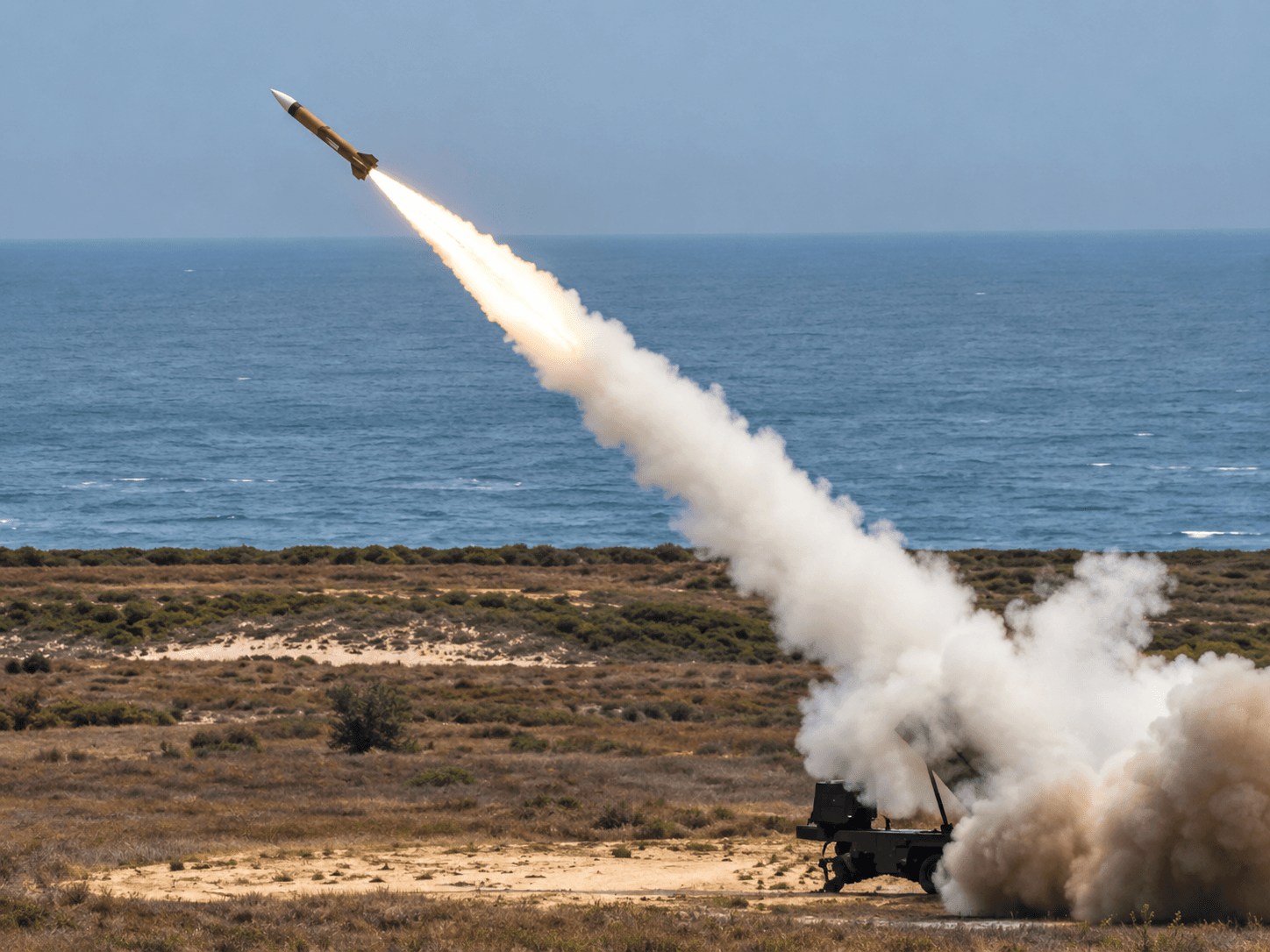
The United States has moved two additional Patriot missile batteries into Saudi Arabia and Qatar as Washington steps up efforts to protect critical energy infrastructure in the Gulf, according to U.S. officials and a regional source cited by Axios.
One of the systems was reportedly sent to Saudi Arabia to help defend a major oil facility, while another was positioned in Qatar near a key natural-gas facility.
The deployments come as Washington prepares for the possibility of renewed military action against Iran. They also signal an effort to reassure Gulf partners that their critical infrastructure would receive additional protection if tensions escalate.
For Saudi Arabia and Qatar, the concern is straightforward: any attack on major oil or gas facilities could quickly become a problem for the wider global economy.
A MAJOR STRIKE ON GULF ENERGY INFRASTRUCTURE COULD SEND SHOCKWAVES THROUGH OIL AND GAS MARKETS WORLDWIDE.
WHAT HAPPENED?
The U.S. military has reportedly moved additional Patriot air-defence capabilities into Saudi Arabia and Qatar in recent weeks, according to reports citing two U.S. officials and a regional source.
The systems are reportedly being positioned around strategically important energy facilities.
Both Saudi Arabia and Qatar already have longstanding security partnerships with Washington, and Patriot systems are part of the broader air-defence network operating across the region.
What has changed is the security environment.
Washington is preparing for several possible scenarios involving Iran, while Gulf governments remain concerned that any direct confrontation could bring retaliation against their own territory and energy infrastructure.
WHY THE GULF ENERGY SITES MATTER
Saudi Arabia and Qatar occupy very different positions in the global energy market, but both are critical.
Saudi Arabia is one of the world's leading oil producers and exporters.
Qatar is one of the world's major suppliers of liquefied natural gas, or LNG.
That means an attack on a major facility in either country could have consequences far beyond the Gulf.
Potential effects could include:
Higher oil prices
Tighter LNG supplies
Rising shipping costs
Higher insurance premiums
Disruptions to refinery operations
Greater pressure on energy-importing countries
Renewed inflation concerns
The issue, therefore, is not only about regional security.
GULF ENERGY SECURITY IS ALSO A GLOBAL ECONOMIC ISSUE.
WHY ARE PATRIOTS BEING MOVED?
Patriot systems are designed to intercept certain incoming missiles and other aerial threats.
Their deployment around energy infrastructure adds another layer of protection against possible missile or drone attacks.
According to reports, Washington is also trying to reassure Riyadh and Doha that their critical facilities will not be left exposed if U.S. military operations against Iran intensify.
There is a strategic calculation behind that reassurance.
Saudi Arabia's cooperation and access to its airspace could become important if U.S. operations expand. At the same time, Saudi leaders have long been concerned that an attack on Iran could result in retaliation against the kingdom.
The additional air-defence systems appear intended to reduce some of that risk.
SAUDI ARABIA'S OIL RISK
Saudi Arabia has experienced attacks on energy infrastructure before.
Oil facilities and pipelines have previously been targeted by missiles and drones during periods of regional conflict, making the protection of the country's energy network a major national-security concern.
A serious disruption to Saudi oil production or exports would not be contained within the kingdom.
Markets would immediately begin asking several questions:
HOW MUCH SUPPLY IS AT RISK?
HOW LONG COULD THE DISRUPTION LAST?
CAN OTHER PRODUCERS MAKE UP THE SHORTFALL?
WHAT HAPPENS TO SHIPPING AND INSURANCE COSTS?
The answers could have a direct impact on global oil prices.
QATAR'S GAS INFRASTRUCTURE
Qatar faces a different kind of exposure.
The country is a major LNG exporter, and its production, processing and export facilities are closely tied to global gas supplies.
A prolonged disruption could tighten LNG markets and put additional pressure on buyers in Europe and Asia.
For countries that depend heavily on imported gas for electricity generation and industry, even a temporary reduction in supply could create significant challenges.
That makes the protection of Qatar's energy infrastructure an international concern, not simply a domestic one.
FEARS OF IRANIAN RETALIATION
Much of the concern surrounding the new deployments is linked to the possibility of Iranian retaliation.
Saudi and Qatari officials have reportedly warned Washington that attacks on Iranian energy infrastructure could prompt Tehran to respond against Gulf energy facilities.
Those concerns have been part of the wider debate in Washington over how aggressively to confront Iran.
With the possibility of renewed military action once again being considered, the issue has returned to the forefront.
For Gulf governments, the calculation is difficult.
They want to maintain strong security relationships with the United States while avoiding becoming direct targets in a wider conflict.
THEIR CHALLENGE IS TO STRENGTHEN THEIR DEFENCES WITHOUT ALLOWING THE REGION TO SLIDE DEEPER INTO WAR.
THE U.S. MILITARY BUILDUP
The Patriot deployments are reportedly part of a wider U.S. military buildup in and around the Middle East.
Additional naval and air assets have been positioned in the region as Washington prepares for a range of possible scenarios.
That does not necessarily mean a major conflict is inevitable.
Military deployments can also be designed to deter an attack by demonstrating that Washington is prepared to respond.
The intended message is clear:
ATTACKING U.S. PARTNERS OR THEIR CRITICAL INFRASTRUCTURE COULD COME AT A HIGH COST.
But deterrence carries its own risks.
As more military forces operate in a tense environment, the possibility of an incident or miscalculation triggering a broader confrontation also increases.
PATRIOTS ARE NOT A PERFECT SHIELD
The arrival of additional Patriot batteries does not make Gulf energy facilities invulnerable.
Modern attacks can involve drones, cruise missiles and other systems arriving from different directions, sometimes in large numbers.
That is why the defence of a major energy facility typically relies on several layers working together.
RADAR + AIR DEFENCE + ELECTRONIC WARFARE + FIGHTER AIRCRAFT + INTELLIGENCE + HARDENED INFRASTRUCTURE.
Patriot systems are one component of that wider defence network.
Their deployment should therefore be viewed as a reinforcement rather than a guarantee that every threat can be stopped.
GLOBAL ENERGY MARKETS ARE WATCHING
Oil and gas markets often react to geopolitical risks before physical supplies are actually disrupted.
Even the possibility of an attack can push traders to reassess future supply and drive greater price volatility.
The biggest concern would be a scenario in which several facilities were hit at the same time or shipping through key regional routes was disrupted.
That could turn a regional security crisis into a much larger economic shock.
For countries that import large amounts of energy, the effects could eventually show up through higher transport costs, more expensive electricity and renewed inflationary pressure.
THE STRAIT OF HORMUZ FACTOR
The strategic importance of the Gulf is also tied to the Strait of Hormuz, one of the world's most important energy shipping routes.
Large volumes of oil and LNG pass through the region every day.
Even if production facilities remain operational, a serious escalation that threatens commercial shipping could raise freight rates and insurance costs.
That leaves Gulf security dependent on two closely connected priorities:
PROTECT THE ENERGY INFRASTRUCTURE.
KEEP THE SHIPPING ROUTES OPEN.
Both matter to global energy markets.
SAUDI ARABIA AND QATAR WANT SECURITY — NOT WAR
For Riyadh and Doha, the situation presents a difficult balancing act.
Both countries maintain close security relationships with Washington, but both also have strong economic reasons to avoid a wider regional conflict.
Their oil and gas industries depend on stable production, reliable infrastructure and safe export routes.
A prolonged war could put all three under pressure.
That helps explain why Gulf governments have continued to support diplomatic efforts while simultaneously strengthening their defences.
The objective is not necessarily to prepare for war.
It is to make sure that if a conflict comes, the Gulf is not left carrying the greatest cost.
WHAT DOES THIS MEAN FOR INDIA?
India is closely connected to developments in Gulf energy markets.
The country imports a significant share of its crude oil and maintains extensive economic and energy ties with Gulf producers.
A sustained increase in global oil prices could raise India's import bill and put pressure on transportation, manufacturing and other energy-intensive sectors.
Higher energy costs can also feed into inflation.
For Indian consumers, a crisis in the Gulf could eventually be felt far beyond international headlines — through fuel prices, airfares, logistics costs and household expenses.
FACT CHECK METER
FACT METER: 95%
STATUS: DEVELOPING
CONFIRMED / REPORTED
Reports indicate that the United States has deployed two additional Patriot missile batteries in Saudi Arabia and Qatar.
One system was reportedly positioned to help protect a major Saudi oil facility.
Another was reportedly deployed near a Qatari natural-gas facility.
The reported deployments come amid concerns about possible renewed U.S.-Iran military escalation.
Saudi Arabia and Qatar have previously raised concerns about the potential for retaliation against their energy infrastructure.
IMPORTANT DISTINCTION
The exact locations and operational details of the reported Patriot deployments have not been publicly confirmed in full by the U.S. military.
According to reports, U.S. Central Command declined to comment specifically on the deployments.
AWX VERDICT
The reported deployments represent a significant reinforcement of Gulf air defences, but they should be viewed as part of a broader deterrence and contingency strategy — not as proof that a major new conflict is inevitable.
AWX FOCUS
The most important part of the story may not simply be the arrival of additional Patriot systems.
It is what those systems are reportedly being positioned to protect.
Oil.
Natural gas.
Pipelines.
Processing facilities.
Export terminals.
These are more than industrial assets. They are strategic infrastructure with the potential to influence energy prices and economic conditions around the world.
If the regional conflict expands, the battlefield may not be limited to military installations.
ENERGY INFRASTRUCTURE COULD BECOME THE NEXT FRONT LINE.
WHAT TO WATCH NEXT
Whether Washington announces additional air-defence deployments.
Any further U.S. military movements into the Gulf.
Iranian statements regarding Gulf energy facilities.
Security developments around Saudi oil infrastructure.
Security developments around Qatar's LNG facilities.
Movements in global oil and LNG prices.
Security conditions around the Strait of Hormuz.
Whether Washington and Tehran return to negotiations.
Any new drone or missile attacks across the Gulf.
THE AWX BOTTOM LINE
THE GULF IS PREPARING FOR THE POSSIBILITY THAT THE NEXT SHOCK COULD HIT ENERGY INFRASTRUCTURE — NOT JUST MILITARY TARGETS.
The reported deployment of additional Patriot batteries to Saudi Arabia and Qatar highlights how seriously Washington and its Gulf partners are taking the risk of escalation.
For Saudi Arabia, the priority is protecting its oil infrastructure.
For Qatar, it is safeguarding natural-gas production and exports.
For the United States, the priority is protecting its partners while maintaining its strategic options.
And for the global economy, the concern is much simpler:
KEEP THE GULF'S ENERGY FLOWING.
If oil and gas infrastructure becomes a battlefield, the consequences will not remain confined to the region.
They could spread through energy markets, shipping routes, inflation and household costs around the world.
ATTLAS WIRE | AWX WORLD NEWS
Real Stories. Lasting Impact.


Comments
No comments yet.