

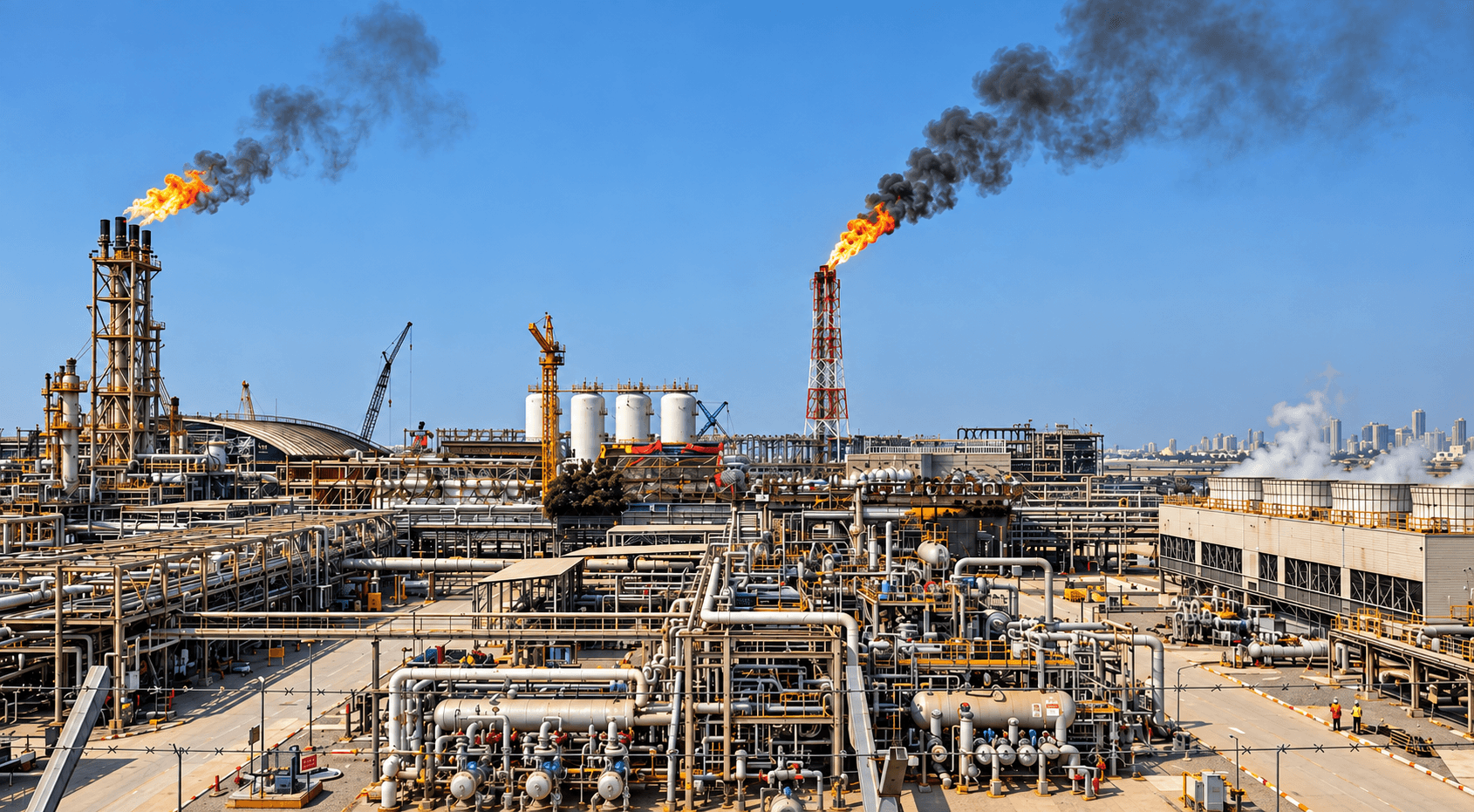
Europe's natural gas market is facing another difficult test as the continuing Middle East crisis disrupts LNG flows and raises fresh concerns about supplies ahead of winter.
Gas prices have climbed significantly from earlier levels, although the market has so far avoided the extreme spikes seen during the 2022 energy crisis.
That difference matters.
Europe is better prepared than it was four years ago. The region has more diversified LNG supplies, lower overall gas consumption and more experience dealing with energy disruptions.
But that does not mean the continent is fully protected.
European storage levels are below recent seasonal norms, while dependence on LNG imports has grown. If Middle Eastern disruptions continue or winter demand rises sharply, the pressure on the market could increase quickly.
WHAT HAPPENED?
The latest pressure on Europe's gas market is closely tied to disruption around the Strait of Hormuz.
The waterway is a key shipping route for LNG from Qatar, one of the world's largest exporters of liquefied natural gas.
The continuing crisis has disrupted shipping through the region and affected LNG supplies that would normally reach international markets.
European buyers are now having to compete more aggressively for cargoes from other suppliers.
That competition matters because Europe and Asia often rely on the same flexible LNG shipments.
If European demand rises while Asian buyers are also looking for additional cargoes, the global market can tighten rapidly.
WHY QATAR MATTERS
Qatar is one of the world's most important LNG suppliers, with exports serving customers across both Asia and Europe.
Much of that LNG normally moves by sea, making the Strait of Hormuz strategically important to Qatar's energy industry.
The current crisis has disrupted that system and added another layer of uncertainty to global supply.
Damage to Qatar's LNG infrastructure has also raised concerns about the longer-term outlook.
QatarEnergy has warned that the crisis could delay parts of its planned LNG expansion, while repairs to damaged facilities could take time.
That is significant because the global market had been counting on additional LNG from major expansion projects.
Instead, some of that expected supply growth may now be delayed.
EUROPE'S STORAGE PROBLEM
Gas storage is one of Europe's main safeguards against supply disruptions.
During the warmer months, countries typically build up underground inventories ahead of the winter heating season.
This year, however, Europe's storage position is weaker than it would ideally be heading into winter.
Lower inventories leave less room to absorb a sudden disruption in LNG deliveries or an unexpected increase in demand.
A mild winter could ease some of that pressure.
A colder-than-expected winter could do the opposite.
For governments and energy companies, that makes planning particularly difficult. They have to secure enough gas without knowing exactly how much demand the winter will bring.
THE LNG COMPETITION
Europe is far less dependent on Russian pipeline gas than it was before the energy crisis of recent years.
But the shift has created another form of dependence: LNG shipped from the global market.
That has given Europe more flexibility because gas can be sourced from multiple countries.
At the same time, it means European buyers are competing directly with customers elsewhere.
When Middle Eastern supplies are disrupted, Europe has to look for replacement cargoes.
That can push prices higher and redirect LNG shipments from other regions toward Europe rather than Asia or other markets.
In effect, a disruption in one part of the world can quickly become a competition for gas across the entire global market.
THE UNITED STATES FACTOR
The United States has become increasingly important to Europe's energy security.
American LNG has helped Europe make up for the decline in Russian pipeline supplies and deal with disruptions elsewhere.
That gives European buyers an important alternative.
But U.S. LNG cannot completely shield Europe from a global supply shortage.
If European buyers need more cargoes, they may have to offer higher prices to secure them. Asian buyers could also be competing for the same shipments.
The United States can therefore soften the impact of a supply disruption, but it cannot remove the underlying risk created by tight global LNG supplies.
WHY PRICES MATTER
Natural gas prices affect far more than household heating bills.
Gas is also widely used for electricity generation and industrial production.
Higher prices can raise costs across sectors including:
Chemicals
Fertilizers
Steel
Glass
Ceramics
Manufacturing
If elevated prices persist, European companies could face higher production costs than competitors in regions with cheaper energy.
That can feed into industrial output, investment and inflation.
EUROPE IS BETTER PREPARED — BUT NOT INVULNERABLE
Europe is in a stronger position than it was during the 2022 energy crisis.
The region has diversified suppliers, expanded LNG infrastructure and reduced overall gas consumption. Energy efficiency has also improved across parts of the economy.
Those changes provide an important buffer.
But diversification is not the same as independence.
Europe can switch suppliers only when alternative gas is available.
If a major LNG exporter is disrupted while global demand remains strong, European buyers will still feel the effects through higher prices and tighter competition.
THE WINTER QUESTION
The biggest unknown may now be the weather.
A mild winter would reduce demand and give European markets more time to absorb the current supply shock.
A colder winter would increase heating demand and draw down storage more quickly.
The situation could become particularly difficult if colder weather arrives while Qatari LNG exports remain disrupted.
That combination would put pressure on both prices and physical supplies.
For now, Europe's ability to navigate the winter largely comes down to three variables:
Storage.
Weather.
LNG availability.
WHY THIS MATTERS
1. EUROPE'S ENERGY SECURITY IS BEING TESTED AGAIN
Europe has spent years reducing its dependence on Russian gas. The current Middle East crisis is a reminder that diversification can reduce risk without eliminating geopolitical exposure.
2. QATAR IS A CRITICAL LNG SUPPLIER
Any prolonged disruption to Qatari LNG exports has implications well beyond Europe and could affect the wider global gas market.
3. EUROPE AND ASIA ARE COMPETING FOR LNG
When supplies tighten, European and Asian buyers can end up competing for the same cargoes, putting additional pressure on prices.
4. LOWER STORAGE MEANS A SMALLER BUFFER
Weaker storage levels leave Europe with less room to absorb an unexpected increase in demand or another supply disruption.
5. HIGH GAS PRICES CAN HIT INDUSTRY
The effects can spread from energy markets into electricity costs, manufacturing, inflation and household expenses.
FACT CHECK METER
AWX FACT CHECK
STATUS: DEVELOPING
CONFIRMED
The Middle East crisis has disrupted international LNG markets.
Qatar is a major global LNG supplier.
Disruption around the Strait of Hormuz has affected LNG shipping.
European gas prices have risen significantly compared with earlier 2026 levels.
Europe has increased its reliance on LNG following the reduction in Russian pipeline gas supplies.
European gas storage remains an important concern heading into winter.
NOT INDEPENDENTLY VERIFIED
The exact duration of the disruption to Qatari LNG exports.
The final impact of the crisis on Europe's total winter gas supply.
Whether European storage levels will be sufficient under a prolonged cold-weather scenario.
The final scale of additional LNG competition between Europe and Asia.
EUROPEAN MARKET POSITION
Europe has a more diversified gas supply system than it did before the 2022 energy crisis, but it remains exposed to global LNG prices and international shipping disruptions.
QATAR FACTOR
Qatari LNG remains strategically important to the global market, while infrastructure damage and shipping disruption have created uncertainty around future supplies.
AWX VERDICT
FACTUAL CORE: VERIFIED
GAS MARKET PRESSURE: SIGNIFICANT
WINTER SUPPLY RISK: DEVELOPING
FULL-SCALE EUROPEAN GAS CRISIS: NOT ESTABLISHED
WHAT TO WATCH NEXT
European storage
Whether storage levels improve before winter and how quickly inventories fall once heating demand increases.
Qatar
Whether LNG production and exports return to normal, and how quickly damaged infrastructure can be restored.
Strait of Hormuz
Whether shipping conditions improve or further restrictions affect LNG movements.
United States
Whether American LNG exports can provide additional supplies to European buyers.
Asia
Whether Asian countries increase LNG purchases and intensify competition for available cargoes.
European gas prices
Whether prices remain elevated or begin to ease as supply conditions stabilize.
Weather
Whether the coming winter is mild or significantly colder than expected.
European governments
Whether governments introduce additional measures to protect consumers and maintain energy supplies for industry.
THE AWX BOTTOM LINE
Europe has spent years making its energy system more resilient.
It has reduced its dependence on Russian pipeline gas, expanded LNG infrastructure and diversified its suppliers.
But the Middle East crisis is exposing another vulnerability.
Europe may have diversified where its gas comes from, but it remains connected to a global market where a major disruption can affect everyone.
Qatar's LNG supplies, the Strait of Hormuz, European storage and winter weather are now closely linked.
If Middle Eastern disruptions ease, Europe's gas market may have enough flexibility to absorb the shock.
If they persist into a cold winter, prices could rise sharply and competition for LNG could intensify.
For now, Europe is not facing a repeat of the 2022 energy crisis.
But the warning is clear:
A global LNG market under pressure leaves little room for another major shock.
ATTLAS WIRE | AWX WORLD NEWS
Real Stories. Lasting Impact.


Comments
No comments yet.