

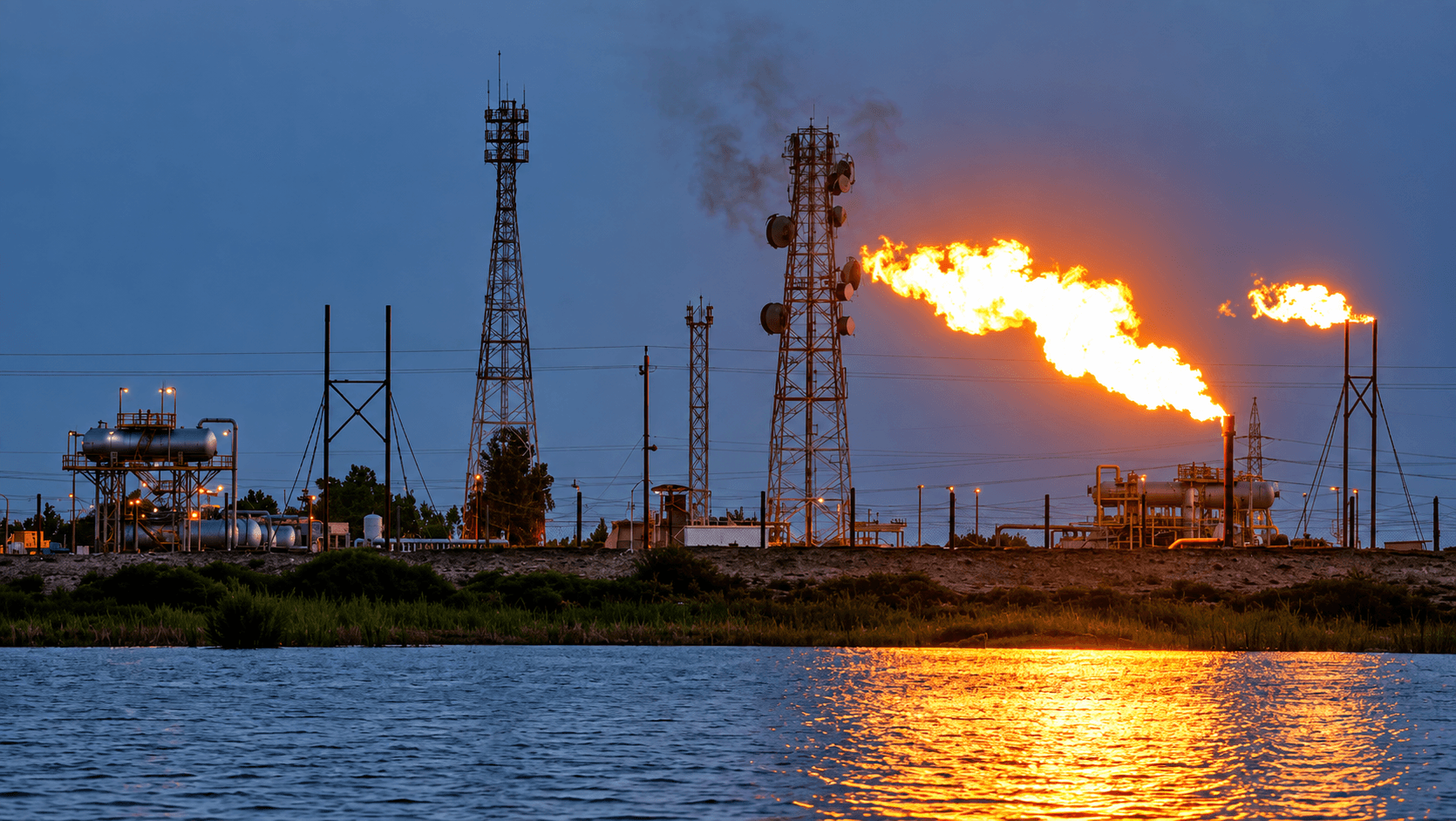
Europe is facing another energy challenge as tensions in the Middle East continue to threaten oil supplies and keep crude prices at elevated levels.
Brent crude has been trading around $100 a barrel in recent days after briefly moving above that level during the latest escalation. The market remains highly sensitive to developments around the Strait of Hormuz and across the wider Gulf.
For Europe, however, the concern goes beyond the price of crude itself.
Higher oil prices can quickly feed into gasoline, diesel, transport costs, manufacturing expenses and, eventually, consumer prices.
Europe has already spent years dealing with the economic fallout from geopolitical energy shocks. Another prolonged period of expensive oil could add to that pressure just as governments and central banks try to keep inflation under control while supporting economic growth.
WHAT HAPPENED?
Oil markets have remained volatile as the Middle East conflict continues to raise concerns about regional production and shipping.
Brent crude moved above $100 earlier this month, reaching more than $107 at one point as fears over potential supply disruptions intensified.
Prices have since moved below and around the $100 mark as traders react to changing diplomatic and military developments.
That volatility is important in itself.
Oil prices do not necessarily need a large amount of physical supply to disappear before markets react. The prospect of a prolonged disruption can be enough to push traders to price in a higher risk premium.
WHY $100 MATTERS
The $100 level is not a physical ceiling for oil prices. It is mainly a psychological and economic benchmark.
If Brent stays above $100 for an extended period, the impact can spread well beyond the energy market.
Fuel costs rise.
Transportation becomes more expensive.
Airlines and shipping companies face higher operating bills.
Manufacturers have to pay more for energy and petrochemical inputs.
Eventually, some of those higher costs can reach consumers.
For European policymakers, that creates a difficult balancing act.
A fresh energy shock could make inflation harder to bring down while also putting pressure on economic growth.
THE HORMUZ RISK
The Strait of Hormuz remains at the heart of the market's concerns.
The narrow waterway connects the Persian Gulf with the Gulf of Oman and serves as a major route for Middle Eastern oil and LNG exports.
Any serious restriction on shipping through Hormuz could therefore have consequences far beyond the region.
The current crisis has already affected normal traffic through the waterway and disrupted parts of the region's energy flows.
For Europe, the impact does not have to come through a direct loss of Middle Eastern oil.
Energy is traded through a global market. When supplies from one major producing region become less certain, buyers compete for barrels from elsewhere.
That can push prices higher across the world.
SAUDI ARABIA'S ROLE
Saudi Arabia remains one of the world's largest oil producers and has traditionally been an important source of additional supply when markets come under pressure.
But the kingdom has also faced attacks and disruptions affecting energy infrastructure and alternative export routes.
The East-West Pipeline, which moves oil from Saudi Arabia's eastern fields toward the Red Sea, has been affected by recent attacks and disruptions.
That is significant because the pipeline offers an alternative to sending all of Saudi Arabia's exports through the Strait of Hormuz.
Saudi Arabia has increased reliance on other export routes while working to restore affected infrastructure.
The combination of risks around Hormuz and vulnerabilities along alternative routes is one reason traders remain cautious.
EUROPE'S EXPOSURE
Europe does not depend entirely on oil arriving directly through the Strait of Hormuz.
But that does not shield the continent from the consequences of a disruption.
Oil is a global commodity. If Middle Eastern supplies become less reliable, buyers elsewhere compete for alternative supplies.
That competition can lift prices even when European physical supplies remain available.
European refiners and consumers can therefore feel the impact without a direct shortage of crude.
The same applies to refined fuels.
Gasoline and diesel markets can tighten when crude becomes more expensive or when shipping and refining capacity comes under pressure.
THE DIESEL PROBLEM
For Europe, diesel could prove to be an even more immediate concern than crude oil itself.
Diesel is essential to road freight, agriculture, construction and a wide range of industrial activities.
When diesel prices rise, the effects can spread quickly.
Transport companies may have to raise freight charges.
Farmers face higher fuel and operating costs.
Manufacturers pay more to move raw materials and finished products.
Those additional costs can eventually reach consumers.
The latest Middle East energy shock has already pushed European gasoline and diesel prices significantly higher than before the conflict.
THE INFLATION RISK
Higher oil prices create a difficult problem for central banks.
When energy becomes more expensive, inflation can rise even when demand across the wider economy remains weak.
That can leave policymakers facing an uncomfortable choice.
They may want to support economic activity through lower interest rates, but a renewed increase in energy prices could make it harder to ease monetary policy.
The result could be a combination of:
Higher energy costs.
Higher inflation.
Slower economic growth.
That is precisely the combination European policymakers want to avoid.
DIPLOMACY COULD CHANGE THE MARKET
Oil markets are also closely watching diplomatic developments.
If the United States and Iran reach an agreement that reduces the threat to shipping through Hormuz, some of the geopolitical premium built into oil prices could quickly disappear.
But if negotiations fail or military tensions increase, the opposite could happen.
Oil prices have already been reacting to changing expectations around U.S.-Iran talks and the security of regional energy flows.
That makes diplomacy one of the most important variables for the oil market in the weeks ahead.
WHY THIS MATTERS
1. $100 OIL COULD REOPEN THE INFLATION DEBATE
A sustained move above $100 could put fresh pressure on European inflation.
2. FUEL COSTS AFFECT THE WHOLE ECONOMY
Higher gasoline and diesel prices can raise costs for households, transport companies, farmers and manufacturers.
3. HORMUZ REMAINS A GLOBAL CHOKEPOINT
A prolonged disruption could affect oil prices well beyond the Middle East.
4. ALTERNATIVE ROUTES ARE ALSO UNDER PRESSURE
Saudi Arabia's pipeline and Red Sea export options provide alternatives, but recent attacks have highlighted the vulnerabilities of those routes.
5. DIPLOMACY COULD BECOME THE BIGGEST MARKET CATALYST
A credible reduction in tensions could push oil prices lower, while renewed escalation could send them higher.
FACT CHECK METER
AWX FACT CHECK
STATUS: DEVELOPING
CONFIRMED
• Brent crude has traded around and above the $100-a-barrel level during the current Middle East crisis.
• The Strait of Hormuz remains a major source of global oil-supply risk.
• Regional attacks have disrupted parts of energy infrastructure and shipping.
• Saudi Arabia's alternative oil-export infrastructure has faced recent disruption.
• European fuel prices have risen significantly during the Middle East energy shock.
NOT INDEPENDENTLY VERIFIED
• How long oil prices will remain near or above $100.
• The amount of oil that could ultimately be lost if disruptions around Hormuz continue.
• Whether diplomatic negotiations will lead to a lasting reduction in supply risks.
• The long-term impact of the crisis on European economic growth.
MARKET RISK
A prolonged period of oil above $100 could increase inflationary pressure across Europe while raising transportation and industrial costs.
DIPLOMATIC FACTOR
Any meaningful agreement that reduces tensions between Iran and the United States could ease some of the risk premium currently built into oil prices.
AWX VERDICT
FACTUAL CORE: VERIFIED
OIL-SUPPLY RISK: HIGH
EUROPEAN ENERGY PRESSURE: RISING
SUSTAINED $100+ OIL: DEVELOPING
WHAT TO WATCH NEXT
Oil prices
Whether Brent stays above the $100 threshold or falls back as diplomatic expectations improve.
Strait of Hormuz
Whether tanker traffic continues moving toward normal levels or faces further disruption.
Iran-U.S. diplomacy
Whether negotiations produce a concrete agreement that can reduce risks to regional energy supplies.
Saudi Arabia
Whether alternative oil-export infrastructure returns fully to operation.
European fuel prices
Whether higher crude prices continue to feed into gasoline and diesel markets.
European inflation
Whether the energy shock begins to reverse recent progress on price stability.
Central banks
Whether sustained energy inflation changes expectations for European interest rates.
Global supply
Whether other oil producers can increase output enough to offset disruptions in Middle Eastern supply.
THE AWX BOTTOM LINE
Europe is watching the $100 oil mark because it represents more than a number on a trading screen.
It is a reminder of how quickly geopolitical conflict can spill into the global economy when energy supplies and shipping routes are at risk.
Europe has diversified its energy sources since the major energy shocks of recent years. But oil remains a global commodity.
A disruption in the Gulf can still become a price shock in Europe.
If diplomacy succeeds and shipping through Hormuz returns toward normal, some of the pressure on crude prices could ease.
If the conflict continues to disrupt production, shipping and alternative export routes, Europe could face another period of expensive fuel and renewed inflation pressure.
For now, the biggest question is not whether oil can reach $100.
It already has.
The question is how long it stays there.
ATTLAS WIRE | AWX WORLD NEWS
Real Stories. Lasting Impact.


Comments
No comments yet.