

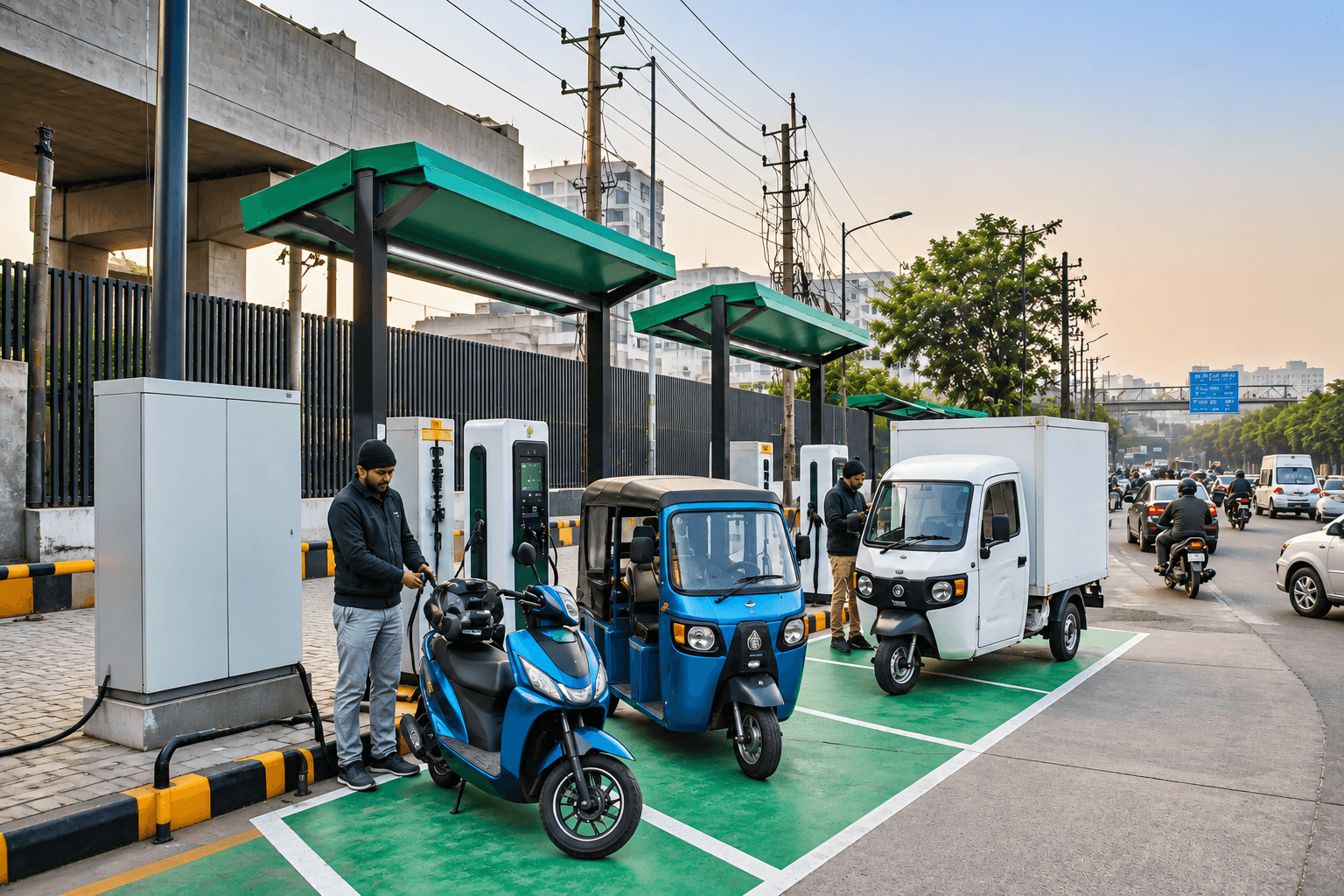
Delhi is set for another expansion of its electric-vehicle charging network, with 382 new charging sites approved as the city works to keep up with the growing number of electric vehicles on its roads.
Electric scooters, in particular, are becoming a more familiar sight across the capital. For many commuters, the attraction is simple: lower day-to-day running costs, convenient urban travel and growing interest in cleaner forms of transportation.
But as the number of electric vehicles rises, so does a basic question:
WHERE WILL THEY CHARGE?
The newly approved sites are aimed at addressing that gap.
WHAT HAPPENED?
Authorities have approved hundreds of additional locations for EV charging infrastructure across Delhi.
The sites are expected to improve access to charging for residents using electric scooters, cars and other battery-powered vehicles.
That could be especially important for people who live in rented homes, apartment complexes or neighbourhoods where installing a private charger is difficult.
For these residents, public charging is not simply an added convenience. It can determine whether owning an electric vehicle is practical in the first place.
WHY ELECTRIC SCOOTERS ARE GAINING GROUND
Electric scooters are increasingly being used for daily commuting in Delhi.
Lower energy costs compared with petrol-powered two-wheelers are one reason. Electric scooters also have fewer moving mechanical parts than conventional vehicles, which can reduce some maintenance requirements.
They can be particularly useful for office commuters, students, delivery workers and people making short trips across the city.
With two-wheelers already playing such a large role in Delhi's daily transport, the rise in electric models is naturally creating greater demand for reliable charging facilities.
WHY 382 SITES MATTER
The significance of the 382 approved sites goes beyond the headline figure.
For EV users, coverage matters.
A driver needs to know that a working charger will be available when the battery is running low. If charging points are too far apart, poorly located or frequently unavailable, concerns about running out of charge can quickly become a barrier to wider adoption.
A larger and better-distributed charging network could make electric vehicles easier to use for longer and more frequent journeys.
THE HOME-CHARGING PROBLEM
Charging an electric scooter at home is usually the most convenient option.
But that is not available to everyone.
Delhi has large numbers of residents living in apartments, rented accommodation and densely populated neighbourhoods. Dedicated parking spaces and private electrical connections are not always easy to arrange.
That makes public charging particularly important.
As more people switch to electric two-wheelers, the demand for charging facilities outside the home is likely to grow with them.
CHARGING SPEED WILL ALSO MATTER
Simply adding more charging points will not solve every problem.
The speed and type of chargers installed will also matter.
Someone using an electric scooter for work or daily commuting may not be able to spend several hours waiting for a battery to recharge.
Faster charging can improve convenience, although it may require greater electrical capacity and more substantial infrastructure.
That leaves authorities with a broader challenge:
BUILD ENOUGH CHARGERS — BUT MAKE SURE THEY ARE USEFUL FOR THE PEOPLE WHO NEED THEM.
WHERE SHOULD THE NEW CHARGERS GO?
Location could play a major role in determining how successful the new sites are.
Charging facilities near:
Metro stations
Major roads
Markets
Residential areas
Commercial districts
Office hubs
Transport terminals
Parking facilities
could see strong demand.
The goal is not simply to scatter chargers across the city. They need to form a practical network that people can actually use.
A charger that exists but is difficult to reach, poorly maintained or inconveniently located may do little to improve the everyday EV experience.
THE GRID CHALLENGE
A growing EV fleet also means rising electricity demand.
Delhi's power network will have to accommodate additional charging loads as more vehicles move away from petrol and diesel.
That does not mean EV adoption will automatically put the grid under severe pressure. But planning will be important, particularly around large charging hubs and areas where many vehicles could charge at the same time.
Smart-charging systems could eventually help spread demand across different periods and reduce pressure during peak hours.
THE ENVIRONMENTAL BENEFIT
Electric scooters produce no tailpipe emissions while they are being driven.
That gives them an advantage in a city dealing with persistent air-quality concerns.
At the same time, the overall environmental impact of EVs depends on factors such as how electricity is generated, how batteries are manufactured and what happens to them at the end of their useful life.
Even so, replacing petrol and diesel two-wheelers with electric alternatives can reduce direct vehicle emissions on city roads.
For Delhi, that could make electric mobility one part of a broader effort to reduce transport-related pollution.
THE BATTERY QUESTION
The expansion of EVs also brings another issue into focus: battery management.
Electric scooters rely heavily on lithium-ion and other battery technologies that need to be handled, serviced and eventually recycled properly.
As more electric vehicles reach the end of their useful lives, safe battery disposal and recycling will become increasingly important.
A functioning EV ecosystem therefore requires more than:
VEHICLES + CHARGERS
It also needs:
BATTERY SAFETY + RECYCLING + SERVICE + GRID PLANNING
WILL MORE CHARGERS LEAD TO MORE EVS?
Better charging infrastructure could remove one of the concerns that keeps some consumers from switching to electric vehicles.
But charging is only one part of the decision.
Buyers also look at:
Vehicle prices
Battery range
Charging time
Replacement battery costs
Reliability
Financing options
Service availability
Resale value
If charging becomes easier and more dependable, electric scooters could become a more attractive option for people replacing older petrol-powered two-wheelers.
THE DELIVERY ECONOMY
Delhi's delivery and logistics sector could also play an important role in the growth of electric two-wheelers.
Food delivery, e-commerce and other local logistics operations rely heavily on two-wheelers, often covering significant distances every day.
For riders who travel long hours, fuel is a major operating cost. Electric vehicles can potentially reduce those energy expenses.
But commercial riders have another requirement: time.
A delivery rider cannot afford to spend long periods waiting for a vehicle to charge.
For that reason, reliable and strategically located charging stations could become particularly important for the city's growing delivery economy.
THE BIGGER DELHI EV TEST
Delhi's next challenge is moving beyond simply encouraging people to buy electric vehicles.
The city now needs to build an ecosystem that makes those vehicles practical to use every day.
That means reliable chargers, reasonable pricing, accessible locations and enough electricity capacity to support growing demand.
It also means making sure approved charging sites actually become operational and remain functional.
The 382 approved sites could be an important step, but their impact will ultimately depend on how quickly they are developed and how effectively they serve EV users.
FACT CHECK METER
FACT METER: 93%
STATUS: DEVELOPING
CONFIRMED
Delhi is expanding its EV charging infrastructure.
Hundreds of additional charging locations have been approved.
Electric two-wheelers are becoming an increasingly important part of the city's EV transition.
Public charging is particularly important for residents without convenient access to home charging.
Charging infrastructure will need to expand alongside EV adoption.
IMPORTANT DISTINCTION
Approval does not necessarily mean that all 382 locations are already operational. Individual sites may still require equipment installation, electricity connections, construction work and commissioning.
AWX VERDICT
The expansion could strengthen Delhi's EV charging network, but its real impact will depend on where the sites are located, how reliable the chargers are and how quickly they become available to the public.
AWX FOCUS
Delhi's electric-vehicle story is moving beyond the question of how many electric scooters are being sold.
The bigger issue is whether the city can build enough infrastructure to support them.
A resident may be ready to switch from a petrol scooter to an electric one. But if finding a working charger becomes a daily headache, that decision becomes much harder.
That makes charging infrastructure a central part of Delhi's clean-mobility plans.
THE EV TRANSITION NEEDS A CHARGING NETWORK THAT CAN KEEP UP.
WHAT TO WATCH NEXT
How quickly the 382 approved sites become operational.
Where the new charging stations are located.
What charging speeds and technologies they provide.
Public charging prices.
Growth in electric scooter registrations.
Availability of chargers in residential areas.
Grid upgrades required for larger charging hubs.
Battery recycling and safety measures.
Whether charging infrastructure continues to keep pace with EV adoption.
THE AWX BOTTOM LINE
DELHI’S ELECTRIC-SCOOTER BOOM IS CREATING A NEW URBAN CHALLENGE — KEEPING THE BATTERIES CHARGED.
The approval of 382 additional charging sites could make electric vehicles more practical for everyday users and give potential buyers greater confidence about making the switch.
But the real test will not be the number of sites approved.
It will be the number of working, accessible and reasonably priced chargers available when people actually need them.
Delhi is expanding the network.
Now the focus will be on making sure that network works.
ATTLAS WIRE | AWX WORLD NEWS
Real Stories. Lasting Impact.




Comments
No comments yet.