

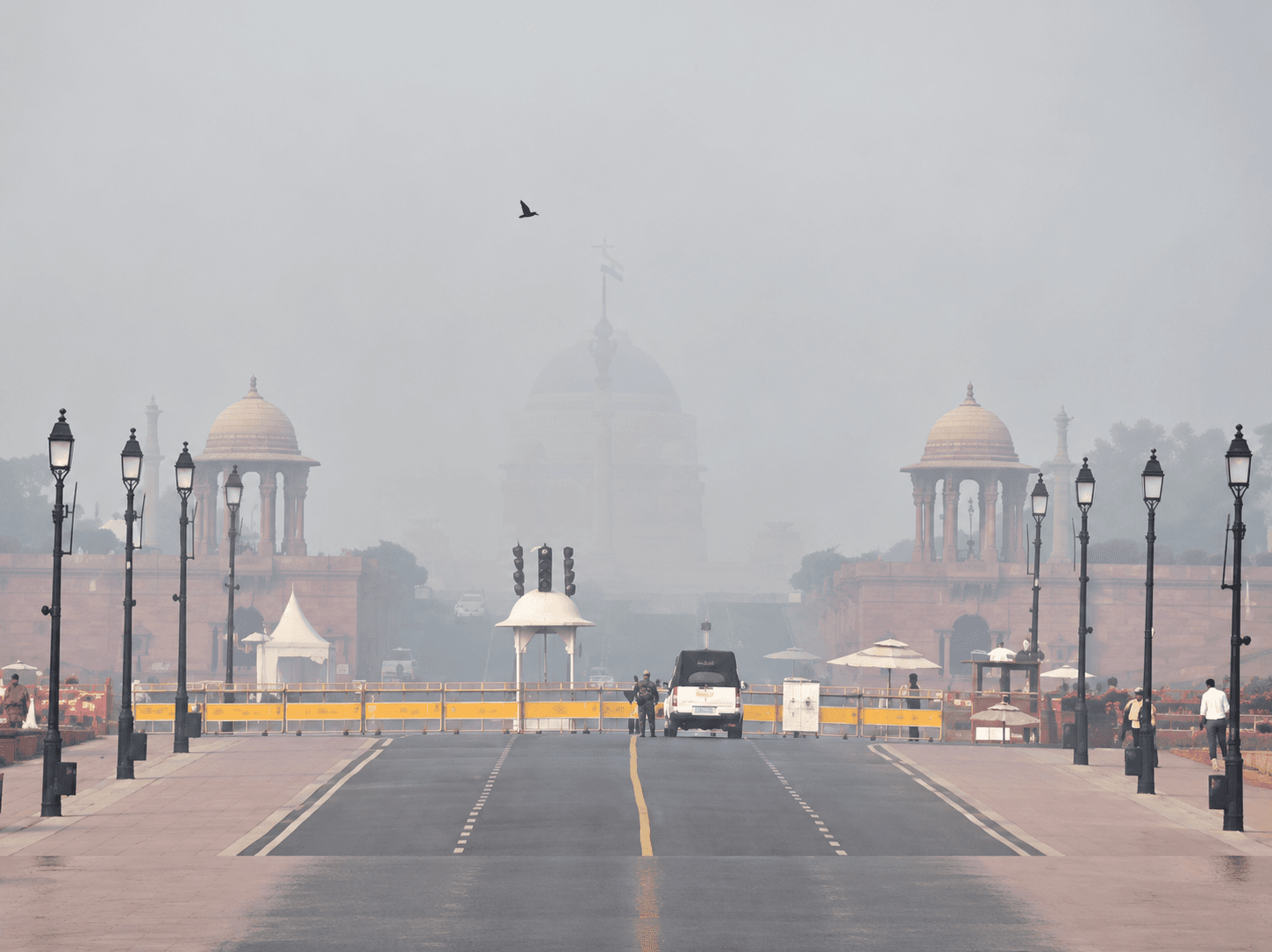
Delhi’s air-quality picture is proving more complicated than the headline AQI suggests.
The city’s overall Air Quality Index may be showing some improvement, even as readings for PM2.5 and PM10 move higher. For residents, that can make the daily pollution picture difficult to interpret.
A lower AQI does not necessarily mean that every pollutant in the air has fallen.
That distinction matters because AQI is designed to turn readings from different pollutants into one easy-to-understand figure. Individual pollutants, however, can move in different directions.
So the key question is straightforward:
Does a lower AQI necessarily mean Delhi’s air is cleaner if PM2.5 and PM10 are rising?
WHAT IS HAPPENING?
Pollution levels across Delhi can change significantly from one day to the next, influenced by traffic, dust, construction, weather and other sources.
The current discussion centres on the apparent difference between the overall AQI and individual particulate readings.
A lower AQI can indicate an improvement in the overall air-quality category. But the index does not represent just one pollutant.
PM2.5, PM10, nitrogen dioxide, ozone and other pollutants can behave differently depending on conditions across the city.
As a result, the overall AQI can improve while particular pollutants remain elevated.
For residents trying to understand the situation, looking at the individual readings alongside the AQI provides a clearer picture.
AQI IS NOT THE SAME AS PM2.5
This is an important distinction.
AQI is an index.
PM2.5 is a pollutant.
The AQI uses pollutant measurements to produce a single number that indicates overall air quality under the applicable calculation system.
PM2.5 refers to fine particles measuring 2.5 micrometres or less in diameter. Because of their tiny size, they can penetrate deep into the respiratory system.
PM10 refers to inhalable particles measuring 10 micrometres or less.
So when Delhi’s AQI falls, it does not automatically mean that PM2.5, PM10 and every other pollutant have also declined.
That is why individual pollutant readings remain important.
WHY PM2.5 MATTERS
PM2.5 is closely watched because these particles are particularly small.
They can come from a range of sources, including vehicle emissions, combustion, industrial activity, construction and various forms of burning.
Weather conditions also play a major role in how these particles spread or remain concentrated near the ground.
When pollutants build up close to the surface, people can experience poor air quality even if the overall AQI appears better than it was previously.
For that reason, environmental authorities and health experts generally look beyond the headline AQI.
PM10 TELLS A DIFFERENT STORY
PM10 includes larger airborne particles and is often closely linked with dust.
In Delhi, road dust and construction activity can contribute significantly to PM10 levels. Dry conditions and heavy vehicle movement can further disturb dust and send particles back into the air.
That means a rise in PM10 can sometimes point toward increased dust-related pollution, even when other pollutants are moving differently.
HOW CAN AQI FALL WHILE PARTICULATES RISE?
There are several possible reasons.
First, AQI considers multiple pollutants.
If one pollutant improves enough, the overall index can move lower even when PM2.5 or PM10 increases.
Second, pollution varies across the city.
Delhi is a large and densely populated urban area. Conditions beside a busy road can be very different from those in a residential neighbourhood.
Third, weather can quickly change pollution levels.
Wind, temperature, humidity and atmospheric mixing affect how pollutants disperse.
And fourth, daily fluctuations are normal.
One day’s reading should not automatically be treated as evidence of a long-term improvement or deterioration.
THE WEATHER FACTOR
Delhi’s pollution levels are closely tied to atmospheric conditions.
When winds are stronger and the atmosphere mixes well, pollutants can disperse more easily. When winds weaken and the air becomes stagnant, pollutants can remain trapped closer to the surface.
That becomes particularly important as the capital moves toward the colder months.
Lower temperatures, weaker winds and stable atmospheric conditions can make it easier for particulate pollution to accumulate.
So even if the AQI looks better today, that does not guarantee that the improvement will continue.
WHAT DOES THIS MEAN FOR DELHI RESIDENTS?
The takeaway is simple:
Don’t rely on just one number.
Residents should consider:
Overall AQI
PM2.5 levels
PM10 levels
Readings from nearby monitoring stations
Weather conditions
Official pollution advisories
Trends over several days
Local conditions matter too. Someone living beside a busy traffic corridor or a construction site may be exposed to different pollution levels from the citywide average.
The AQI remains useful, but it is only part of the picture.
THE HEALTH QUESTION
Air pollution is also a public-health issue.
Elevated particulate pollution can affect respiratory health, with children, older adults and people with existing respiratory or cardiovascular conditions among those who may be more vulnerable.
That does not mean every short-term increase in PM2.5 or PM10 represents an immediate health emergency.
However, prolonged exposure to elevated particulate pollution remains a concern.
This is why the difference between a better AQI and genuinely lower pollution should not be overlooked.
DELHI’S BIGGER POLLUTION CHALLENGE
Delhi’s pollution problem does not come from one source.
Vehicle emissions, construction and road dust, industrial activity, waste burning and pollution from surrounding regions can all play a role.
That makes detailed monitoring increasingly important.
If PM2.5 rises, authorities need to identify what is driving the increase.
If PM10 rises, dust-control measures may need greater attention.
And if a particular area records a sharp increase, enforcement and mitigation efforts can potentially be directed there.
Delhi’s expanding real-time monitoring systems could play an important role in identifying these local changes.
The goal should not simply be to bring down the AQI number.
The goal should be to reduce the pollutants themselves.
FACT CHECK METER
FACT METER: 94%
STATUS: DEVELOPING
CONFIRMED
AQI is an index used to communicate overall air-quality conditions.
PM2.5 and PM10 are individual particulate pollutants.
AQI and individual pollutant concentrations are related but are not interchangeable.
Weather and local pollution sources can influence particulate levels.
A citywide AQI may not reflect conditions at every monitoring station.
IMPORTANT DISTINCTION
A lower AQI alongside higher PM2.5 or PM10 readings is not necessarily contradictory.
The AQI is calculated using pollutant measurements under the applicable system, while individual pollutants can rise or fall independently.
AWX VERDICT
A lower headline AQI should not be taken as proof that every aspect of Delhi’s air pollution has improved. Individual pollutant readings still matter.
AWX FOCUS
Delhi’s air-quality debate often gets reduced to one question:
Is the AQI better or worse?
But the atmosphere is more complicated than a single number.
Different pollutants can behave differently across different parts of the city and under different weather conditions.
That makes PM2.5 and PM10 important indicators to watch.
The more useful question is not simply:
“What is Delhi’s AQI today?”
It is:
“Which pollutants are driving the reading, where are they rising, and what is causing the change?”
WHAT TO WATCH NEXT
Whether PM2.5 and PM10 continue to rise or begin falling.
Whether the lower AQI trend continues over several days.
Changes in wind speed and atmospheric conditions.
Construction and road-dust activity.
Traffic-related emissions.
Local pollution hotspots.
Any increase in open burning.
How particulate levels change as winter approaches.
THE AWX BOTTOM LINE
DELHI’S AIR MAY LOOK BETTER ON THE AQI DASHBOARD — BUT THE PARTICULATE NUMBERS DESERVE A CLOSER LOOK.
A lower AQI is encouraging, but it should not be treated as a complete clean-air certificate.
PM2.5 and PM10 provide a more detailed view of what is happening in the air.
For Delhi, where pollution can shift quickly with traffic, dust, weather and seasonal conditions, those individual readings are important.
One number can describe the situation. It cannot always explain it.
As winter approaches, the bigger test will be whether an improvement in the headline AQI translates into a sustained reduction in particulate pollution.
ATTLAS WIRE | AWX WORLD NEWS
Real Stories. Lasting Impact.




Comments
No comments yet.