

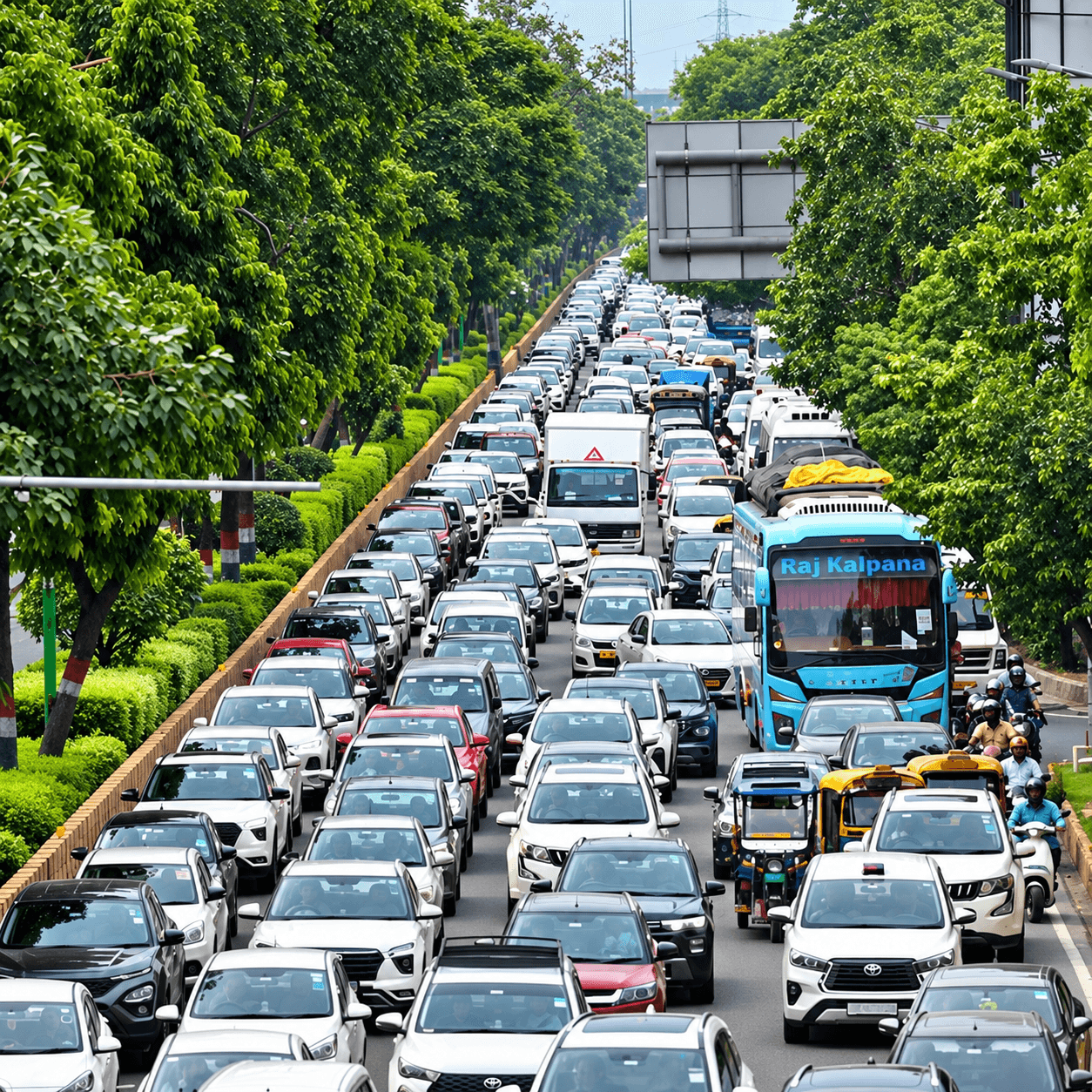
Central Delhi is on traffic alert today as police step up security around Jantar Mantar ahead of planned political demonstrations.
Barricades, checkpoints and traffic diversions are being put in place around sensitive stretches of the capital. The measures could slow traffic on roads connecting Jantar Mantar with Parliament Street, Connaught Place and other key government and commercial areas.
For commuters, the main concern is straightforward: how much will today's security arrangements affect travel, and when will normal traffic return?
WHAT IS HAPPENING?
Security has been tightened around Jantar Mantar as political groups prepare for demonstrations.
Police may restrict vehicle movement near the protest area, with barricades and diversions being adjusted according to crowd conditions.
Commuters travelling through central Delhi could therefore face delays, particularly during busy hours. Those who do not need to pass through the area are being advised to consider alternative routes.
WHY IS CENTRAL DELHI UNDER WATCH?
Jantar Mantar sits in one of the busiest and most sensitive parts of the capital.
The surrounding road network connects several important locations, including:
Connaught Place
Parliament Street
Central Secretariat
India Gate
New Delhi railway station
Because these areas are closely connected, restrictions near one location can quickly affect traffic on surrounding roads.
THE JANTAR MANTAR CONNECTION
The heightened security comes amid a wider political dispute over electoral-roll revisions and criticism of the Election Commission.
Protesters have sought to gather at Jantar Mantar to raise concerns over the Special Intensive Revision of electoral rolls.
Police are preparing for the possibility of larger gatherings and are using security measures to manage access to the protest zone and maintain public order.
That response is also having an impact on traffic movement in central Delhi.
WHICH AREAS COULD SEE DISRUPTION?
Commuters should be prepared for possible delays around:
Jantar Mantar
Parliament Street
Connaught Place
Patel Chowk
Central Secretariat
Mandi House
New Delhi
India Gate
The extent of the disruption will depend on the size and movement of the crowds and on any further instructions issued by police.
WHY TRAFFIC DIVERSIONS MATTER
Central Delhi already carries heavy traffic throughout the day.
When a road is restricted, vehicles are pushed onto nearby routes. Those roads can quickly become crowded, creating delays well beyond the original restriction.
In simple terms:
Road restriction → diverted traffic → pressure on alternative routes → longer journeys.
Public transport can also come under additional pressure as commuters look for ways around affected roads.
METRO ACCESS COULD ADD TO THE PRESSURE
Heightened security around Jantar Mantar can also affect access to nearby Delhi Metro stations.
If commuters are unable to use their usual station, they may shift to neighbouring stations or switch to buses, taxis, auto-rickshaws and ride-hailing services.
That can increase passenger and road traffic in areas outside the immediate protest zone.
COMMUTERS FACE POSSIBLE DELAYS
People travelling through central Delhi today could encounter:
Longer journey times
Traffic diversions
Police checkpoints
Congestion on alternative routes
Crowding around transport hubs
Delays near government districts
Motorists should allow extra time and check traffic conditions before setting out.
WHY POLICE ARE USING BARRICADES
Barricades give police a way to control vehicle and pedestrian movement as conditions change.
Their placement can depend on several factors, including:
Crowd size
Location of the demonstration
Security concerns
Emergency requirements
Existing traffic conditions
The aim is to keep traffic moving where possible while preventing unauthorised access to restricted areas.
KEEPING EMERGENCY ROUTES OPEN
Another priority is emergency access.
Ambulances, fire services and other emergency vehicles need to be able to move through central Delhi even when large crowds gather.
Traffic controls can help maintain clear routes and prevent vehicles or crowds from blocking emergency movement.
WHAT SHOULD COMMUTERS DO?
Anyone travelling through central Delhi today should consider:
Leaving earlier than usual
Checking live traffic updates before departure
Using alternative routes or Metro stations
Avoiding unnecessary travel near Jantar Mantar
Following police and traffic advisories
Allowing extra time for possible checkpoints
Conditions may change during the day depending on the size and movement of the demonstration.
PUBLIC TRANSPORT MAY SEE EXTRA PRESSURE
If more people avoid driving through central Delhi, demand for public transport could increase.
Buses, Metro stations, auto-rickshaws and ride-hailing services may see heavier demand, particularly around stations and roads outside the restricted area.
That means congestion may not remain limited to the immediate protest zone.
THE POLITICAL DIMENSION
Today's traffic restrictions are closely connected to a broader political dispute involving electoral-roll revisions and the Election Commission.
Opposition parties, student groups and civil-society activists have raised concerns about the issue, while authorities are focused on maintaining order around planned demonstrations.
As a result, developments around Jantar Mantar are being closely watched.
SECURITY VS. NORMAL CITY LIFE
For authorities, the priority is maintaining public safety and preventing disorder.
For protesters, restrictions can affect their ability to gather and demonstrate.
For residents, workers and businesses, prolonged security measures can make an already busy part of the capital harder to navigate.
That leaves Delhi with a familiar challenge: maintaining security without causing unnecessary disruption to everyday life.
COULD RESTRICTIONS EXPAND?
That will depend largely on what happens at the protest site.
If the gathering remains limited and peaceful, restrictions could be eased as the situation stabilises.
If crowds grow or attempt to move beyond designated areas, police could introduce additional barricades or diversions.
For now, the situation should be treated as fluid.
WHY THIS MATTERS
1. CENTRAL DELHI IS A MAJOR TRANSPORT CORRIDOR
Restrictions around Jantar Mantar can affect commuters travelling between major commercial, government and transport hubs.
2. ALTERNATIVE ROADS COULD BECOME CONGESTED
Traffic diverted from restricted roads can quickly create bottlenecks elsewhere.
3. METRO USERS MAY ALSO BE AFFECTED
Any restrictions around nearby stations could push passengers towards alternative stations.
4. SECURITY ARRANGEMENTS CAN CHANGE QUICKLY
Police can alter barricades and diversions as crowd conditions develop.
5. THE PROTEST HAS WIDER POLITICAL SIGNIFICANCE
The demonstrations are linked to the ongoing debate over electoral rolls and election administration.
AWX FACT CHECK
FACT METER: 93%
STATUS: DEVELOPING
CONFIRMED
Security has been increased around Jantar Mantar and parts of central Delhi.
Police can introduce traffic restrictions and diversions around major protest locations.
The security arrangements are linked to planned political demonstrations.
Central Delhi contains major government, commercial and transport corridors.
Traffic conditions can change as crowd movement and police deployment change.
IMPORTANT DISTINCTION
A TRAFFIC DIVERSION DOES NOT MEAN ALL CENTRAL DELHI ROADS ARE CLOSED.
Restrictions are generally focused on sensitive areas and may be changed as the security situation develops.
NOT YET ESTABLISHED
How long today's restrictions will remain in place.
Whether additional roads will be closed.
Whether the protest will require wider traffic controls.
The total number of commuters affected.
AWX VERDICT
CENTRAL DELHI SECURITY: HIGH
TRAFFIC DISRUPTION: EXPECTED
JANTAR MANTAR: SECURITY FOCUS
ROAD DIVERSIONS: ACTIVE / POSSIBLE
METRO IMPACT: POSSIBLE
SITUATION: DEVELOPING
AWX FOCUS: DELHI TRAFFIC ALERT
JANTAR MANTAR
The main security and protest-control zone.
PARLIAMENT STREET
May see traffic and security restrictions depending on developments.
CONNAUGHT PLACE
Alternative routes could face heavier traffic.
CENTRAL SECRETARIAT
Security measures in the government district could affect movement.
NEW DELHI
The area's railway and Metro connections make it particularly sensitive to commuter disruption.
COMMUTERS
Allow extra time and consider alternative routes if travelling through central Delhi.
THE KEY QUESTION
Will today's restrictions remain focused around Jantar Mantar, or will traffic controls spread to a wider part of central Delhi?
WHAT TO WATCH NEXT
TRAFFIC
Whether congestion builds up on alternative routes.
POLICE
Whether more barricades or road restrictions are introduced.
PROTEST
The size and movement of the demonstration.
METRO
Whether access restrictions at nearby stations are expanded or lifted.
EMERGENCY SERVICES
Whether emergency routes remain clear.
COMMUTERS
Whether major transport hubs see unusual crowding.
SECURITY
Whether restrictions are eased once the situation stabilises.
THE AWX BOTTOM LINE
Central Delhi is facing heightened security today as authorities prepare for political demonstrations around Jantar Mantar.
For police, the priority is maintaining order and keeping the area secure. For protesters, the restrictions could affect access to the demonstration. For commuters, the immediate concern is more practical: how long will the journey take?
Traffic diversions may remain concentrated around the protest area, but central Delhi's tightly connected road network means delays can spread quickly to surrounding routes.
The situation remains developing.
If you are travelling through central Delhi today, allow extra time, check traffic conditions before leaving and follow official traffic directions.
The protest may be centred around Jantar Mantar, but its traffic impact could be felt across a much wider part of the capital.
ATTLAS WIRE | AWX WORLD NEWS
Real Stories. Lasting Impact.




Comments
No comments yet.